dailynewsnblog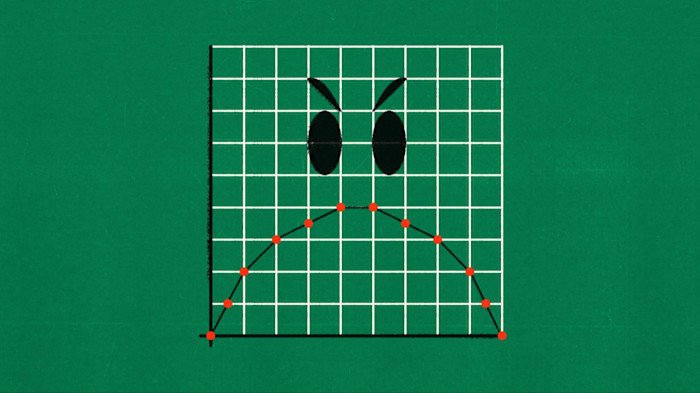
If the 21st century has produced a more prescient book, I’ve not seen it. I’m thinking of The Moral Consequences of Economic Growth, by Harvard economics professor Benjamin Friedman. The book was published in late 2005, making it the same age as this column.
Friedman’s argument was wide-ranging but the bottom line is easy to summarise: “Economic growth — meaning a rising standard of living for the clear majority of citizens — more often than not fosters greater opportunity, tolerance of diversity, social mobility, commitment to fairness, and dedication to democracy.”
Friedman noted that a thriving economy might have a number of welcome side-effects, consequences which we might call moral progress. For example, if jobs were plentiful and workers were scarce, discrimination on the grounds of race, sex or religion “most often gives way to the sheer need to get the work done”.
Yet for Friedman, the key to unlocking the virtues he admired was not jobs but an increase in broad-based material living standards, which is measured — or at least proxied — by GDP per person. He argued that we naturally judge how things are going by making comparisons, and two types of comparison are readily available. The first is to compare ourselves with others. The second is to compare our current situation with our own past experiences. If living standards were briskly increasing, then we would notice that we were comfortably richer than we had been a decade ago. If living standards were stagnating or falling, then we would stop making contended comparisons with our former selves, and our envious gazes would turn to the lives of others.
Such zero-sum thinking is likely to be toxic and counter-productive. After all, as Friedman writes, “Nothing can enable the majority of the population to be better off than everyone else. But not only is it possible for most people to be better off than they used to be, that is precisely what economic growth means.”
At the time, Friedman was criticised from the left for being too reductive about what economic progress meant (what about inequality? What about environmental sustainability?) and from the libertarian right for confusing moral progress with centrist ideals such as an inclusive, redistributive welfare state (what about rewarding excellence? What about freedom?).
These critiques have lost their bite. The events of the past two decades have proved that on the big questions, Friedman was unnervingly, tragically correct. The 21st century has been an era of economic trauma, and the consequences for our attitudes and our politics have become all too obvious.
The US economy has certainly grown over the past 25 years, but the growth has been uneven, uncertain and repeatedly interrupted. The century began with the unnerving popping of the dotcom bubble, followed by the post-9/11 recession, which blurred into the “China shock”, an influx of Chinese imports that for a few years inflicted localised but traumatic damage on US communities dependent on manufacturing. All that was made to look tame by the banking crisis of 2007-08, which depressed growth rates for years afterwards, as well as draining the US economic system of legitimacy. The final one-two punch was the Covid-19 lockdown followed by the surge in inflation of the past few years.
What does all this drama look like in the economic data? Simple. Over the quarter-century beginning in 1950, real GDP per person grew almost 80 per cent. Over the following quarter-century, 1975-1999, real growth per person was again just under 80 per cent. But from 2000-2024, total real growth per person halved, to just under 40 per cent.
Or consider the experience of the finance-heavy UK economy, in which the banking crisis looms even larger. That crisis was followed by an anaemic recovery — not helped by the tax rises and spending cuts of the coalition government — and then, in 2016, the vote for Brexit. The data, again, tells the story: between the peak of 2007 and the last full year before the referendum, 2015, the UK’s real economic output per person grew by a grand total of 1 per cent. Since 2016 the average is still well short of 1 per cent a year. For context, in the 1990s, real per capita growth was more like 1 per cent every six months.
Friedman’s basic thesis was that robust, broad-based growth would encourage tolerance, social mobility, fairness and a commitment to democratic values. Should we be surprised that an economic slowdown has given us the opposite?
Since The Moral Consequences of Economic Growth was published, economists have investigated its thesis with a more quantitative lens. Lewis Davis and Matthew Knauss looked at more than 80 countries between 1989 and 2007. They found that people were more eager for governments to “take more responsibility to ensure that everyone is provided for” where the growth rate had recently been rising and income inequality had recently been falling.
That’s an intriguing finding, particularly the counterintuitive proposition that people want more government provision in places where income inequality is falling. And not everyone would agree that there is anything “moral” about wanting government to take a bigger role as a provider. Still, it is striking that Davis and Knauss find that in economies that are misfiring, with falling growth and rising inequality, the typical response is: every man for himself.
In January, Timothy Besley, Christopher Dann and Sacha Dray published a study of “Growth Experiences and Trust in Government”, and concluded that individuals who had experienced higher GDP growth since they were born “are more prone to trust their governments”. Again, trusting your government is not quite the same thing as moral rectitude, but Besley and colleagues are pointing to some of the same fundamental issues as Friedman was: when economic growth sags, it doesn’t just change what we can afford — it changes what we value, what we believe and who we trust.
We shouldn’t be reductive about this link between material flourishing and moral flourishing. There are certainly moments, such as the Great Depression in the US, when both the government and the people seemed to rise to the challenge rather than sinking into infighting and recrimination. And the increasing power and attention given to unsavoury political characters around the democratic world is surely about more than merely low growth. Still: low growth matters, not just because it empties out our shopping bags, but because it hollows out our character.
Find out about our latest stories first — follow FT Weekend Magazine on X and FT Weekend on Instagram