dailynewsnblog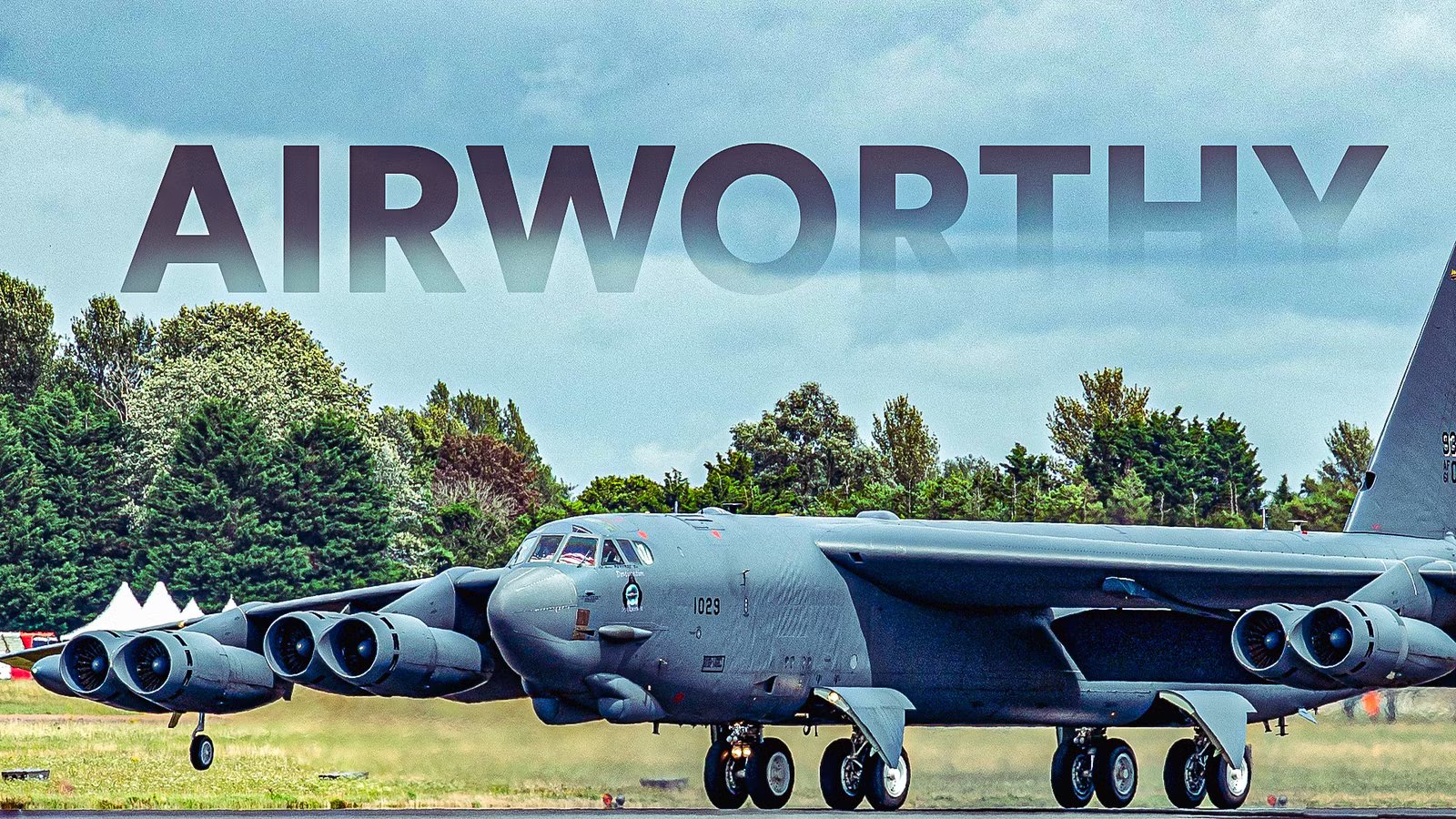
A monument to a design that was both a breakthrough in its own time and adaptable enough to keep up with the future, the Boeing B-52H Stratofortress continues to roll out of its hangar on missions decades after its first flight. April 1952 saw the first flight of the Stratofortress, and in 1955, the B-52B became operational, launching an epic saga in aviation history.
Originally a high-altitude nuclear bomber, it now serves as a cruise-missile arsenal, a maritime patrol aircraft, a conventional bomb truck, and even an electronic-warfare platform. Its exceptional performance and size allow it to change roles nearly as easily as ground crews switch weapons. The B-52H, the sole surviving model, is anticipated to remain in service well into the 2050s.
The Next-Gen BUFF

The upcoming B-52J upgrade is evidence that the United States Air Force believes the legendary Stratofortress isn’t done yet. To improve fuel efficiency, increase range, and reduce the number of wrench-turning hours on the ramp, the bomber’s fifty-year-old TF-33 engines will be swapped for eight new Rolls-Royce F130s.
Avionics and sensors will also be upgraded. In order to give aircrew a more precise and comprehensive picture of the battlespace, the USAF is installing the same APG-79 radar used in the F/A-18 Super Hornet and replacing more analog instruments with integrated digital displays.
|
Specification |
Boeing B-52H Stratofortress |
|---|---|
|
Length |
159 ft 4 in (48.5 m) |
|
Wingspan |
185 ft 0 in (56.4 m) |
|
Height |
40 ft 8 in (12.4 m) |
|
Max takeoff weight |
488,000 lb (221,323 kg) |
|
Fuel capacity |
312,197 lb (141,610 kg), 47,975 U.S. gal (181,610 L) |
|
Powerplant |
8 × Pratt & Whitney TF33-P-3/103 turbofans |
|
Thrust per engine |
17,000 lbf (76 kN) |
|
Maximum speed |
650 mph (1,050 km/h, 560 knots) |
|
Cruise speed |
509 mph (819 km/h, 442 knots) |
|
Combat range |
8,800 mi (14,200 km, 7,600 NM) |
|
Service ceiling |
50,000 ft (15,000 m) |
The Hypersonic Attack Cruise Missile, a lightning-fast standoff weapon, is planned to be the newest addition to the arsenal with the J-model. Nicknamed “BUFF” for “Big Ugly Fat Fellow,” the enduring warbird has seen three generations of pilots, including some directly related to the first cadre of B-52 pilots. When the prototype first roared down the runway during the Eisenhower period, no one could have predicted that the grandchildren of those pilots would be flying the same big jets a century later.
The Global Strike Command

The Air Force Global Strike Command (AFGSC) is a shield and a sword, flying high above the world’s hotspots. America’s promise that it can strike, or not strike, anywhere in the world is embodied by the ever-present power of the B-52, high-speed B-1B Lancer, stealthy B-2 Spirit, and upcoming B-21 Raider. These incredible bombers can launch precision-guided JDAMs for surgical strikes, nuclear gravity bombs in the worst-case scenario, or even standoff cruise missiles.
Bombers provide a level of versatility that no missile silo can match. They can be deployed as a force demonstration, redirected in midair if diplomacy succeeds, or retasked in flight when the mission changes. The impact is felt not limited to military strategy, but directly influences diplomacy when a group of Stratofortresses thunders into a theater or a lone B-2 flies by air defenses with impunity.
USAF Major General Jason Armagost, 8th Air Force and Joint-Global Strike Operations Center commander, commented on the 2024 deployments by squadrons of the AFGSC:
“On any given day, we’re actively engaged through bomber task force missions. In fact, about 60 percent of the year we are deployed to a theater or providing continental US (CONUS) -to-CONUS flights in support of theaters or in support of US Strategic Command and the Chairman of Joint Chiefs of Staff.”
Modernization maintains the relevance of that mission. While the debut of the B-21 promises deeper penetration and higher survivability against tomorrow’s air defenses, re-engineered B-52s, B-1Bs, and B-2s are getting new sensors and armaments. When combined, the fleet is a flexible, lethal, and poignant symbol of American determination that can deliver decisive force, reassure allies, or deter in a single sortie.

How Many B-52 Stratofortresses Were Built?
The legendary B-52 Stratofortress, behemoth of the sky built to fight the unthinkable war, nearly a century later the fleet continues to serve.

Few aircraft can match the airborne arsenal that a B-52 possesses as it hurtles off the runway and blazes into the skies. Up to twenty cruise missiles, like the stealthy AGM-129 Advanced Cruise Missile or the AGM-86 CALCMs that skim the ground for hundreds of miles, can both be piled in the huge bomb bay or slung under their broad wings.
The Stratofortress can also rain down cluster munitions that burst into scores of smaller sub-munitions, or switch to precision work with GPS-guided ordnance. The venerable bomber now has the accuracy of a modern fighter thanks to Joint Direct Attack Munitions, which are traditional bombs with smart tails. Simply punch the release, enter the coordinates, and the weapon will guide itself to the target.
The B-52’s armament menu, taken as a whole, reads more like the loadout list for a whole squadron rather than options for a single aircraft, highlighting why the Air Force continues to rely on this venerable monster anytime it requires reach, volume, and diversity in one package. All the while maintaining the balance of power in the most terrifying strategem of all: nuclear-armed mutually assured destruction.

How The US Air Force’s B-52 Fleet Maintains Global Strategic Presence
After six decades of vigilance, the US’s mighty fleet of B-52 Stratofortress’ endure to provide deterrence and ensure global security.
Reigning Heavyweight Strike Champ

The B-52 lacks the speed and stealth of its rivals, but it has the toughness, sheer volume, and range that few can compete with. The streamlined B-1B Lancer needs the tanker sooner on intercontinental runs, but it screams past at supersonic speeds. Northrop Grumman’s flying wing has a smaller bomb bay, shorter range, and just a two-person crew.
Russia’s turboprop Tupolev Tu-95 “Bear” parallels the B-52’s role as a nuclear intercontinental bomber. Propellers give the Bear better fuel economy and, theoretically, a greater range, but when the mission is critical, the sluggish Soviet-era design can’t compete with the American bomber’s higher dash speed.
Sheer capacity remains the Stratofortress’s hallmark. Its huge weapons bay and heavy-duty wing pylons for bombs or cruise missiles, paired with immense unrefueled range, secure its permanent place in America’s nuclear triad. The B-52 continues to provide capabilities that even its more exquisite successors find difficult to replace.

How US Air Force Global Strike Command Gets Aircrew Fit To Fly B-52s For 33 Hours
New methods keep B-52 flight crews alert during 30+ hour missions, merging physical stamina with mental strength for global readiness.
The B-52 Through The Years

The Stratofortress was created during the early stages of the Cold War. It has demonstrated for decades that relevance and age don’t conflict. As America’s airborne guardian, it first stood watch in the sky, warning enemies that any nuclear attack would be met with catastrophic reprisal. The Stratofortress exchanged its nuclear payload for conventional bombs when Operation Linebacker II erupted in the 1960s, roaring over Vietnam in carpet-bombing raids.
The first jet-powered, nonstop trip around the world was accomplished by the B-52 Stratofortress. Using in-flight refueling, three B-52Bs made the historic flight as part of Operation Power Flite in January 1957, finishing the trip in 45 hours and 19 minutes. Another B-52 also flew for 47 hours in 1994 as part of Exercise Global Power 94-7, delivering explosives on a bombing range in Kuwait.
In 1991, its reach became legendary. Crews boarded at American bases, took off from the continental United States, and dropped bombs on targets half a globe away during Operation Desert Storm. The B-52 was a lynchpin in the battles over Bosnia, Kosovo, Afghanistan, and, more recently, ISIL in the Gulf.

US Air Force B-52H Stratofortress Operations In The Arabian Peninsula
B-52H bombers are one of America’s highest visibility platforms to project around the globe, reinforcing US alliances and deterring aggression.
Keeping The Human In The Loop

Commanders continue to depend on aircrews who strap in and fly the operation themselves when the skies turn hostile and the stakes rise. Unmanned aircraft have earned a reputation as cost-effective and lethal over permissive battlefields. When conditions change, and it comes down to the wire, professional officers and pilots making real-time judgments about the conflict zone are irreplaceable.
Experienced pilots in the cockpit must evaluate situations, improvising when data links are snarled by electronic warfare or when an unforeseen threat appears on the scope. The chariot they ride hauls heavier, longer-range weapons to more distant targets than any drone. The aircraft’s enormous bomb bays are a responsibility that should be wielded by not only the highest-trained professionals but also those facing the threat with their own eyes.
Taking the human out of the line of fire is the ultimate improvement in eliminating the risk to human life. It could be argued, however, that this creates cognitive dissonance, reducing human life on the target scope to just numbers and pixels. Drones will also falter in their mission if the data link is jammed or signals are spoofed. Drones perform well in situations with minimal air defenses, meaning that the most risky and critical missions still demand a warfighter in the cockpit.
The best strategy, then, is to combine the two. Bombers with crews break down the defenses as swarms of unmanned systems take advantage of the opening, splitting the burden. That human presence in the cockpit, on the battlefield, will continue to be the foundation of any operation that leaves no room for failure and demands the utmost professional conduct.