dailynewsnblog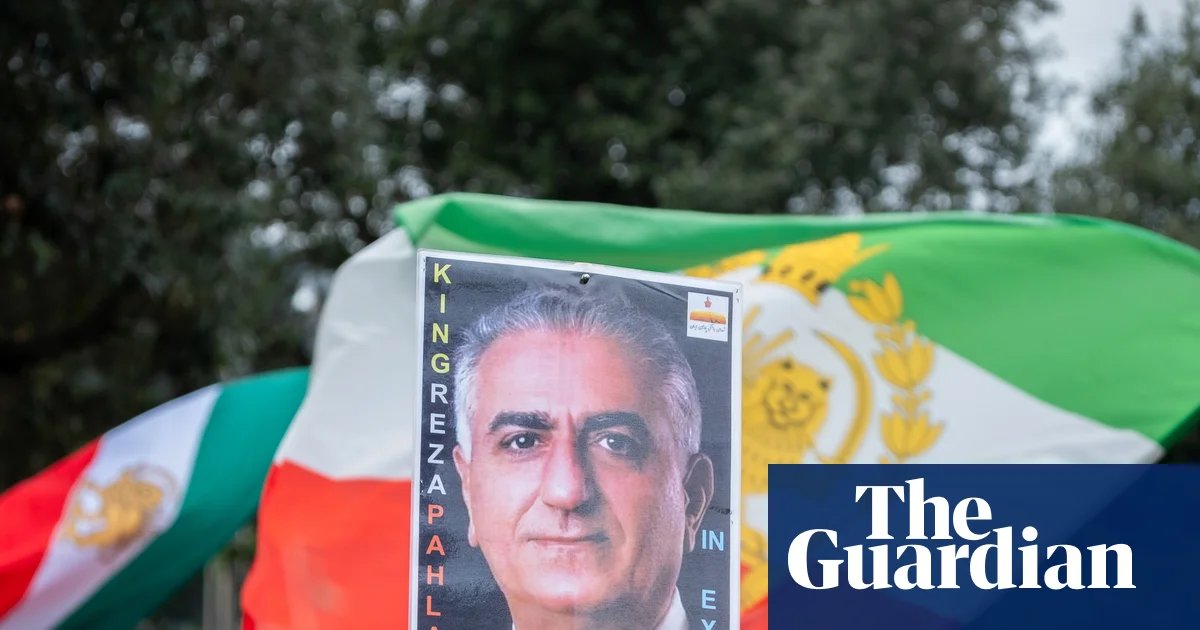
The Japanese writer Haruki Murakami in his novel 1Q84 may have foreshadowed the great and indelible rift Iranian society is about to experience. “The ones who did it can always rationalize their actions and even forget what they did. They can turn away from things they don’t want to see. But the surviving victims can never forget. They can’t turn away. Their memories are passed on from parent to child. That’s what the world is, after all: an endless battle of contrasting memories.”
Inside Iran, contrasting memories are already being brought into even sharper relief and made more traumatic by the blanket propaganda from Iran state TV portraying protesters as drug-crazed or pawns of a foreign power attracted to a violent terrorist culture reminiscent of Islamic State.
But underlying this battle for narrative lies a wider political challenge for the opponents of the Iranian government inside and outside the country.
Yet again the Iranian state, faced by a revolt, has resorted to overwhelming repression and state violence to silence. The initial promise by the reformist president, Masoud Pezeshkian, that he would listen to the voices of protest as the grievances were legitimate emerged to be hollow, or quickly superseded. The notion that reformist governments can or want to control the security apparatus, or suppress the prejudices of the supreme leader, have been dispelled.
Arash Azizi, the author of What Iranians Want and a supporter of an Iranian Republic, says the scale of this repression is unprecedented. “The impact has been disastrous and numbing. We are still digesting it. We are talking about the most brutal actions by the Islamic Republic since the 1980s. The vast majority of Iranians do not remember anything like this. It’s now emerging that we almost all knew someone who was killed.”
The necessity to reflect collectively on such a tragedy inside Iran is made more difficult by a weeklong blackout of communications. It leaves the opposition grieving, in disarray, and still bitterly divided over the wisdom of foreign-backed revolt and how change can be achieved.
Some cling to the hope that Donald Trump and Sen Lindsey Graham will still make good on their promise to help the revolution and whatever help comes has only been postponed. Others accuse Trump of betrayal and of offering false hope, urging the protesters on to the streets only for them to be mown down. Trump clings to the threadbare excuse that the regime has promised not to execute the protesters.
The inquest will be most intense around the role of Reza Pahlavi, the 65-year-old exiled son of the former shah of Iran. Even anti-monarchists admit chants for the return of the shah have featured strongly, even if they differ on the depth of that support and its meaning. In the words of Mehrdad Khamenei, writing on the news website Akhbar Rooz, “it is a paradox of the opposition that, unable to produce liberation, [it] has taken refuge in the reproduction of the past”.
Rouzbeh Parsi, an adjunct lecturer at Sweden’s Lund University, says Pahlavi is for many Iranians born after the shah’s repressive rule little more than a convenient blank page. “The calls for the return of a monarch is a sign of desperation on the part of some protesters, who under the repression of the Islamic Republic have not been able to coalesce around any single political figure inside the country.”
One of the striking aspects of Pahlavi is that in interview he is unfailingly polite, cautious to the point of robotic, and seemingly unexceptional in his stated centrist ambitions to help bring about a modern Iran, ideally through a referendum. He has three daughters raised in the west, of which the oldest, Noor, cultivates her Instagram accounts with 1.3 million followers, balancing images of her luxurious modern lifestyle with articulate calls for her father to be given the chance to restore Iran’s freedom.
In interview, Pahlavi avoids criticising his father’s rule, which was brought to an end by the revolution of 1979. Pressed, he says his father took on too much responsibility, but that Iran was on course to become South Korea, instead of resembling North Korea.
In contrast, some of Pahlavi’s closest supporters appear to be, online at least, intolerant, rightwing and vengeful. After half a century of bloodshed and sacrifice, perhaps that is not surprising. Iranian exiles are inevitably deeply invested one way or another and Pahlavi has come to personify all that remains unresolved about Iran if the current regime was to collapse.
Azizi, a long-term opponent of a return to monarchy, argues that Pahlavi and his advisers have a lot to explain. He said: “He now faces a huge credibility challenge. He asked people to come out and they did, but he did not seem to have a plan to follow through. He called for strikes that did not take place. He repeatedly promised intervention by Trump but not only did it not come, Trump refused to meet him and openly cast doubt on his chances even if he said some nice things about him personally.”
Pahlavi had also courted the Israeli prime minister, Benjamin Netanyahu, visiting Israel in 2023, but now Israeli officials are briefing on Netanyahu’s scepticism about Pahlavi’s credentials and leadership skills.
The tensions over Israel’s refusal to intervene is apparent among some of his closest advisers such as Saeed Ghasseminejad. On 15 January, he wrote on X: “If Israel remains on the sidelines while the massacre and execution of Iranians continues, it will shape Iranians’ perception of the Jewish state for generations. However, if Israel acts on the explicit promise Prime Minister Netanyahu made weeks ago and helps Iranians bring down the regime, a new era of Israeli-Iranian alliance under the ‘Cyrus Accords’ framework [a proposed peace agreement] will emerge, one where the sky’s the limit for economic, security, and military partnership. The regime’s back is to the wall, the decision is Israel’s to make and it will define Bibi’s legacy.”
Pahlavi’s allies seek vengeance, not just against the Iranian state but against those that called for negotiations with that state.
Amir Etemadi, another adviser, wrote: “The architects of the slaughter of the Iranian people are Khamenei, his underlings and his mercenaries; and their accomplices in crime are the apologists who, under the guise of analysts and journalists, whitewashed the reformist branch of the Islamic Republic time and again, enabling its greatest atrocities to unfold during the eras of Rouhani and Pezeshkian. You’re done for. Every last one of you – wherever you may be in the world.” Others promised that the “Reza boys” were coming to get the defenders of the regime.
During the 1979 revolution, the many rivulets of opposition met to form one mighty river to overcome the shah. This time the tributaries inside and outside Iran remain separated.
It has been a perennial problem since the late 90s. As the Iranian elite started to fracture, and protests grew, Pahlavi made several attempts to build opposition coalitions, including the National Council of Iran for Free Elections, launched in 2013. Most have struggled with internal disagreements. The diverse coalition formed at Georgetown University during the “women, life, freedom” movement in February 2023 rapidly fell apart. The Canada-based activist Hamed Esmaeilion, one of the six-strong council, without naming Pahlavi, wrote: “Imposing opinions is not democratic and the consensus of a group’s members, not just one member, is a precondition of a democratic movement.”
Pahlavi’s critics also challenge his personal capacity to lead, saying he has been erratic about his envisaged role and the need for foreign intervention.
Mostly Pahlavi describes himself as an honest broker, above the fray, promising to act with absolute neutrality to secure a transition. But at other times his aides appear to insist they alone can commandeer the protests and act as if Pahlavi aspires to be something of a ruling monarch on the model of his father.
Pahlavi also faces criticism for urging Iranians on to the streets without a realistic plan. Insisting he was prepared to die for freedom, he declared: “All institutions and apparatuses that are responsible for the regime’s false propaganda and the severing of communications are considered legitimate targets.” The option of layered, non-violent resistance was spurned.
Asked by CBS on 12 January whether he had to bear some responsibility for the deaths, he responded: “This is a war and war has casualties” – words that in isolation sound callous. Pahlavi’s claim that 50,000 members of the security services were primed to defect also proved optimistic. He revised the claim, saying: “Thousands of military and police forces did not go to work so as not to participate in the suppression.”
Azizi hopes that with Pahlavi’s failures being more evident, “the moral authority of those inside Iran in prison such as Nobel prizewinner Narges Mohammadi and Mostafa Tajzadeh will grow”.
Azizi claimed: “The so-called Republicans will now have the ball thrown at us in a way. It’s our turn to organise a serious, credible alternative to the regime, something we have consistently so far failed to do.”