dailynewsnblog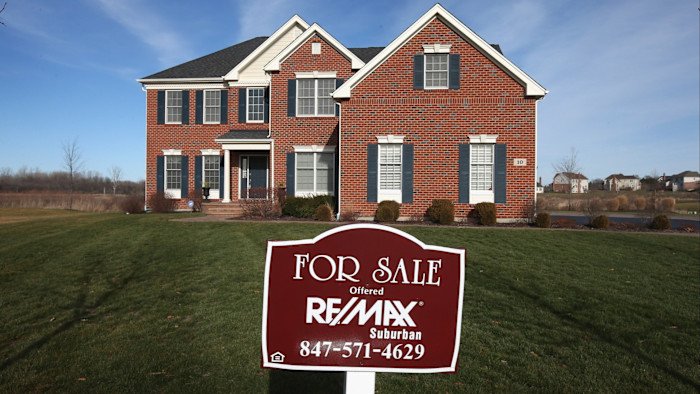
Unlock the White House Watch newsletter for free
Your guide to what Trump’s second term means for Washington, business and the world
This article is an on-site version of our Unhedged newsletter. Premium subscribers can sign up here to get the newsletter delivered every weekday. Standard subscribers can upgrade to Premium here, or explore all FT newsletters
Good morning. Global investors really, really do not want exposure to the US dollar, according to a Bank of America investor survey. This is not surprising, given the beating international owners of US assets took last year if they did not have dollar hedges in place. We don’t see dollar risk coming back into vogue any time soon. Do you? Email us: unhedged@ft.com.
Housing
The housing market is probably the darkest corner of the US economy and it did not get brighter last month. Existing home sales fell 8.4 per cent on a monthly basis. Here’s a chart from the National Association of Realtors:

This may very well be a blip from the cold and snow across the US in January. Existing home sales have been looking a bit brighter in the past few months. But only a bit. And things are equally slow on the new home side. Employment in home construction is falling. The National Association of Home Builders/Wells Fargo survey shows the market has not really recovered since inflation leapt in 2022. The green line shows customer traffic:

Homebuilder stocks are in recovery mode. This likely reflects anticipation of lower mortgage rates, the frozen market for existing homes and hopes for stimulative housing policies:

But rising homebuilder shares do not indicate that the basic problem in the market is getting much better. That problem is affordability. Mortgages have fallen almost a full percentage point since the start of last year, which has helped a little, but not enough to offset high prices. After housing demand surged because of the pandemic-era low interest rates and fiscal stimulus, home prices surged about 20 per cent annually in major metro areas, Tiffany Wilding at Pimco points out. That’s a more dramatic rise in home prices than in the housing bubble. Wilding adds:
Now, although US GDP growth remains fairly strong, real wage inflation has cooled and wage levels have not fully adjusted to the now much higher costs of purchasing and maintaining a home.
Heading into this year’s midterm elections, President Donald Trump has zeroed in on affordability. He has proposed forbidding large institutional investors from buying single-family homes and has directed Fannie Mae and Freddie Mac to purchase up to $200bn in mortgage-backed securities to reduce mortgage rates.
Neither one of those proposed policies will have much of an impact, according to a poll by the Clark Center for Global Markets at the University of Chicago, which posed the question to a group of notable economists. Having Fannie Mae and Freddie Mac buy $200bn is too small a fraction of the market. Meanwhile, institutional investors account for 0.33 per cent of single-family house sales in the US, which would have a marginal impact on home prices, Chad Syverson of UChicago responded in the poll. Robert Shimer, also of UChicago, commented the following:
‘Affordability’ is the user cost of ownership, not house prices. Banning large institutional investors reduces liquidity which reduces the cost of buying a house but also the value from selling one. It would also raise the cost of renting a home.
The affordability problem can only be resolved by some combination of three things: much higher real incomes, much lower mortgage rates, or much lower house prices. None seem likely in the near term, and it is not clear what Trump can do about it. But we expect him to keep trying — and probably do the market more harm than good.
(Kim and Armstrong)
Inflation is not that bad but it is not getting better
Way back in the misty past of last Friday, the January CPI inflation report landed and it was widely read as showing that inflation cooled unexpectedly. This is not so. In the ways that matter, the readings in January were at least as hot in January as in December, and possibly hotter. Inflation is only a bit high relative to the Federal Reserve’s target, but it is not getting better.
The difference between Unhedged’s view on this and that of most observers is how we look at the rate of change and which prices we think are most indicative of what might happen next. On rate of change, we always take the month-to-month change and annualise it, a more timely measure than year-over-year measures. And we are in the camp that likes to exclude food and energy (too volatile to be predictive) and shelter prices (old news both because of the way the BLS measures it and because rents take a long time to change).
So, here is goods and services inflation, month-over-month annualised, excluding all that stuff (that blank in October and November, you may remember, is the result of the government shutdown last year):

See the improving trend there? We don’t either. And here is goods and services mixed together:

Used car prices fell hard in January (good news, as I’m in the market for one of these). But if you take this volatile category out, inflation looks warmer still.
The problem, if you are the person who thinks inflation responds to wage pressure, is that the wage-sensitive categories (personal care, recreation, medical care and so on) are almost all on the move.
Matt Klein of the Overshoot tweeted that he “Almost feels sorry for people who think this was a benign CPI print.” He writes:
The BLS version of what could be called “supercore” CPI, which excludes food, energy, shelter (housing and hotels), and used vehicles, had its biggest one-month increase since September 2022. The Federal Reserve Bank of Atlanta’s measure of inflation in items where prices change infrequently, excluding shelter, had its largest one-month increase since March 2025 when the first tariffs appeared. Even if we acknowledge that month-on-month inflation has tended to appear worse in Januarys than in the rest of the year, the data for 2026 do not support the claim that underlying price growth is decelerating.
And here is Omair Sharif of inflation insights noting even the goods numbers were not great:
Core goods excluding autos were up 0.36% [month over month, or over 4 per cent annualised] … That suggests that firms passed through higher prices in January than what we normally tend to see, and that likely included passing through some tariff-related costs.
Inflation is not terrible, but it is hard for us to understand how someone would look at the current inflation data, in combination with the jobs numbers, and conclude more rate cuts were needed.
(Armstrong)
One good read
In finance theory, nobody knows anything.
FT Unhedged podcast

Can’t get enough of Unhedged? Listen to our new podcast, for a 15-minute dive into the latest markets news and financial headlines, twice a week. Catch up on past editions of the newsletter here.
Recommended newsletters for you
Due Diligence — Top stories from the world of corporate finance. Sign up here
The AI Shift — John Burn-Murdoch and Sarah O’Connor dive into how AI is transforming the world of work. Sign up here