dailynewsnblog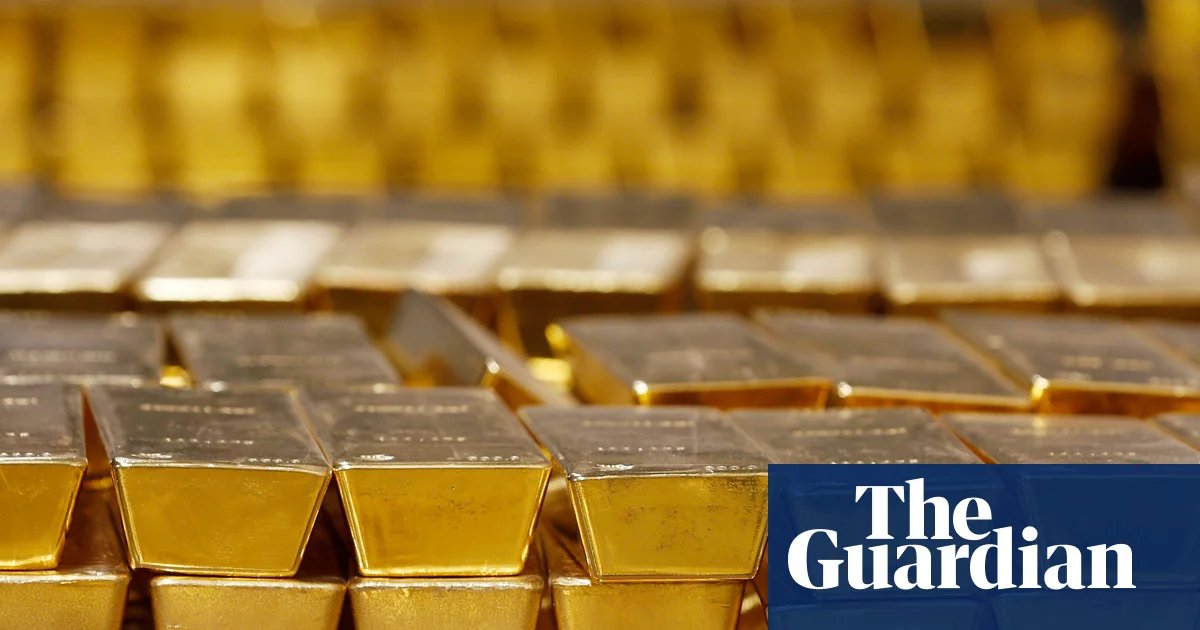
Fifteen minutes after takeoff, the call came for Serbia’s central bank governor: millions of dollars’ worth of gold bars, destined for a high-security Belgrade vault, had been left on the runway of a Swiss airport.
In air freight – despite the extraordinary value of bullion – fresh flowers, food and other perishables still take priority. “We learned this the hard way,” Jorgovanka Tabaković told a conference late last year.
Serbia’s is among a growing number of central banks to hastily amass vast stockpiles of gold, upending decades of conventional economic logic and fuelling an increase in the gold price amid mounting geopolitical tensions. As Washington challenges the US Federal Reserve’s independence, sending jitters through financial markets, the price soared to a record $4,643 (£3,463) an ounce this week, and analysts have tipped it to break $5,000 this year.
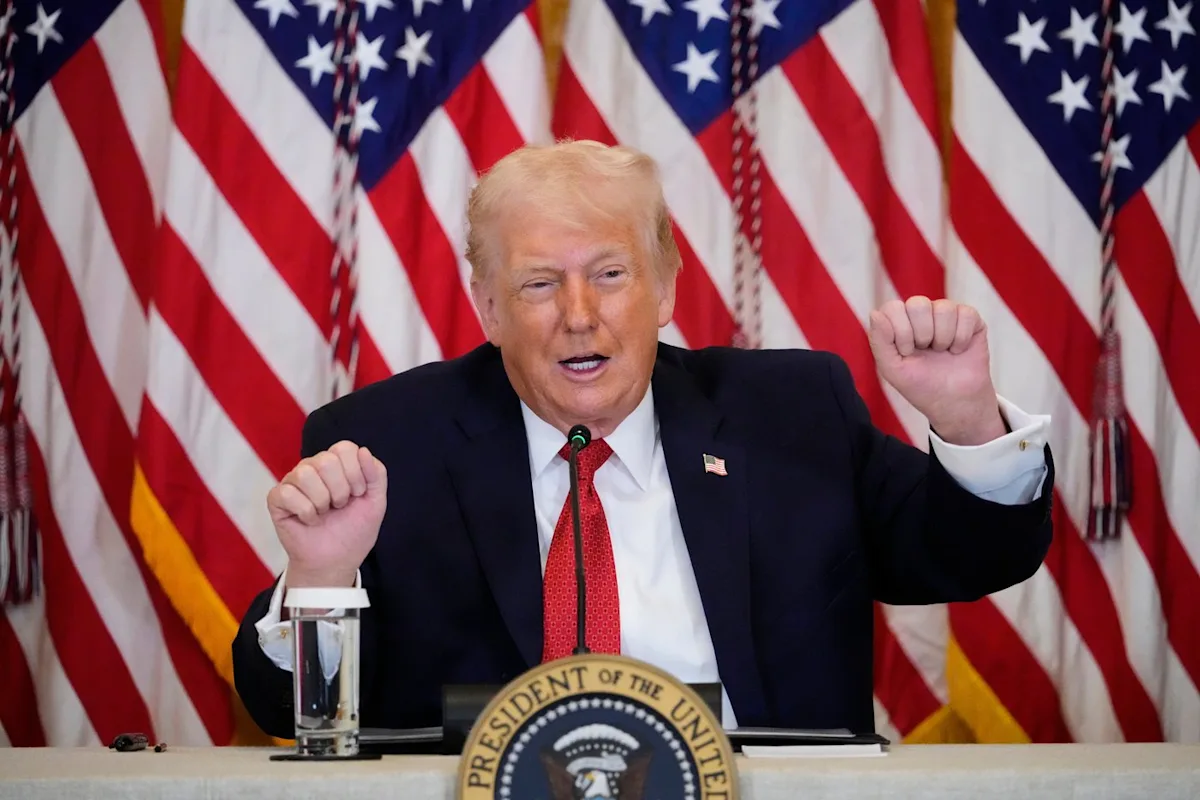
As Donald Trump shatters the global rules-based order, official institutions (and private investors) are scrambling to buy gold: the share of the asset in central banks’ reserves has doubled in the past decade to more than a quarter, the highest level in almost 30 years.
Although this partly reflects the soaring bullion price, experts say central banks are also stuffing their vaults as an insurance policy in a volatile world. Many are also rushing to repatriate gold stockpiles held overseas, and slashing their exposure to the US dollar.
“We have moved from Pax Americana to global discord, geopolitically. It is the law of the jungle when we see what the US are doing,” says Raphaël Gallardo, the chief economist at the asset manager Carmignac.
“Investors – private and sovereign – believe their strategic reserves are no longer safe in dollar terms, as they can be confiscated overnight. The dollar is losing the credibility as the nominal anchor of the global monetary system because the Fed is losing credibility, and US Congress is losing its credibility.”
Official reserves are a critical piece in the global monetary puzzle. Underpinning national currencies as a kind of safety fund, they are typically made up of currencies such as the dollar, euro, yen and pound, as well as gold, bonds and International Monetary Fund assets. They are used to help maintain investor confidence, and can be deployed to stabilise exchange rates in times of stress.
For much of the past century the dollar has been the primary reserve currency of choice; the grease in the wheels of global finance and the medium of exchange in the majority of world trade.
Historically, the monetary system pegged currencies to the value of gold – with countries committing to convert paper money to a fixed amount; reflecting millennia of obsession with the precious metal. However, the link for the dollar – and with it other currencies pegged to the US currency under the 1944 Bretton Woods agreement – was severed in the economic upheaval of the 1970s by the then US president, Richard Nixon. Since then, exchange rates have floated on international currency markets based on supply and demand.
However, the dollar’s status is dwindling; reflecting Trump’s erratic policymaking – including interference at the Fed and the fragile US public finances – as well as Washington’s readiness to deploy economic sanctions. This includes the targeting of Russian central bank reserves after Vladimir Putin’s invasion of Ukraine.
Still, the dollar is down but not out. From about 66% of total central bank reserves a decade ago, it has slipped to about 57%. Economists say this is because it lacks a clear alternative. Other fiat currencies – such as the pound, euro, yen or yuan – lack global scale. As a consequence, institutions are turning instead to gold – the world’s oldest reliable store of value.
As a case in point, in June last year – fuelled by the soaring bullion price – gold overtook the euro to become the world’s second-most important reserve asset after the dollar.
“There is no one to replace the dollar. So gold is shining by default,” Gallardo says. “People are returning to what [British economist John Maynard] Keynes called the ‘barbarous relic’, as it is nobody’s debt.”
According to a survey of 50 central banks by the asset manager Invesco, about half plan to increase their gold allocation. Two-thirds also plan to relocate bullion stockpiles they hold outside their borders back to domestic vaults for safekeeping.
“Gold has always been the ultimate safe haven. So in times of political uncertainty and instability you see gold spikes in terms of central banks. It’s a form of protection and a backstop if traditional fiat currencies fail,” says Rod Ringrow, the head of official institutions at Invesco.
“The last four years have seen this whole concept of the weaponisation of reserves, after the Russia-Ukraine conflict. So central banks have started to look at that and say: ‘If I want gold reserves, am I comfortable with them in-country, or at other depositories?’. We’ve seen a shifting pattern in that regard.”
Historically, many central banks have held their gold stockpiles in London, Switzerland and New York – the centres of the global bullion trade, with records of political and economic stability.
The Bank of England is the world’s most important hub. Serving about 70 official institutions worldwide, its vaults deep under London’s streets contain about 400,000 bars, worth more than half a trillion dollars.
The clamour for central banks to repatriate their gold – and the difficulties it can involve – has recently come to the fore: Venezuela has bars locked-up at the Bank of England worth $2bn, which it cannot access while the UK government refuses to recognise the Caracas regime. Russia has also threatened Belgium, where the bulk of Moscow’s frozen foreign-currency reserves are held.
Alongside Serbia, governments that have sought to repatriate their gold reserves include India, Hungary and Turkey. Poland has brought back hundreds of tonnes of gold bars that it transported to London, the US and Canada amid the outbreak of the second world war.
In the 2010s, Germany was an early pioneer of repatriation, amid political pressure to return thousands of tonnes of bullion from the US and France, where its reserves had been moved to because of fears of a Soviet invasion during the cold war.
Economists say the most prominent countries hoarding gold are typically those most exposed to geopolitical tensions. Central bank purchases rose by 10% in the year to September, according to the World Gold Council, led by Poland, Kazakhstan, Azerbaijan and China.
Beijing has been on a buying spree, amassing more than 2,000 tonnes – estimated to rank as the sixth largest in the world – in its attempts to rival Washington. Still, with more than 8,000 tonnes, the US is thought to be the world leader – even though the contents of its Fort Knox vault have not been officially audited since 1953.
Other countries have gone in the opposite direction. The UK government was a notable seller during Gordon Brown’s time as the Labour chancellor in the late 1990s and early 2000s – disposing of 401 tonnes of gold out of its 715-tonne holding – at a time when gold prices were historically low.
Some economists believe cryptocurrencies could grow in significance to rival traditional currencies and gold as a reserve asset. However, central banks have so far shown caution when it comes to a volatile and nascent market where security concerns remain, and where the most stable assets are still pegged to the value of the dollar or gold anyway.
Jonathan Fortun, an economist at the Institute of International Finance, says although gold is ascendant, and crypto could come next, few assets are yet to rival the dollar.
“I don’t think the dethroning of the dollar would be the main concern if we arrived to the stage where we were to be bartering in gold. That would be a second round effect – we’d have many other issues.”