dailynewsnblog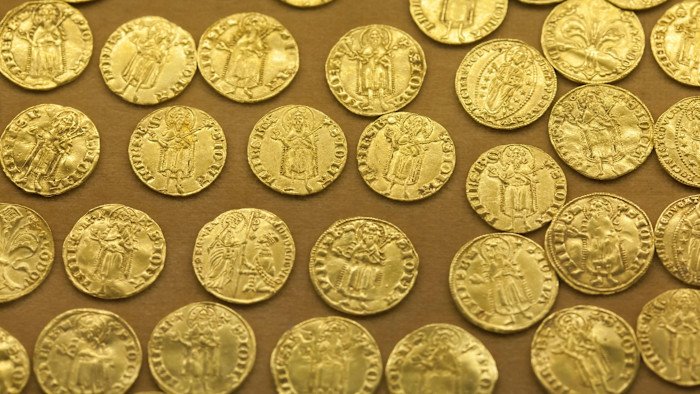
Unlock the Editor’s Digest for free
Roula Khalaf, Editor of the FT, selects her favourite stories in this weekly newsletter.
The writer is the author of the forthcoming The Almighty Dollar: 500 Years of the World’s Most Powerful Money
One of the many temptations of the study of economics is the lure of prediction. Gather enough data, and you can say what will probably happen. The more events you have, the better you’re able to predict. This can work with research on large datasets, such as the Nobel Prize-winning analysis from the late 1990s showing how the minimum wage had less of an effect on employment than theory had predicted.
The challenge comes when the dataset shrinks. It’s possible that the dollar’s absolute dominance as a currency is fading. It should be comforting that there have been other dominant currencies. We should be able to know when the end is near, and what’s coming next.
We do not know. We cannot know. Dominant currency regimes don’t come and go that often. We could count them on one hand, maybe two. We don’t know what will replace the dollar because the dollar is its own currency regime, unique in the way all currency regimes are.
Robert Mundell, who won an economics Nobel for work on the optimum area for a shared currency, argued that dominant currencies come from states with large domestic markets, consistent monetary policy, stable politics and open capital markets. For a currency to be great, its country must be, too.
More recently the economic historian Barry Eichengreen pointed out that great currencies came from republics, which could protect investors from rapacious kings. Gold florins and ducats were minted by Florence and Venice, for example. The guilder by the Dutch Republic. Or sterling. Or the dollar.
These rules are useful but not perfectly predictive; it’s possible to find exceptions. Saxony and Bohemia, for example, were not republics but together they conspired to make silver thaler the common currency of the early-modern Baltic. Imperial Spain was often unstable and never a republic, but the Spanish silver dollar was a standard money of account for both Atlantic and Pacific trade from the 16th to the 19th centuries.
And currency regimes have functioned quite differently. The gold florin became a standard in the late 13th and early 14th centuries when bankers in Florence developed merchant banking, using bills of exchange to move value around Europe. They sent their agents and often their coins to England, Germany and the Low Countries. The Dutch guilder became a standard in the 17th century when Amsterdam became a centre for writing and clearing bills of exchange for Atlantic and Baltic trade. The balance sheet of the Bank of Amsterdam served as a single common ledger for payments among merchants, backed 100 per cent by deposits of silver and gold coins. The gold florin and the bank guilder were both stable currencies created by republics. But they rested on two completely different financial regimes.
In the 18th century, the Bank of England adopted another model — expanding its supply of pounds sterling by buying both state debt and merchant loans. Its notes were convertible to gold on demand but unlike the Bank of Amsterdam, not completely backed by gold. This proved far more flexible, allowing the Bank of England to learn, over time, how to protect the UK’s merchants and commercial banks by expanding its balance sheet in an emergency.
America’s Federal Reserve, like the Bank of England, has had to learn how to lend dollars to the world in a panic. But it, too, rests on a different financial arrangement. In the years that sterling was a dominant currency, the UK ran a capital surplus — it lent to the world. The US, by contrast, borrows from the world. Two dominant, stable empires, two different currency regimes.
This leaves us poorly served to see what the next regime is going to look like. Neither China nor Germany seem like they’ll ever be willing to borrow as much as the US has, for example. China seems unlikely to open up its capital markets. The European Central Bank doesn’t seem likely to act as the lender of last resort outside of Europe. All this tells us, though, is that Europe and China won’t produce a dominant currency exactly like the US dollar.
It’s possible, for example, that China could keep its capital markets tightly controlled and maintain a surplus, but build out currency swap lines to protect offshore yuan deposits. Or that America could become less stable and less free, but offshore dollars could continue to lurch along under the protection of the Fed. There are no enduring, permanent rules for dominant currencies. To believe that there are is to assume there have been enough of them to know them perfectly. No currency regime has been exactly like the last one. The next one won’t be, either.