dailynewsnblog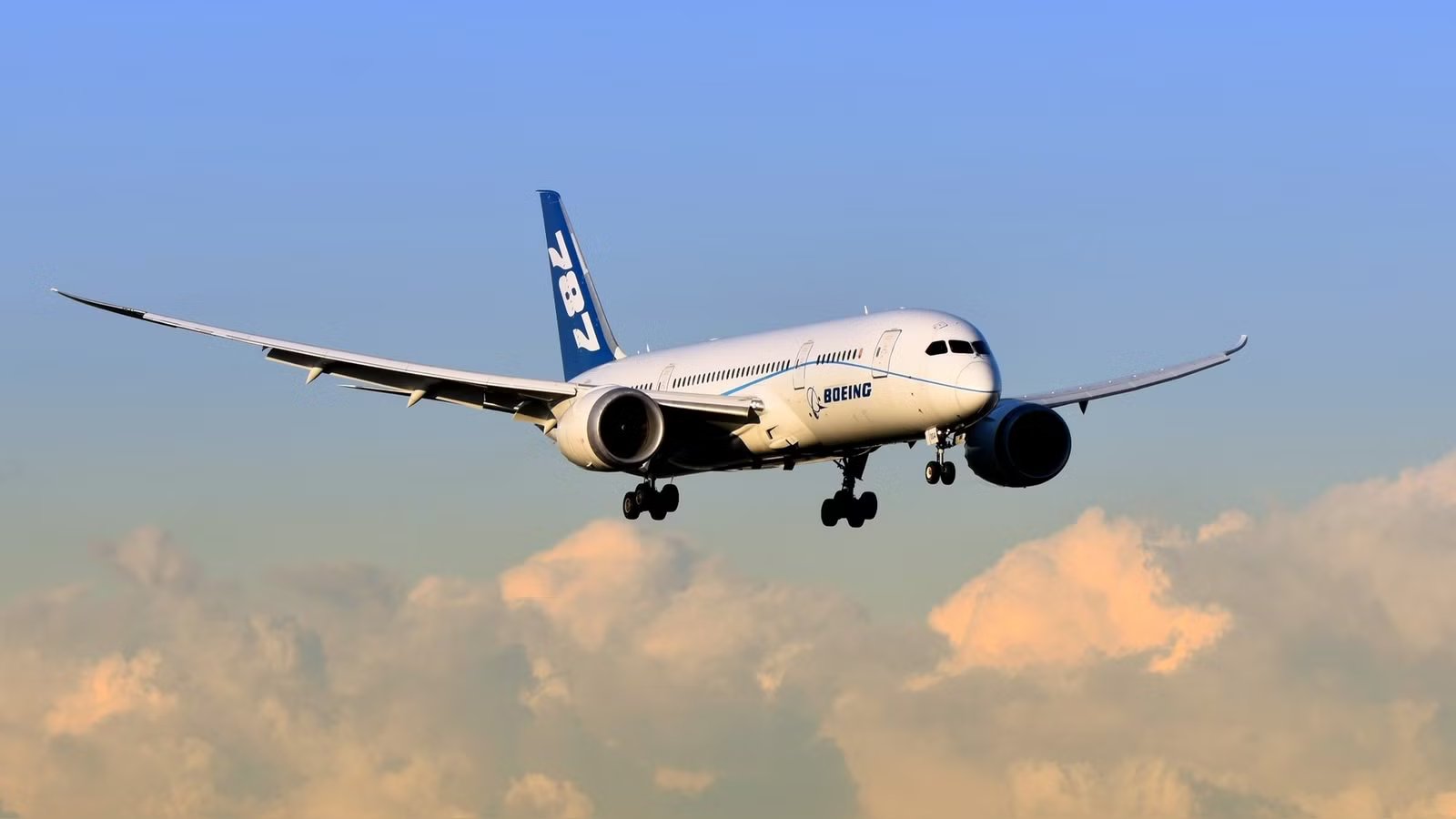
There are aircraft that earn their reputation by hauling millions of passengers across oceans. And then there are aircraft that become legends precisely because they never do. The Boeing 787-8 with registration N7874 is the latter: a Dreamliner that was created for an airline that vanished into a merger, inherited by another that never wanted it, and ultimately transformed into one of Boeing’s most useful flying laboratories.
Now, after over 16 years as a propulsion and technology workhorse, N7874 is bowing out.  Boeing will hold some internal farewell events, including low-altitude flyovers at Everett Paine Field and Boeing Field King County International Airport as a tribute to the thousands of engineers who worked on the 787 program. But the story is a tidy aviation paradox: the “Delta Dreamliner” that never entered service may have done more to shape the 787 program than any of the jets that did.
From Northwest’s Future Flagship To Boeing’s Flying Lab

N7874 was the fourth 787 ever built, and was originally intended to become part of Northwest Airlines’ much-hyped 787-8 fleet. Northwest had placed a firm order for 18 787-8s in 2005, positioning itself to be a Dreamliner pioneer. But as the 787 program’s development delays mounted, Northwest disappeared into its 2008 merger with  Delta Air Lines, and the strategic logic behind the original order dissolved.
As Delta vacillated over the unwanted 787 orders it had inherited, Boeing pivoted and added N7874 to its fleet of six 787-8 test aircraft. Its early résumé included high- and low-elevation performance trials and other certification work, before its second act as a long-term Boeing-owned testbed began in earnest.
|
The Six Boeing 787 Test Aircraft |
||
|
Registration |
Rolled Out |
Current Status |
|
N787BA |
July 2007 |
The first Dreamliner to fly on December 15, 2009, it is now on display at Chubu Centrair International Airport in Nagoya, Japan. |
|
N787EX |
June 2009 |
Conducted general systems testing. It is currently preserved at the Pima Air & Space Museum in Tucson, Arizona. |
|
N787BX |
June 2009 |
Used for interior and marketing “Dream Tour” flights. It is on display at the Museum of Flight in Seattle. |
|
N7874 |
June 2009 |
Served as Boeing’s long-term propulsion and technology workhorse until it was decommissioned in February 2026. |
|
N787FT |
July 2009 |
Used for additional systems and battery testing. It was eventually dismantled for parts and recycling. |
|
N787ZA |
July 2009 |
The final flight-test aircraft for the 787-8, powered by GE engines. It was eventually sold and converted into the Mexican Presidential aircraft. |
That second act is now coming to an end, as the legendary aircraft has been retired and will head to long-term storage at Pinal County Airpark in Marana, Arizona. Captains Heather Ross and Craig Bomben, who conducted the jet’s maiden flight back in 2009, will also carry out this final farewell flight, with the ultimate fate of the aircraft still to be decided.
As for the Delta connection, the airline formally canceled the inherited Northwest order in December 2016, closing the book on a fleet plan it had never embraced. Ironically, it would be nearly a decade later that the Atlanta-based airline would return to Boeing for its first Dreamliners, placing an order for 30 of the larger 787-10s (with 30 options) in January this year.
A Greener Dreamliner, One Experiment At A Time

The bulk of Boeing’s fleet of 787 test aircraft were retired or sold in 2011-12, once certification was complete and the first 787-8 had entered commercial service with All Nippon Airways. But not N7874. It had become a machine too valuable to retire quickly, too specialized to hand off easily, and too instrumented to be converted into just another passenger jet. So it was that in 2014, N7874 was selected to join the Boeing ecoDemonstrator program, transforming the aircraft into a platform for testing technologies aimed at improving efficiency, reducing fuel burn, and cutting emissions and noise.
Among the concepts evaluated were advanced software and connectivity upgrades designed to streamline operations, fuel load optimization software to reduce fuel burn and emissions, remote sensors to reduce wiring weight, and multiple aerodynamic refinements. The aircraft even tested icephobic wing coatings — materials designed to reduce ice accumulation and improve both safety margins and operational efficiency in cold-weather environments.
Rather than delivering a single breakthrough, the ecoDemonstrator campaign helped validate more than 25 individual technologies aimed at incrementally reducing fuel use, emissions, and noise. These would go on to be adopted across 787 fleets worldwide, all contributing to long-term efficiency gains. For an aircraft that never entered airline service, N7874 played a quiet but highly influential role in shaping a more sustainable Dreamliner program, and for Boeing, a more competitive aircraft.

What Aircraft Does Boeing Own & Operate?
The US manufacturer maintains a fleet of 25 aircraft for a diverse range of purposes.
Rewriting the Trent 1000 Story

N7874’s primary mission would adapt over the years, becoming increasingly centered on propulsion development. From 2017, the aircraft flew as a dedicated flying testbed for the Rolls Royce Trent 1000 engine family, supporting performance improvements, and later, durability-focused upgrades aimed at resolving “time-on-wing” issues that affected earlier Trent 1000 models.
One of its most widely recognized missions took place in August 2017, when the aircraft conducted an 18-hour endurance flight as part of ETOPS-related testing for the Trent 1000 TEN variant. The flight path famously traced the outline of a Dreamliner across the United States — an engineering exercise that doubled as an unexpected viral moment for aviation enthusiasts.
In later years, the aircraft supported further refinement work, including durability enhancement packages designed to extend maintenance intervals and improve operational reliability. Most recently, the aircraft tested the Trent 1000 XE upgrades, which feature redesigned high-pressure turbine (HPT) blades with 40% better cooling. The durability package aims to triple the time an engine can remain on the wing before requiring maintenance, and last year N7874 completed 34 tests over 32 flight days to finalize aircraft-level certification.
During its lifetime, N7874 logged over 3,000 flight hours and performed more than 1,200 test cycles. Unlike a commercial jet that flies in straight lines, almost every hour N7874 spent in the air involved extreme maneuvers, engine restarts in midair, or testing in unfavorable weather conditions. But as the aircraft retires, it leaves behind a Dreamliner fleet that is significantly strengthened and enhanced by its efforts, proof that even an airliner that never carried a single paying passenger can leave a lasting mark on aviation.