dailynewsnblog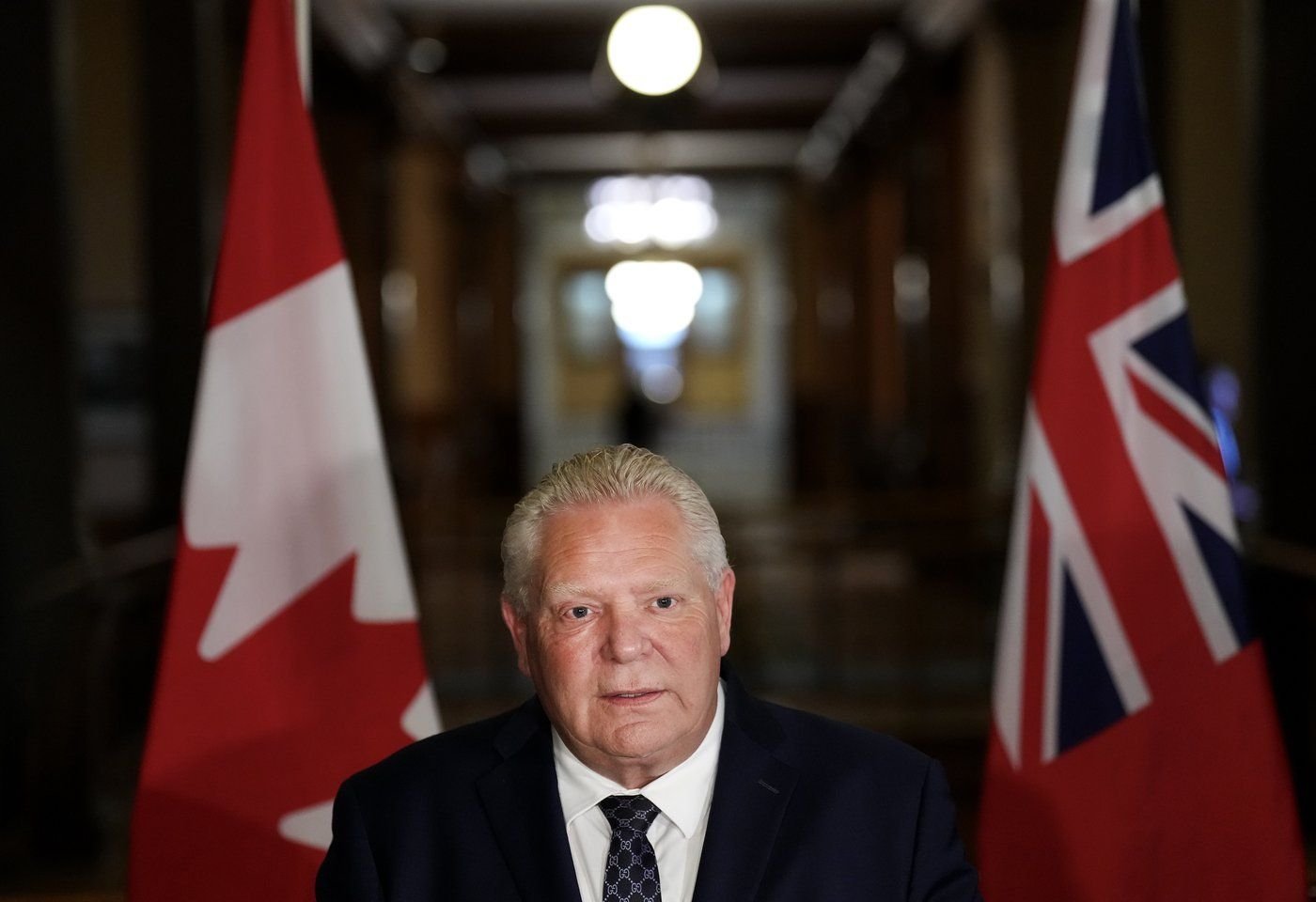
In this week’s edition of Adjournment Proceedings, we look at the why behind some of Ontario Premier Doug Ford’s recent moves that have drawn criticism from across the political spectrum.
Welcome back to Adjournment Proceedings, our weekly long read series. We publish a new edition every Friday. In this week’s edition, we look at the why behind some of Ontario Premier Doug Ford’s recent moves that have drawn criticism from across the political spectrum.
Missed a week? Take a look through our archives here.
Premier Doug Ford has spent the first months of 2026 making a series of politically risky decisions.
Now, this shift is beginning to show up in the numbers.
An Abacus Data poll puts Ford’s Progressive Conservatives at 39 per cent, down five points in a month and their lowest level of support in nearly two years. At the same time, 51 per cent of Ontarians now say it’s time for a change in government, an uptick that suggests soft support is also fading.
At the centre of that slide is a growing perception that Ford is moving away from the political identity that once defined him: accessible, responsive, and anti-establishment.
Instead, critics say, he is consolidating power.
The FOI overhaul: control vs. transparency
The most politically damaging move so far has been Ford’s proposed changes to Ontario’s Freedom of Information laws.
The government plans to exclude records from the premier’s office, ministers, and political staff from public access requests, a significant departure from existing transparency rules.
Opposition leaders, including Marit Stiles and Mike Schreiner, have framed the move as an attempt to shield decision-making from scrutiny. Even groups like the Canadian Taxpayers Federation have raised concerns.
“Ontarians deserve to know who is making decisions and whose interests are being served, not have that information locked away,” Stiles said.
Schreiner struck a similar tone, linking the proposal to past controversies that have already raised questions about transparency within the Ford government, like the Greenbelt.
“When a government moves to limit access to information, it raises serious red flags,” he said. “People have a right to know what’s happening behind closed doors, especially after everything we’ve seen.”
The political risk is clear: the change cuts directly against Ford’s brand.
He has long positioned himself as a premier who answers his own phone and deals directly with constituents. Restricting access to internal communications raises a simple (and politically potent) question: what is he trying to hide?
Ford’s defence has been rooted in privacy. He says that Ontarians routinely share sensitive personal information with him and that releasing records could expose confidential details.
“Every personal problem people have, they call me, I feel like a psychologist every day trying to solve everyone’s personal issues,” Ford said last month.
Erin Morrison, a longtime NDP strategist, said the optics alone could be devastating.
“For Premier Doug Ford to change the rules to hide his emails, expenses and phone records is a horrifically bad look, it’s going to have Ontarians wondering what he’s trying to cover up. Accusations of corruption and investigations are already dogging him, and this brings the conversation in Ontario right back to those topics. It’s a huge public relations risk, and one wonders why he’s so eager to take it,” she said.
Expanding “strong mayor” powers: centralizing authority
Another key pillar of Ford’s 2026 agenda is the continued expansion of so-called “strong mayor” powers, now teamed up with appointed regional “strong chairs.”
The proposed legislation would allow the province to appoint heads of regional municipalities and grant them enhanced executive authority, mirroring powers already extended to big-city mayors. The chairs will be appointed to eight jurisdictions: Durham, Halton, Muskoka, Niagara, Peel, Waterloo, York, and Simcoe County.
Supporters inside the government argue this is about speeding up housing and infrastructure approvals, cutting through what they see as slow, fragmented local governance.
“Where perhaps a local mayor gets stuck on the local politics, a regional chair is going to be looking at a much broader way,” Mayor of Barrie Alex Nuttall said. “That makes a lot of sense… to ensure that the regional voice is being heard.”
Critics, however, see something else: a steady erosion of local democracy.
“We have no sense of how he’s going to be picking these people,” NDP Leader Marit Stiles said. “We’ve seen the track record of this government; their appointments are almost always failed conservative candidates.”
By concentrating decision-making power in fewer hands, aligned with provincial priorities, the government can more easily push through its housing agenda. But it also risks backlash from municipalities and voters who feel sidelined.
Municipal Affairs Minister Rob Flack says the move will bring “more efficient, streamlined, regional decision-making.” The new strong chairs are like “a chair of the board, so the directors will be the elected officials. (…) Democracy is alive and well,” he said.
Infrastructure and cost pressures
Ford’s government is also doubling down on major infrastructure projects, even as costs and delays continue to mount.
Ford’s government is also doubling down on major infrastructure projects, even as costs, environmental concerns, and political scrutiny continue to mount.
That includes Highway 413, a proposed 52-kilometre corridor through Halton, Peel and York regions that has become one of the most polarizing files at Queen’s Park. The government argues the highway is essential to ease congestion and support growth, but critics say it cuts through environmentally sensitive land and benefits well-connected developers.
Similarly, the Bradford Bypass, linking Highways 400 and 404, has drawn criticism from environmental groups and urban planners who question both its ecological impact and whether it meaningfully addresses long-term traffic congestion.
On the transit side, projects like the Ontario Line, the Scarborough Subway Extension, and the Yonge North Subway Extension are being sold as transformative investments, but not without controversy.
The Scarborough subway project, in particular, has faced years of criticism over its rising costs and shifting scope, with some transit advocates arguing that earlier light rail plans would have delivered more service for less money. The Ontario Line, while broadly supported, has sparked community concerns over construction disruption and route impacts, while the Yonge North extension raises ongoing questions about capacity constraints further south on the line.
And then there is the government’s more speculative ambition: a tunnel expressway under Highway 401, a proposal that has drawn skepticism from experts who warn it could become one of the most expensive infrastructure undertakings in Canadian history, with unclear returns.
University of Toronto professor Matti Siemiatycki has warned about the growing price tags and execution risks associated with these kinds of megaprojects, particularly when multiple are pursued simultaneously.
“If people can’t believe that governments can deliver these projects effectively, then they won’t support them,” he said.
More recently, the government has also signalled openness to changes around Billy Bishop Toronto City Airport, including proposals that could expand its role or reconsider long-standing restrictions.
The province plans to designate the airport a “Special Economic Zone” using powers under Bill 5 to expedite construction of the airport by streamlining approvals, “while maintaining robust safety and environmental protections.” This would allow development expanding the runway for larger jets to bypass existing municipal and provincial regulations.
In March, Ford announced that the province was taking over the city-owned land because “lefties” on city council don’t want to modernize or grow the airport.
Billy Bishop is governed by a tripartite agreement consisting of the federal government, the federally mandated port authority and the city, each of which owns a portion of the airport land, but since the province ultimately has constitutional authority over municipalities, Ford has the legal upper hand.
NDP Leader Marit Stiles was quick to respond.
“I think this is an example of exactly what we feared the government would do using those extra powers that they’ve given themselves, is to meddle once again in areas that they have no jurisdiction over,” she said.
But one long-time conservative organizer said that the political logic is straightforward: infrastructure wins elections when it’s seen and used. Highways can be driven on, subways can be ridden, and construction itself signals progress.
But the risk for Ford is that delays or ballooning costs could turn those same projects into symbols of overreach, especially if voters start to question transparency and decision-making at Queen’s Park.
The post-secondary backlash
Not all of Ford’s political challenges stem from cuts or restrictions.
In one of the more counterintuitive moments of 2026, the government committed billions, roughly $6.4 billion, to Ontario’s struggling post-secondary sector. But the catch to students was that the government also made changes in the OSAP system, such as reducing the grant portion from 85 per cent to 25 per cent, as well as allowing tuitions to increase.
Former Liberal MPP John Milloy put it: “Doug Ford has a problem. He just invested $6.4 billion into Ontario’s starving post-secondary sector, and students and their parents are madder than hornets. My wild guess is that this is not the outcome that he wanted.”
Premier Ford, who likes to associate his image with affordability and popular measures to reduce the cost of living, now has some explaining to do, Morrison said.
“The cost of living is out of control. We still have huge issues in health care and housing, and we haven’t seen the success that Ford promised,” she said.
Why now?
Taken individually, each of these decisions can be defended on policy grounds: privacy, efficiency, housing supply, economic growth. But together, they point to a broader shift in strategy.
Ford appears to be moving from a politician focused on personal connection to a centralizing executive focused on delivery and control.
There are a few reasons why, says a longtime PC organizer.
With the Liberals still leaderless and opposition attention split, Ford may see a window to push through difficult reforms before political competition intensifies. He is also at the beginning of his new term after winning a majority, and still far from the next election, which might give voters time to “forget” some of the most unpopular decisions.
If his government can deliver on housing and infrastructure, voters may overlook concerns about transparency and governance.
But if those results don’t materialize, or if new controversies emerge, the decisions he’s making now could define the narrative heading into the next election.
Right now, the early signs suggest Ontarians are starting to take notice.
If economic conditions worsen, especially in manufacturing regions Ford has promised to protect or if we see a worsening of Ontario’s EV market, the vulnerability grows.
“He set himself up with that frame, like he could fix it” Coletto said. “If he’s successful, he gets another mandate. If not, people may look for an alternative.”