dailynewsnblog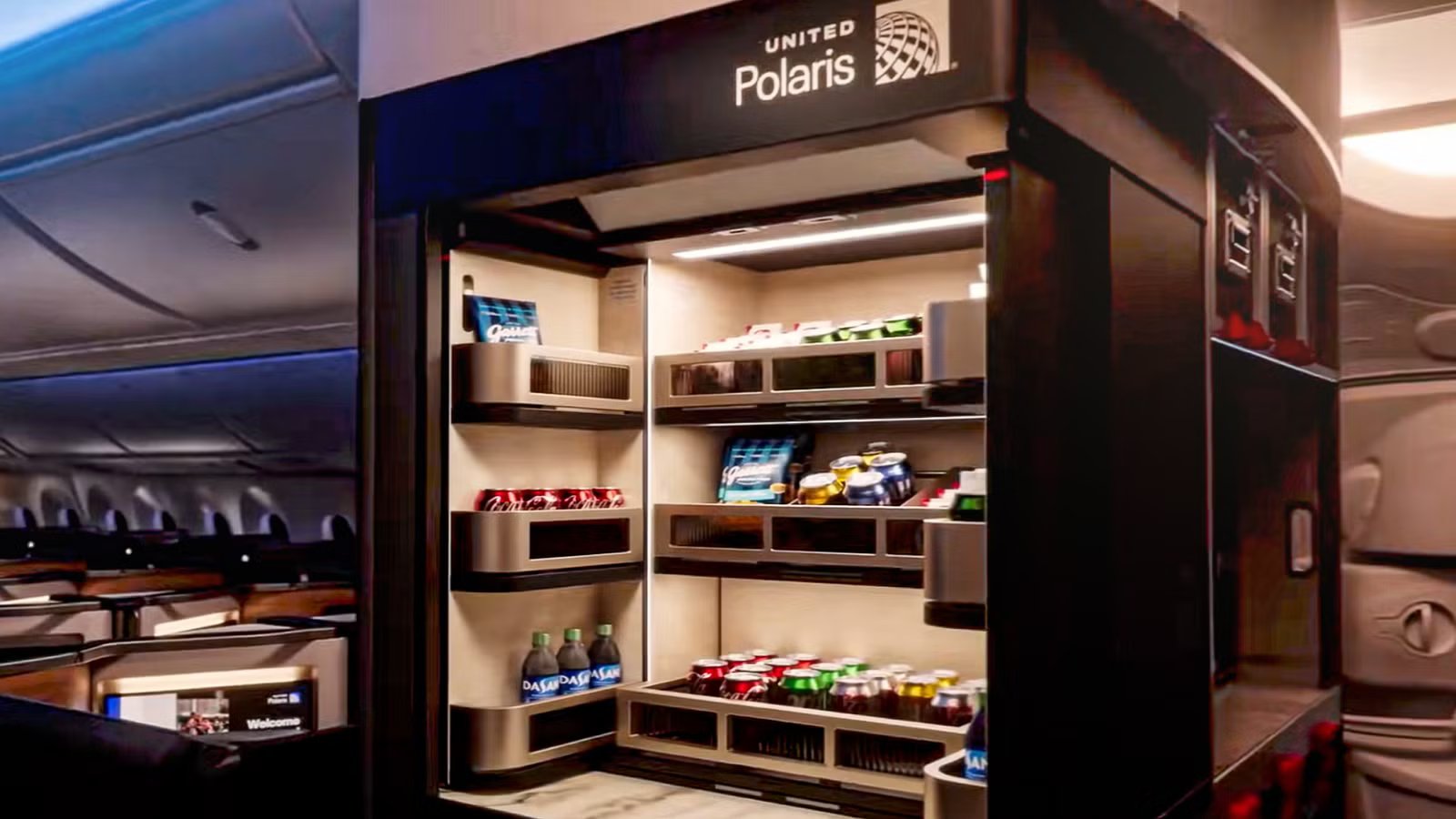
 United Airlines is making a significant move to reclaim its position as a leader in international luxury with a bold new configuration for its Boeing 787-9 fleet. This premium-heavy layout is designed specifically for the world’s most lucrative long-haul corridors, where the demand for high-end space often beats the supply. By introducing brand-new inflight hardware, including an exclusive Polaris Studio and a dedicated social snack bar, the carrier is signaling a shift away from high-density packing toward a more refined, service-oriented travel experience.
This guide provides a comprehensive look at the features that have sparked plenty of discussion and excitement. For travelers frequenting the competitive routes between the US and beyond, these additions represent a much-needed evolution in the American long-haul product. As United begins to roll out these internal upgrades, it is clear that the focus is now on providing a level of privacy and amenity that can compete with the world’s best 5-star airlines.
Continuing The Polaris Story

The centerpiece of the new United Elevated cabin is the Polaris Studio, a brand-new business-plus product located in the first row of each business class section. This sub-fleet of Boeing 787-9 aircraft features eight of these exclusive suites, arranged in a 1-2-1 configuration to ensure all-aisle access. Through utilizing the extra footprint found at the cabin bulkheads, the airline has created a tier of service that sits between traditional business class and a true first class experience, targeting travelers who demand maximum privacy.
The Polaris Studio offers a 25% larger living space compared to the standard Polaris seat, primarily due to the integrated sliding doors and an expansive footwell. The hardware is anchored by a 27-inch 4K OLED touchscreen, the largest currently offered by any US carrier, and features advanced digital seat controls and wireless induction charging. The suite serves as a highly functional office in the sky, complete with multiple USB-C ports and the capability to pair personal Bluetooth headphones directly to the high-definition entertainment system.
The Polaris Studio introduces a level of soft product luxury previously unseen on United. Passengers in these suites receive an exclusive Ossetra caviar amuse-bouche service paired with Laurent-Perrier Cuvée Rosé champagne, as well as upgraded amenities like hoodie-style pajamas and a plush velvet throw pillow. A unique design feature is the integrated ottoman with a seatbelt, which allows a second passenger to join the suite for a companion meal or a mid-flight meeting. This addition transforms the seat from a solitary pod into a social and collaborative space, a significant differentiator for the airline’s most premium clientele.
New Service Ideas

A significant shift in the cabin architecture of the premium-heavy Boeing 787-9 is the inclusion of a dedicated, self-service snack bar. This space is designed as a social hub for business class passengers, moving away from the traditional model where refreshments are hidden in the galley. The area features a walk-up counter with integrated refrigeration, allowing travelers to grab chilled beverages, high-end snacks, or fresh fruit at any point during a flight without having to signal a flight attendant.
The design of the snack bar utilizes custom mood lighting that adjusts based on the phase of the flight. The intent here is to replace a section that would typically house several economy seats or storage closets, suggesting United’s commitment to the United Elevated brand over sheer passenger volume. The storage units are stocked with a curated selection of international snacks as well as premium chocolate and savory options that cater to a global palate.
|
Feature |
New Onboard Snack Bar |
Standard Boeing 787 Galley |
|
Accessibility |
24/7 Walk-up Access |
Call Button |
|
Beverage Options |
Chilled Self-Service Fridge |
Crew Served |
|
Design Integration |
Custom LED Social Lighting |
Standard Fluorescent Task Lighting |
|
Space Utilization |
Dedicated Social Zone |
Operational Work Area |
This addition is particularly valuable for the ultra-long-haul routes to East Asia, where the human body’s circadian rhythm often leads to irregular hunger patterns. By providing a low-pressure environment for passengers to stand and stretch while refueling, the airline is addressing the physical fatigue associated with sitting for ten or more hours. The snack bar serves as a functional third space that breaks the monotony of the cabin, making the journey feel shorter and more manageable. Currently, San Francisco to Singapore remains the only confirmed transpacific route for the new product, but more are expected to follow.

When Did United Airlines Introduce Premium Plus?
With plenty already on offer, United Airlines decided to add a product with the aim of reinventing the perception of value.
Maximizing Premium Seating

United has made a considerable strategy change, moving to a premium-heavy 222-seat configuration, sacrificing volume for high-yield revenue. This specific Boeing 787-9 layout features 64 Polaris business class seats and 35 Premium Plus seats, accounting for nearly 45% of the total aircraft capacity. Economy class, therefore, had to be cut massively, removing 65 seats compared to the standard international configuration. This shift proves that this is a strategy aimed at ultra-long-haul routes where corporate demand and high-spending leisure travelers are the primary drivers of profitability.
By prioritizing premium real estate, United now offers 99 premium seats on a single aircraft, the highest percentage of any US carrier on a widebody jet. The business cabin is a 1-2-1 arrangement across 16 rows, while the Premium Plus cabin remains in a 2-3-2 configuration. A technical highlight for enthusiasts is the new ‘double’ seating arrangement in rows 9 through 17, which is perfect for couples. These center seats angle away from the aisle, allowing for a double bed configuration when the privacy divider is lowered.
However, this elevated approach presents a clear downside for the budget-conscious traveler and the environment. The removal of over 60 economy seats naturally restricts the supply of lower-cost tickets, likely leading to higher fares on key routes. Furthermore, a lower-density aircraft typically carries a higher carbon footprint per passenger, as the fuel burn remains largely the same while fewer people are being transported. The Polaris Studio and social zones are definitely impressive, but they come at the cost of accessibility, essentially pricing out a segment of the market that once relied on United’s high-capacity Dreamliner fleet.
Strategy Behind The Selection

The deployment of the United Elevated fleet is far from a random selection of routes. By selecting  San Francisco as the primary launch hub, the airline is positioning its flagship hardware in a market with a unique concentration of high-yield corporate travelers from Silicon Valley. The initial confirmed routes to
  Singapore and
  London Heathrow serve as two distinct proofs of concept: One testing the aircraft’s endurance, and the other defending a high-value business artery against fierce transatlantic competition.
For the SFO to Singapore route, the move to a 222-seat configuration is a technical necessity as much as a luxury upgrade. At nearly 8,500 miles, this is the longest of the announced routes and often faces significant payload restrictions on the standard, higher-density 787-9. By removing 65 economy seats, the airline significantly reduces the aircraft’s takeoff weight, which improves fuel efficiency. This allows United to fly a full cabin year-round while offering a product that can finally compete with the legendary nonstop service provided by  Singapore Airlines.
|
Route |
Distance |
Approx. Flight Time |
Key Competition |
|
SFO – Singapore (SIN) |
8,440 miles |
17 hours 15 mins |
Singapore Airlines |
|
SFO – London (LHR) |
5,350 miles |
10 hours 30 mins |
British Airways, Virgin Atlantic |
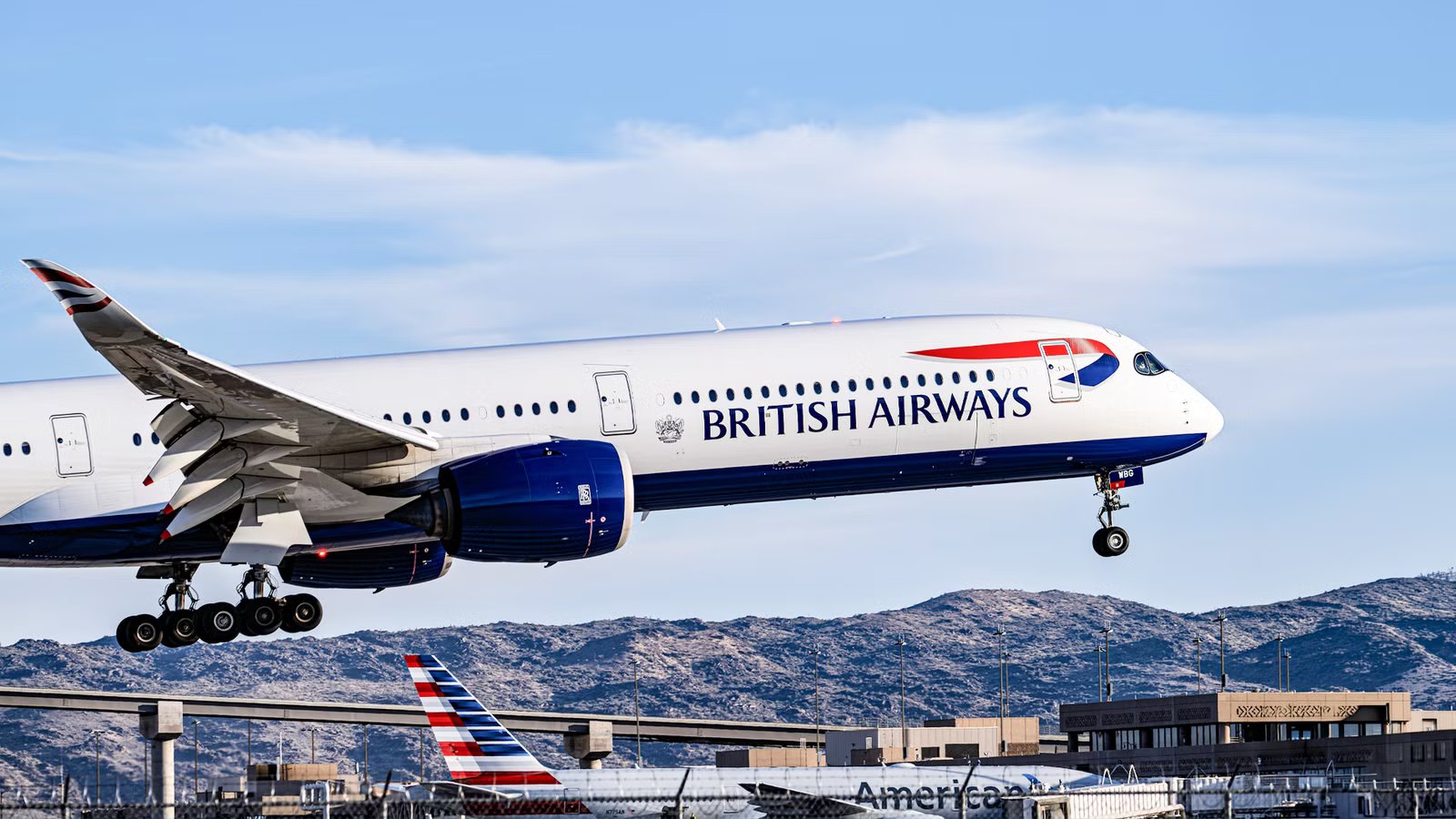
The SFO-LHR market is one of the most profitable globally, but it is also one where United faces intense pressure from  British Airways and Virgin Atlantic, both of which have recently refreshed their business class cabins with privacy doors. Deploying the premium-heavy Dreamliner here allows United to match the competition’s hardware while increasing the total number of premium seats available on the route. Long-term, these aircraft are expected to replace the aging Boeing 767-300ER fleet, which has historically been the primary option for United’s premium transatlantic service.

The New United Airlines Long-Haul Aircraft Coming In 2026
A look at the new United 787s with the “Elevate” interior and how they fit in the airline as well as in the industry.
Office-Like Connectivity

A frequent concern for travelers on 17-hour routes like San Francisco to Singapore is whether they can remain truly productive or entertained over the vastness of the Pacific Ocean, where there is little connectivity. Satellite WiFi on these sectors has been plagued by high latency and intermittent connectivity, making real-time collaboration or high-definition streaming nearly impossible once the aircraft leaves the coastline. United is addressing this by integrating Starlink high-speed, low-latency internet into its United Elevated fleet, marking a significant departure from the slower, legacy satellite systems used by its domestic competitors.
This system utilizes a constellation of low-Earth orbit satellites to provide broadband speeds that function gate-to-gate, even in the most remote corners of the globe. Unlike traditional geostationary satellites that orbit at 35,000 km, Starlink satellites are positioned at roughly 550 km, reducing latency from over 600 ms to as low as 25 ms.
The promise of office-like connectivity is a major selling point, but the transition to Starlink represents a massive capital expenditure for the airline. The speed is impressive for an inflight service, but the free model could lead to network congestion if all 222 passengers attempt to stream high-bandwidth content simultaneously. The installation of these electronically steered antennas requires the aircraft to be taken out of service for extended maintenance periods, which can disrupt scheduling for the still-limited new fleet.
Blueprint For The Future

The potential success of the new 787-9 configurations may well serve as a blueprint for United Airlines’ order book of 140 Boeing 787 aircraft. If this premium-heavy layout proves profitable on the initial routes, the carrier will likely adopt this standard across its future long-haul deliveries. This would therefore mean a permanent pivot away from high-capacity, coach-heavy operations as United seeks to cement its position as the primary US carrier for the global corporate elite.
For travelers, this shift toward premium real estate creates a new reality for upgrade availability and award pricing. With 65 fewer economy seats and a significantly higher concentration of Polaris inventory, the traditional ‘Saver’ level award in business class may become harder to find on flagship routes. Securing a seat in the Polaris Studio or standard suites will likely require booking months in advance or strategically leveraging PlusPoints during mid-week windows when business demand is lower.
A challenge for United is to reconcile this pursuit of luxury with its public net-zero sustainability commitments. A lower-density aircraft inherently increases the carbon footprint per passenger, a metric facing increased regulatory scrutiny in international markets. While investments in sustainable aviation fuel and weight-saving Starlink hardware help mitigate this impact, the optics of a premium-heavy fleet remain challenging.