dailynewsnblog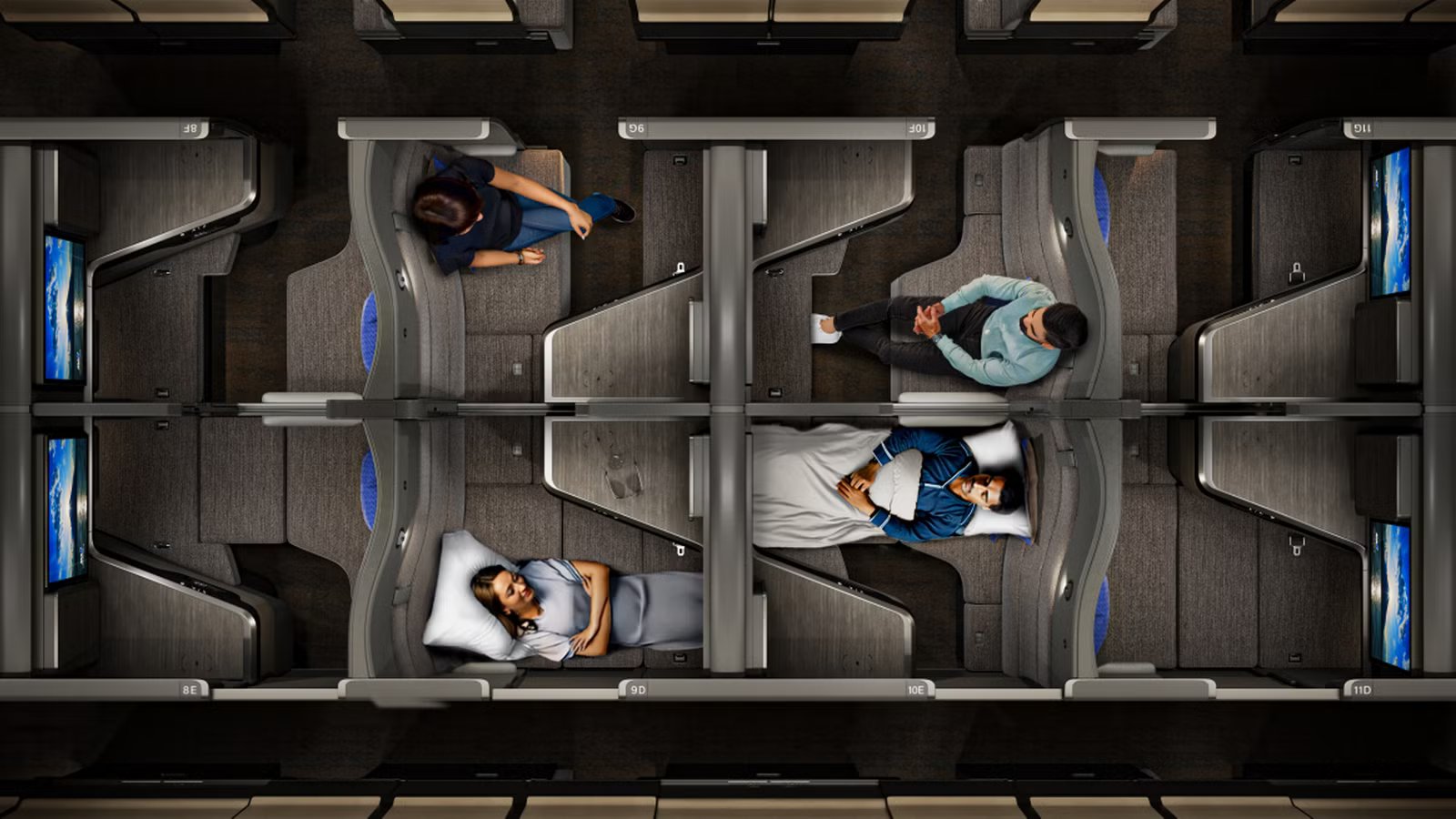
The landscape of premium air travel is undergoing a radical transformation, as global carriers move beyond simple flatbeds to offer fully immersive, private sanctuaries. This year marks a significant milestone in cabin engineering, with major airlines rolling out entirely new or heavily retrofitted business class products that prioritize personal space and high-end residential aesthetics. This guide provides a technical breakdown of the most anticipated seat launches of the year, detailing the specific aircraft, configurations, and hardware innovations that are setting a new industry standard for long-haul comfort.
The shift toward these sleek designs is driven by a convergence of passenger demand for privacy and the arrival of next-generation aircraft like the Airbus A321XLR and the long-awaited Boeing 777X. While some carriers are choosing to retrofit existing fleets to remain competitive, others are using 2026 as a platform to launch entirely new brand identities, such as the highly anticipated debut of  Riyadh Air. These advancements signal substantial changes for travelers and enthusiasts alike, as the choice of aircraft now dictates the quality of the journey more than the airline’s name alone.
A Mini First Class?

The most significant trend in 2026 is the near-total disappearance of the traditional business class seat in favor of fully enclosed suites. Pioneered by early adopters, the industry has now standardized features like sliding privacy doors and 1-2-1 configurations that ensure every passenger has direct aisle access. These designs prioritize perceived space, using slimmer structural elements and integrated storage to provide more room without increasing the cabin’s physical footprint.
 Qatar Airways continues to lead this charge with its Qsuite Next Gen, which is being rolled out across its Airbus A350-1000 and Boeing 777 fleets this year. The design features taller, digitally controlled dividers and a ‘Make My Bed’ setting that simplifies the turn-down service. This almost mini first class approach is intended to capture high-yield travelers who want the privacy of a premium cabin at a business class price point.
Cathay Pacific’s Aria Suite has also become a benchmark for elegance in 2026. Featuring a privacy door and a sliding partition, the suite uses a calming color palette and curated artwork to create a residential feel. Technologically, it is among the most advanced in the sky, offering ultra-high-definition IFE screens and customizable ambient lighting that adjusts to the phase of flight.
A Masterclass In Cabin Refinement

Moving toward the East, the Japanese giants All Nippon Airways and Japan Airlines are redefining cabin aesthetics through a lens of minimalist luxury. These carriers are focusing on the true suite experience, specifically on long-haul routes connecting Tokyo to major European and North American hubs. By utilizing clean lines and neutral tones, both airlines aim to reduce the sensory overload often associated with international travel, providing a seamless transition from the ground to the air.
JAL’s newest A350-1000 cabins are a masterclass in weight-saving sophistication, featuring the first-ever headphone-free seat speakers integrated into the headrest. This eliminates the clutter of traditional headsets while maintaining a high-fidelity audio environment for the passenger. Meanwhile, ANA’s ‘The Room’ continues to set the pace for width and comfort, with 2026 seeing minor but critical technical updates to seat actuation and climate control, ensuring the hardware remains at the cutting edge of reliability. In addition, the initial introductions of the new FX cabins, which seek to expand upon the success of the original ‘The Room’ features.
Beyond the physical seat, the sleekness of these Japanese cabins is found in their integration of traditional craft with modern aerospace materials. From the use of synthetic wood grains that meet strict FAA fire-safety standards to intricate upholstery patterns that mimic traditional textiles, every element is chosen to reflect a premium brand identity. This attention to detail ensures that the cabin feels bespoke rather than mass-produced, a key differentiator in the competitive transpacific market.

The World’s Most Spacious Transpacific Premium Economy Seats You Can Book Today
Discover the secrets to unlocking the most spacious premium economy seats for your next transpacific flight.
Gulf Carriers Continuing Innovation

Riyadh Air is set to be the most significant disruptor in 2026, having unveiled its launch configuration ahead of its first commercial flights with its digital-first Boeing 787-9 fleet, . The carrier has moved away from traditional legacy layouts, opting for a dark, sophisticated indigo and mocha gold aesthetic. Its Business Elite product in Row 1 is a technical standout, offering a 32-inch 4K OLED screen, currently the largest business class display in the sky, alongside integrated Devialet spatial audio speakers embedded directly into the headrests.
 Emirates is maintaining its lead through an aggressive multi-billion-dollar retrofit program that brings a consistently premium aesthetic to its Boeing 777 and Airbus A380 fleets. The new cabins swap heavy wood-grains for a lighter cream-and-bronze palette and feature integrated wireless charging and 67W USB-C ports on every seat. Crucially, Emirates is rolling out fleet-wide Starlink connectivity this year, providing low-latency, high-speed WiFi that allows for seamless streaming and gaming at 40,000 feet.
The focus for both carriers in 2026 is a total sensory experience that extends beyond the seat hardware. Riyadh Air has introduced a signature cabin scenting program, utilizing canopy twist design elements and curated fragrances to create a distinct brand atmosphere. Meanwhile, Emirates has upgraded its environmental systems, utilizing advanced HEPA filtration that refreshes cabin air every 2 to 3 minutes, ensuring that the sleek new interiors are matched by a superior air quality and wellness environment.
The Year Of The Narrowbody

This year is the real beginning of an era where narrowbody aircraft are no longer synonymous with compromised comfort. As the Airbus A321XLR becomes the backbone of transatlantic and mid-haul routes for carriers like  United Airlines and
  American Airlines, the cabin designs have evolved to match their widebody counterparts. Passengers on a 7-hour flight from the US East Coast to Europe can now expect fully lie-flat suites with direct aisle access, a technical feat previously reserved for much larger aircraft.
American Airlines is a standout in this category, debuting its Flagship Suite on the A321XLR, which features a fully sliding privacy door, a first for the airline’s narrowbody fleet. Similarly, United Airlines is retrofitting a significant portion of its Boeing 737 MAX fleet and new A321XLR deliveries with the United Next interior. The technical innovation here is the integration of Bluetooth audio and 17-inch 4K screens into the slimline seats, ensuring that the big jet experience is maintained even on a single-aisle aircraft.
Beyond the hardware, the sleekness of these narrowbody cabins is achieved through advanced LED sky interiors that use programmable lighting to mimic natural circadian rhythms. This is particularly important for the A321XLR, which often operates on long routes where light management is critical for reducing jet lag. By combining high-density business class configurations with these premium wellness features, airlines in 2026 are proving that the size of the fuselage no longer dictates the quality of the passenger experience.

Small Plane, Big Profit: How the A321XLR Changes Everything
A bold new chapter unfolds as American Airlines takes a calculated risk, defying industry norms with its game-changing fleet addition.
Responding To Changes In The Market

While  Singapore Airlines originally intended to debut its next-generation cabins on the Boeing 777-9, the latest certification hurdles have pushed that aircraft’s entry into service to 2027. In response, the carrier has pivoted its strategy for 2026, announcing a massive S$1.1 billion retrofit program for its Airbus A350-900 fleet. This ensures that passengers can experience the airline’s newest designs this year, maintaining Singapore Airlines’ competitive edge despite Boeing’s revised delivery timelines.
The star of the new rollout is the new business class suite, which will debut on long-haul A350 aircraft in the second quarter of the year. Moving away from the current design, the new seats offer a seamless transition from upright to flat-bed mode and feature fully closing privacy doors for the first time on the A350. Technologically, these suites are a major leap forward, incorporating 4K OLED screens and integrated Bluetooth audio, alongside the introduction of high-speed Starlink satellite connectivity for near-instant WiFi speeds.
The technical challenge of retrofitting 41 aircraft lies in balancing weight with luxury, a task the airline is managing by using advanced composite materials for the suite shells and lightweight Starlink antennae. While the A350’s cabin is slightly narrower than the upcoming 777X, the new staggered layout optimizes every inch to provide forward-facing seats and direct aisle access for all. By decoupling its product launch from the 777X program, Singapore Airlines is proving that agility is just as important as aesthetics in the modern aviation landscape.
Connected Spaces That Are Far More Personal

The sleekness of 2026 is defined by a move toward passenger autonomy and a residential design philosophy. The introduction of high-walled suites and privacy doors on both widebody and narrowbody aircraft like the A321XLR, has effectively narrowed the gap between business class and first class. This means that the premium experience is becoming more standardized, with consistent expectations for direct aisle access and personal storage across almost all long-haul fleets.
The technical integration of WiFi and personal device connectivity has also reached a tipping point this year. With carriers like Qatar Airways, Emirates, and Singapore Airlines adopting Starlink or other high-speed satellite providers, the cabin has officially become a high-functioning remote office or entertainment hub.
Looking ahead, the successful rollout of these cabins depends on the supply chain’s ability to keep pace with airline demand. While carriers like Singapore Airlines have shown great agility by pivoting to the A350 amidst 777X delays, others are still navigating the backlog of seat certifications and material shortages. However, the benchmark set for 2026 is clear. The future of aviation is private, connected, and deeply personalized, proving that the sky is no longer a place of compromise, but a destination of choice.