dailynewsnblog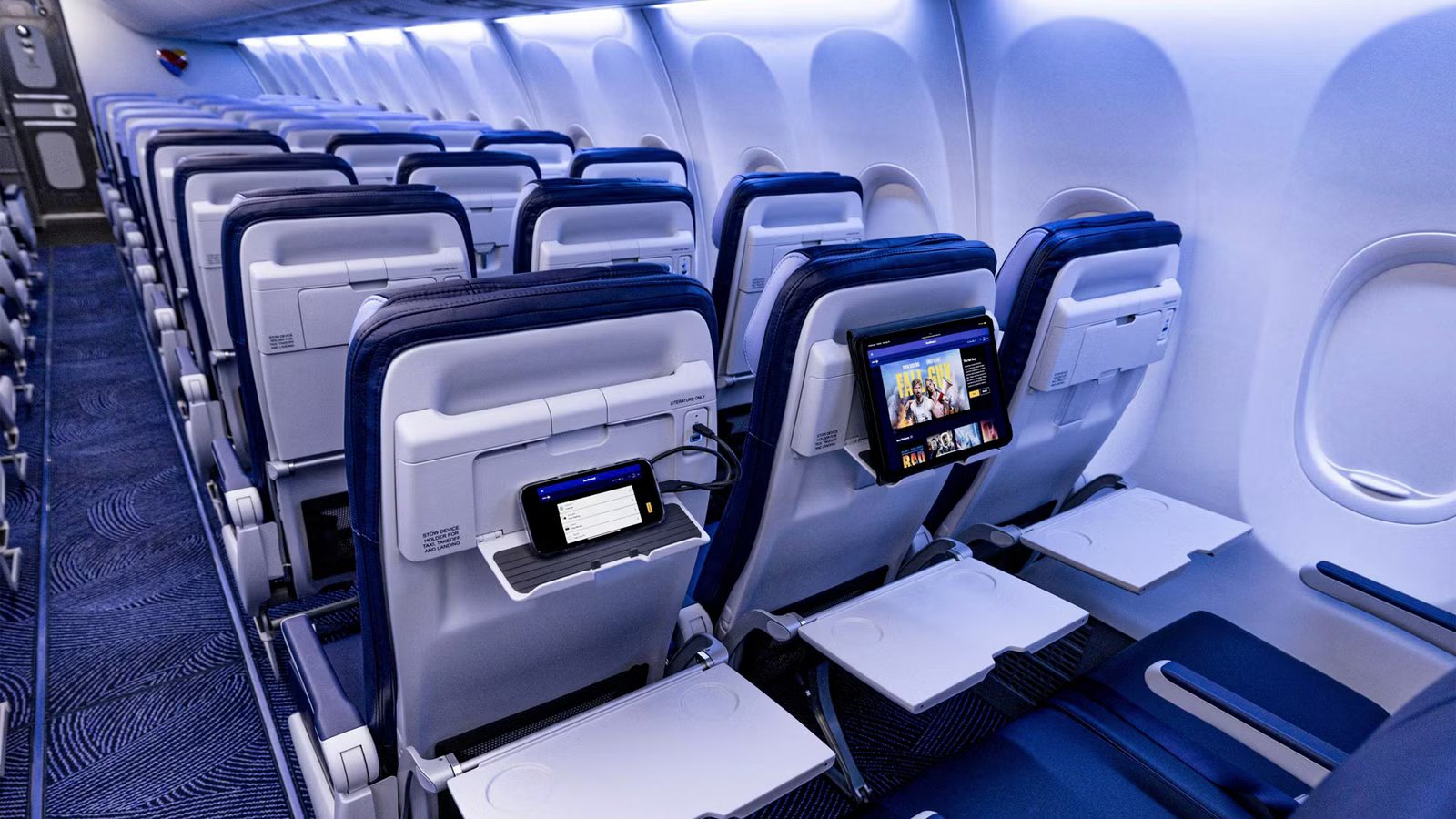
Economy class has long been the battleground between airline profitability and passenger comfort. As airlines have sought to maximize revenue per flight, many have reduced seat pitch, increased seating density, and introduced new fare tiers that squeeze more passengers into each aircraft cabin. Yet despite this industry-wide trend toward densification, some airlines continue to stand out for offering noticeably more comfortable and spacious economy cabins.
In 2026, a handful of carriers remain committed to delivering a better experience at the back of the aircraft. From Japanese airlines that prioritize generous seat pitch to Middle Eastern and Asian carriers investing heavily in ergonomic seat design, these airlines demonstrate that economy class does not necessarily have to feel cramped. By combining thoughtful seat engineering, cabin layout decisions, and passenger-focused design, these airlines offer some of the most spacious economy cabins flying today.
What Determines Comfort In Economy?

The comfort of an economy class cabin largely comes down to three key measurements: seat pitch, seat width, and seat recline. These metrics determine how much personal space a passenger has during a flight, and can significantly impact comfort, particularly on long-haul routes.
Seat pitch refers to the distance between a point on one seat and the same point on the seat in front of it. Essentially, it determines how much legroom passengers have. In the 1970s and 1980s, seat pitch commonly reached 36 inches (91 cm), but as airline competition intensified and fuel costs increased, airlines began gradually reducing pitch to increase capacity. Across the industry today, most economy cabins offer between 30 (76 cm) and 32 (81 cm) inches of pitch, though this regularly falls below 30 inches on some ultra-low-cost carriers.
Seat width is another important measure of comfort. Most economy seats today range between 17 inches (43 cm) and 18.5 inches (41 cm) wide, depending on the aircraft and seating configuration. While the difference may appear minor, even half an inch of additional width can significantly improve shoulder room during long flights. The big determinant of seat width is how airlines choose to configure their cabins, and specifically, how many seats they choose to squeeze into each row.
Seat recline, usually between three and six inches (7–15 cm), provides additional comfort, but must be balanced against the personal space of the passenger seated behind. To address this, seat manufacturers increasingly use cradle-style recline systems, where the seat pan slides forward as the back reclines, preserving knee space for the next passenger.
Beyond the seat itself, airlines can also make economy cabins feel more spacious through cabin design elements, including:
- Slimline seat backs that increase knee clearance
- Higher cabin ceilings on newer aircraft
- Larger windows on aircraft like the Airbus A350 and Boeing 787
- Improved mood lighting systems
- Better overhead bin design to reduce cabin clutter
Together, these elements can create the difference between an economy cabin that feels cramped and one that feels surprisingly comfortable.
SkyTrax Rankings For Best Economy Seat

One of the most widely recognized benchmarks for airline passenger experience is the Skytrax World Airline Awards, which are based on millions of passenger surveys conducted globally. In the 2025 awards, it was Cathay Pacific that won the category of ‘Best Economy Class Airline’, based on the overall experience, including factors such as onboard catering, in-flight entertainment, and WiFi access.
But within the Economy category, it was Japan Airlines that won the award for the ‘Best Economy Class Airline Seat.’ Skytrax determines this based on factors including seat pitch, seat design, headrest comfort, personal space, and cabin ergonomics. The rankings in this category were as follows:
|
Rank |
Airline |
Typical Seat Pitch |
Typical Seat Width |
Typical Seat Recline |
|---|---|---|---|---|
|
1 |
Japan Airlines |
33–34 in (84–86 cm) |
18.5 in (47 cm) |
5–6 in (13–15 cm) |
|
2 |
ANA |
34 in (86 cm) |
18 in (46 cm) |
5–6 in (13–15 cm) |
|
3 |
Emirates |
32–34 in (81–86 cm) |
18 in (47 cm) |
5 in (13 cm) |
|
4 |
Cathay Pacific |
32 in (81 cm) |
18 in (47 cm) |
6 in (15 cm) |
|
5 |
Singapore Airlines |
32 in (81 cm) |
18.5 in (47 cm) |
5–6 in (13–15 cm) |
|
6 |
Qatar Airways |
31–32 in (79–81 cm) |
17.5 in (45 cm) |
4–5 in (10–13 cm) |
|
7 |
EVA Air |
31–32 in (79–81 cm) |
18 in (47 cm) |
5 in (13 cm) |
|
8 |
Korean Air |
33–34 in (84–86 cm) |
18 in (47 cm) |
5–6 in (13–15 cm) |
|
9 |
Turkish Airlines |
31–32 in (79–81 cm) |
18 in (47 cm) |
5 in (13 cm) |
|
10 |
Hainan Airlines |
32 in (81 cm) |
18 in (47 cm) |
5 in (13 cm) |
A clear trend emerges: Asian and Middle Eastern airlines dominate the rankings, reflecting a regional focus on passenger comfort and premium service, even in economy class.

The Striking Differences Between Premium Economy & Economy Class In 2026
What secrets lie between these two cabin classes in 2026? The differences may surprise you…
ANA: The Airline With The Most Legroom In Economy

While some airlines offer more spacious economy seats, All Nippon Airways (ANA) stands out for consistently offering some of the longest seat pitch in the industry. On most of its long-haul aircraft, ANA provides 34 inches (86 cm) of seat pitch, which is several inches more than the global average. For passengers on long intercontinental flights, those extra inches of legroom can significantly improve comfort levels.
These seats with 34 inches of pitch can be found across the vast majority of ANA’s widebody fleet. The only exceptions are its Boeing 767-300ER and Boeing 777-200 sub-fleets, which are used primarily for domestic and regional flights, and have a more standard 31-inch (79 cm) seat pitch. In addition, the 33 Boeing 787-8s are split into three different configurations depending on whether they are used domestically or for long-haul, and the former also have a narrower 31-inch (79 cm) seat pitch.
|
Aircraft Type |
Typical Configuration |
Seat Pitch |
Seat Width |
|---|---|---|---|
|
Airbus A380 |
3-4-3 |
34 in (86 cm) |
18 in (46 cm) |
|
Boeing 767-300ER |
2-3-2 |
31 in (79 cm) |
18 in (46 cm) |
|
Boeing 777-200 |
3-4-3 |
31 in (79 cm) |
17 in (43 cm) |
|
Boeing 777-300ER |
3-4-3 |
34 in (86 cm) |
17.5 in (44 cm) |
|
Boeing 787-8 |
3-3-3 |
31–34 in (79–86 cm) |
17 in (43 cm) |
|
Boeing 787-9 |
3-3-3 |
34 in (86 cm) |
17 in (43 cm) |
|
Boeing 787-10 |
3-3-3 |
34 in (86 cm) |
17 in (43 cm) |
|
Airbus A380 |
3-4-3 |
34 in (86 cm) |
17 in (43 cm) |
ANA combines this generous pitch with thoughtful seat ergonomics, including adjustable headrests, improved lumbar support, and large personal entertainment screens. The airline also emphasizes its focus on high cabin quality standards in its marketing, helping it consistently achieve a Skytrax 5-Star airline rating. So for travelers prioritizing legroom, ANA remains one of the most reliable airlines in the world for spacious economy seating.
Japan Airlines: The Most Spacious Economy Cabin

But seat pitch is just one of the metrics that contribute towards a spacious economy cabin. And if ANA leads the industry in legroom, Japan Airlines (JAL) won the award for best economy seat because it arguably offers the most spacious overall economy experience — particularly on its Boeing 787 fleet.
The key reason is JAL’s decision to install eight-abreast seating (2-4-2) on its Dreamliners instead of the more common nine-abreast (3-3-3) configuration used by all other 787 operators. This seemingly small change has a significant impact. By removing one seat per row, JAL is able to offer wider seats — around 18.5 inches (47 cm) — while maintaining a generous seat pitch of 34 inches (86 cm). The result is an economy cabin that feels noticeably more spacious than competitors flying the same aircraft.
JAL markets these seats as its ‘JAL Sky Wider’ economy product, which features wider seat cushions, adjustable headrests, slimline seat backs for increased knee clearance, and improved seat ergonomics. Unfortunately, they only appear across the carrier’s 787, 777, and international 767 fleets, and aren’t available on the newer Airbus A350s, where seat pitch in economy drops to 31 inches (79 cm).

Japan Airlines Adds Riblet-Shaped Coating On Boeing 787 To Improve Fuel Efficiency
The new initiative will reduce fuel consumption for the airline.
The Most Spacious Economy Seats In The US

In the United States, economy seating has generally become tighter over the past two decades as airlines have increased cabin density. However, one airline consistently stands out for offering more space than its competitors: JetBlue. The airline markets itself as providing “the most legroom in coach” among major US airlines, and its aircraft cabins largely support that claim. Its standard A320 seats have 32 inches (82 cm) of pitch, with a seat width of up to 19 inches (48 cm), putting it ahead of most major US competitors for comfort.
But it’s the airline’s Airbus A220-300 aircraft that offer the most comfortable narrowbody economy cabins currently flying in North America. The aircraft features 18.6-inch (47 cm) wide seats and 32 inches (82 cm) of seat pitch, making it noticeably more comfortable than many competing aircraft.
The A220 also uses a 2-3 seating layout, which means just one middle seat per row, which creates a more open cabin environment compared with the traditional 3–3 layouts used on aircraft like the Boeing 737 or Airbus A320.
That is what makes the A220 such an important aircraft in this discussion. It is not just that the seat itself is good; it is that the aircraft cross-section allows airlines to offer a more comfortable economy product almost by default. The cabin also feels more open, while larger windows, modern lighting, and a new-generation interior help reinforce that impression of space.
Tips To Find More Space In Economy

Beyond choosing specific airlines, passengers can sometimes find more spacious economy seats by selecting specific aircraft configurations. The example of Japan Airlines’ 2-4-2 configuration on its 787s is one of these.
But another example is the upper deck of the Airbus A380. On several airlines, including carriers like  Emirates and
  British Airways, there is an upper deck economy cabin which uses a 2-4-2 configuration instead of the standard 3-4-3 layout found on many widebody aircraft. Because the upper deck cabin is narrower, an economy cabin in this space requires fewer seats per row, resulting in wider seats and a more intimate cabin environment.
Another niche option is finding Boeing 777 aircraft configured with nine-abreast seating (3-3-3) rather than the now-common ten-abreast (3-4-3) layout. The Boeing 777 was originally designed for nine seats per row, and this configuration allows seats to be around 18.5 inches wide. However, many airlines have since moved to ten-abreast layouts to increase capacity, but a few operators still retain the more spacious configuration. Most of these carriers are in the Asia-Pacific region, and include  Air China, ANA, EVA Air, Japan Airlines, Korean Air,
  Singapore Airlines, and Thai Airways.
Aircraft choice can therefore make a significant difference in the economy experience. Two flights on the same route — even with the same airline — can feel dramatically different depending on aircraft configuration. As airlines continue to refine seat engineering and cabin design, passengers seeking comfort in economy class will increasingly find that the most important decision is not just the airline they choose, but the aircraft they fly on.