dailynewsnblog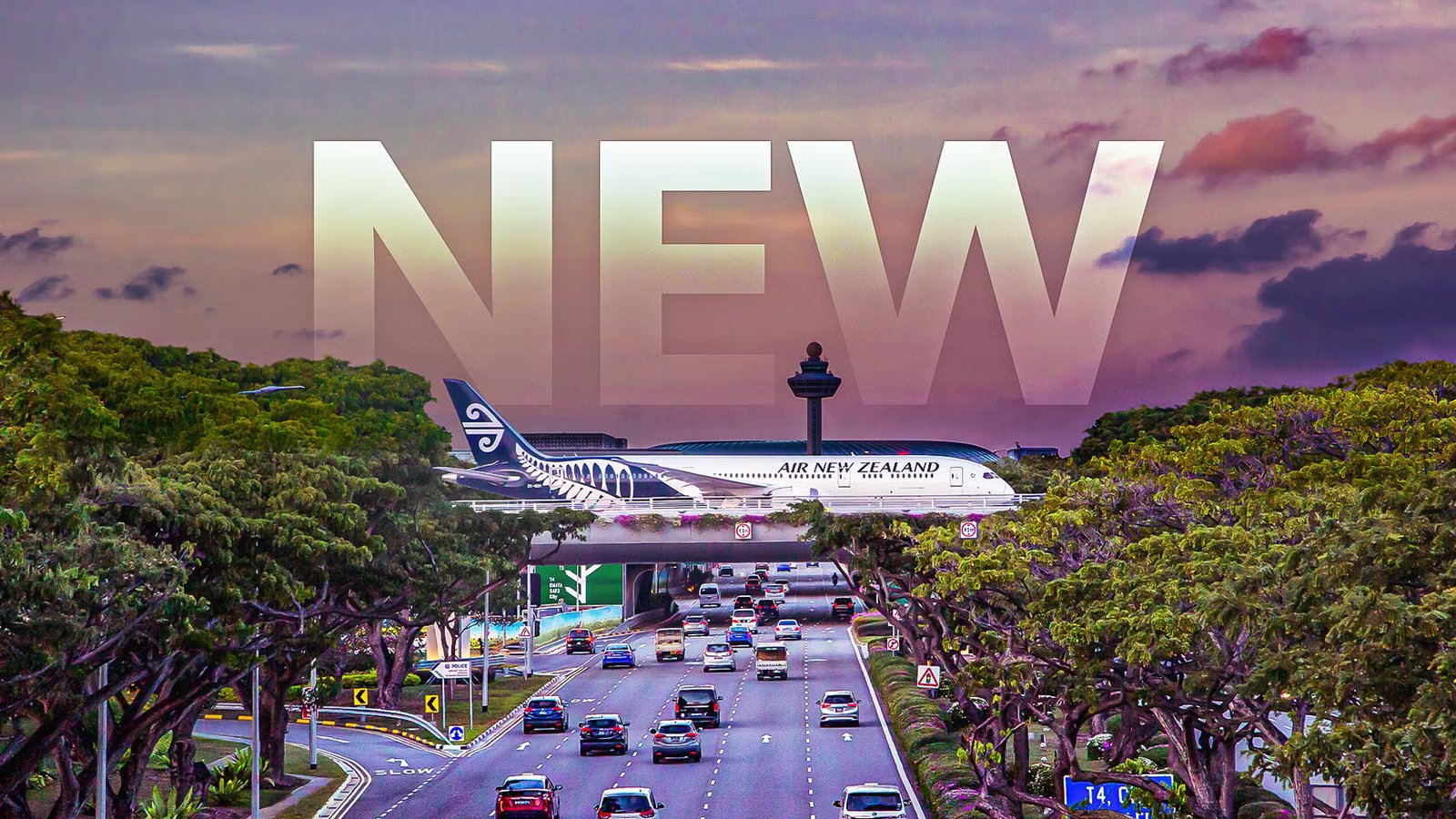
The Boeing 787 Dreamliner is getting a major performance upgrade in early 2026. The iconic American planemaker is improving the maximum takeoff weight of its Dreamliner family line this year. It was confirmed that the Federal Aviation Administration (FAA) has raised the weight limit on both the 787-9 and 787-10 on airframes made since December 2025. The iMTOW update gives the -9 an increase of 10,000 pounds in Maximum Takeoff Weight (MTOW) and the -10 an increase of 14,000 pounds in MTOW. The actual payload increases are approximately three and five metric tons, respectively.
The 787-9 is the longest range variant, meaning that extra payload can be applied to increase passenger and cargo capacity on existing ultra-long-haul routes. But it can also be used as additional fuel to enable the plane to fly longer missions. The 787-10 gains the same improvements, but as a larger-capacity aircraft, it will primarily make it a more effective hub-to-hub hauler while also giving operators more flexibility in destinations.

The 787-9 is already the ‘Goldilocks’ of the three variants available in the Dreamliner family. The twin-aisle jetliner is very popular for its performance balance between range, payload, and fuel efficiency. It is famous for flying the longest Dreamliner missions in the world, and this upgrade will allow it to go even further with approximately 300 to 400 nautical miles of extra range. That could open up secondary airports as destinations for many of the world’s biggest point-to-point long-haul flyers, such as  Qatar Airways and
  United Airlines.
The 787-10 has long suffered from its limited range compared to the 787-9. This upgrade will add about 450 nautical miles, pushing it over the 7,000 mark and allowing the jet to comfortably fly transoceanic routes. Increasing the range of the -10 past that Benchmark makes it an even more valuable workhorse on the most popular routes between major Global hubs.
The upgrade will also make the Dreamliner more competitive with both the Airbus A350 Xtra Wide Body (XWB) and encourage 777-200 operators to modernize sooner. The A350 is a larger aircraft than the 787-10, but the iMTOW increase brings the biggest Dreamliner closer to parity and makes it a much stronger competitor. Meanwhile, the 787-10’s new capacity, combined with a 25% fuel burn advantage over the older ‘triple seven,’ bolsters the business case for modernization for the remaining operators of the legacy Boeing widebody.
United Airlines: The Elevated Fleet

United is the world’s largest customer of the 787. The carrier has more than 220 orders on the books as part of its ‘United Next’ strategy to modernize its fleet, which is the largest in the world. It is also one of the few airlines in the world that operates all three variants of the 787. These elevated interior Dreamliners are key to the airline’s push toward International, long-haul flying expansion.
In 2026, United is expected to take delivery of 20 new 787s, the largest single-year widebody intake for any US carrier since 1988. It also just recently received one of its first examples of the ‘ elevated interior’ 787-9P variant with a premium heavy layout that drops many economy rows in favor of more business and premium economy class seats. These jets are designed to outclass rivals, such as  Delta Air Lines and
  American Airlines. The 787-9P features 99 premium seats, including the new Polaris Studio with sliding doors for privacy.
The iMTOW upgrade will allow United to begin phasing out more 767s and 777-200s, as they currently operate long-distance flights across the Atlantic and Pacific Oceans. The 787-10 will be crucial to this evolution as the airline modernizes for the 21st-century market of commercial flying. The combined cabin improvements and fuel savings will make United not only more competitive with customers but also protect its bottom line from the fluctuations of the notoriously sensitive business of aviation.
Qatar Airways: Maximizing Every Mission

Unlike some carriers that prioritize range for new passenger routes, Qatar Airways’ primary gain from the iMTOW upgrade is payload flexibility. The upgrade allows for roughly three to five metric tons of additional payload on the 787-9 and 787-10, respectively. Last year, Qatar made a landmark order for 130 Dreamliners as a massive widebody fleet expansion and modernization program. The addition of new and improved Dreamliners will dramatically improve the airline’s capacity.
Qatar saw a 17% surge in cargo revenue last year, according to Aviation Outlook. The iMTOW allows the airline to carry heavy freight in the belly of its passenger jets on routes where they were previously limited by weight restrictions, essentially turning passenger flights into mini-freighters. Qatar’s massive 787 order ensures its incoming fleet is future-proofed thanks to the new iMTOW capability.
Qatar Airways has long relied on the 777-200LR for its most distant ULH missions. iMTOW enables the 787-9 to take over long-distance routes currently served by older, less efficient 777s with zero payload hit. Qatar can now also deploy the high-capacity 787-10 on longer missions to North America and Australia from its Hamad International Airport (DOH) hub, previously range-limited.
Air India: More Nonstop Destinations

Air India plans to add 20 examples of the new and improved 787-9 Dreamliners with the iMTOW upgrade. These aircraft will be a game-changer for the airline, which has historically struggled on nonstop flights from India to North America, forcing it to sacrifice payload for range. The additional range that the new jets will have will finally allow Air India Dreamliners to carry a full load on every mission, which includes passengers and cargo, which will both increase the airline’s capacity and significantly strengthen its bottom line.
Air India is using the delivery of these upgraded 787s to completely reset its brand image, which had suffered under previous ownership. The iMTOW upgrade allows the 787-9 to perform roles previously reserved for much larger, more expensive aircraft. Much like the United Elevated cabin campaign, these aircraft will also feature a host of new premium features inside.
India is a massive exporter of pharmaceuticals and perishables. The added weight capacity allows Air India to carry 5+ extra tons of cargo on every flight, tapping into high-yield freight markets that were previously physically impossible to reach non-stop. The airline will also be able to add ULH flights to its portfolio from smaller cities in India, such as Bengaluru and Hyderabad.

India’s Supreme Court Says Air India Crash Report Does Not Implicate Pilot
The pilot has been absolved of blame.
Riyadh Air: Starting Strong From Day One

As a new player in the Gulf carrier market, Riyadh Air started with a splash when it ordered 39 787-9s with 33 options (totaling 72) in 2023. The carrier received its Air Operator Certificate (AOC) in early 2025. Backed by Saudi Arabia’s Public Investment Fund (PIF), the airline aims to connect Riyadh to over 100 destinations by 2030, positioning the city as a global hub rivaling Dubai and Doha.
The new carrier strategy is underscored by an emphasis on high-tech and luxury cabin design. In addition to the tall Dreamliner order, Riyadh Air is also on the books for a large number of Airbus A350-1000 widebodies and A321neo single-aisle jets. The cabin layout of the 787-9s will have business Elite Suites with sliding privacy doors, a 24-seat business class cabin, a large premium economy section, and state-of-the-art economy class.
Some of the first destinations that the operator plans to serve include London Heathrow Airport (LHR) and Dubai International Airport (DXB). The new airline expects to have at least 15 destinations on the docket by this summer, including international hubs such as Paris, Madrid, Bangkok, Cairo, and Mumbai. The carrier has said it will join an airline alliance, but a core part of the airline’s strategy to attract customers is its partnerships with industry leaders such as Delta, KLM, Turkish Airlines, Singapore Airlines, and Lufthansa.

Airbus A350 Vs Boeing 787: How Do They Compare On Ultra-Long-Haul Flights?
The A350 and Boeing 787 serve some of the world’s ultra-long-haul flights and complement each other in many airlines.
Delta Air Lines: Successor To The 767

After famously choosing to exclusively buy Airbus widebodies in recent years, Delta finally placed its first order for the Boeing 787 Dreamliner in January 2026. The airline selected 30 787-10s for its first batch and has an option for 30 more. The new jets will replace aging Boeing 767-300ER and 767-400ER models, some of which have been in service for over 30 years.
The 787-10 fills a critical capacity gap between Delta’s smaller A330s and its larger A350 flagships. With its new widebodies, Delta is launching its largest-ever international schedule in the summer of 2026, featuring many new options to Europe and the Middle East. The new jets will offer premium experience features to complement the 787’s lower cabin altitude and higher humidity in every class, helping reduce traveler fatigue on long journeys.

787-8 Vs 787-9 Vs 787-10: How The Dreamliner Variants Differ
The three 787 variants are tailored to different market segments to fill niches and offer a placement for different previous-generation aircraft.
Air New Zealand: Boosting Business & Adding Capacity

Air New Zealand operates some of the longest routes flown by a Boeing 787 Dreamliner in the entire world. As a result, these jets are very range-sensitive when on mission. When a jet stream doesn’t cooperate, the airline has to sacrifice capacity, which can lead to as many as 70 empty seats in the big Boeing wide body.
These upgrades will improve average payload by 15%, which is crucial for the Pacific-based carrier that operates a large volume of ULH routes. Air New Zealand is also expecting to see more competition from Qantas as the two compete for customers to North America. The new and improved Dreamliners will help attract flyers as the airline builds on its cabin features like ‘Skycouch’ to introduce the first bunk beds on a commercial jetliner, dubbed ‘Skynest,’ when the new 787s roll out.