dailynewsnblog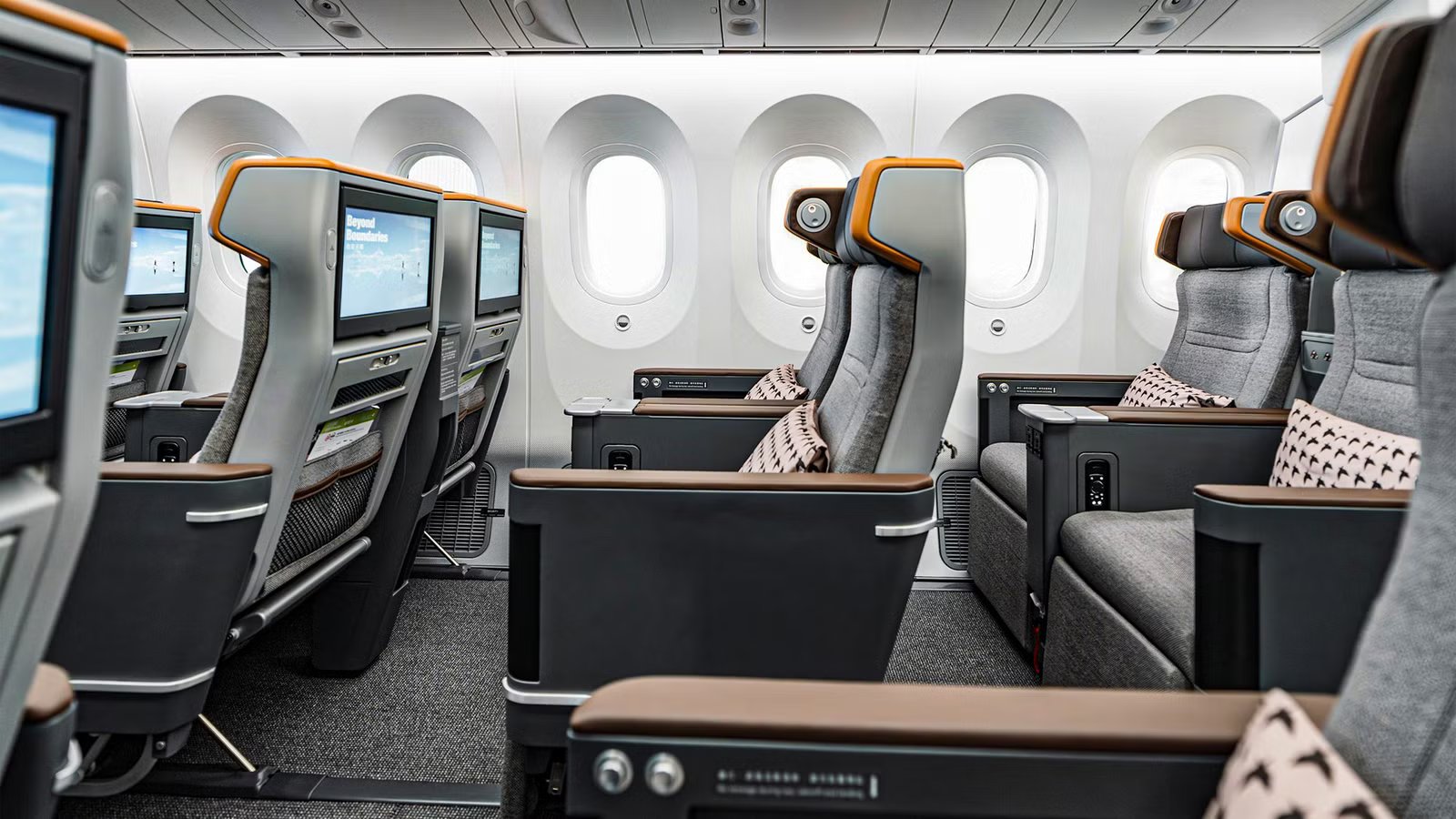
Today, Premium Economy has become one of the most important cabin classes in long-haul aviation. Airlines across the world now rely on the product to bridge the gap between economy affordability and business class comfort, offering wider seats, improved dining, and additional personal space for travelers willing to pay slightly more for a better experience. What was once considered a niche experiment has evolved into a major revenue driver, with many airlines retrofitting aircraft and expanding routes specifically to accommodate growing demand.
However, Premium Economy did not emerge gradually across the industry. Instead, the concept can be traced back to the early 1990s, when a handful of airlines recognized a gap between cramped economy cabins and expensive premium seating. Among them, EVA Air stood out for formally introducing a dedicated intermediate cabin onboard its Boeing 747 fleet, helping reshape how airlines think about passenger comfort and cabin segmentation. Alongside competitors experimenting with similar ideas at the time, the airline helped launch a product category that would eventually become standard across global aviation.
The Rise Of Premium Economy

Over the past decade, Premium Economy has evolved from a niche experiment into one of the most strategically important cabin classes in global aviation. Ten years ago, the product was still limited primarily to select long-haul carriers and specific intercontinental routes. Today, it has become a near-standard feature across widebody fleets operated by airlines in North America, Europe, Asia, and the Middle East. What was once viewed as a supplementary offering has matured into a core revenue segment that airlines actively design aircraft cabins around.
Several factors contributed to this rise. First, passenger expectations shifted. Travelers increasingly sought more comfort on long flights but were unwilling or unable to pay the significantly higher fares associated with business class. Second, airlines recognized the financial potential of carving out a distinct cabin between economy and business. By installing wider seats with more pitch, enhanced dining, and upgraded entertainment, carriers created a product that commanded a meaningful fare premium while requiring far less space than lie-flat business seats. This allowed airlines to improve yield per square foot of cabin space without dramatically reducing total seat capacity.
The post-pandemic travel environment further accelerated Premium Economy’s growth. Corporate travel budgets tightened, leisure travel surged, and airlines sought products that appealed to self-funded premium travelers rather than traditional corporate accounts. Premium Economy filled that gap perfectly. Many carriers expanded the cabin across additional aircraft types, retrofitted existing fleets, and upgraded the soft product to differentiate it more clearly from economy class. Today, Premium Economy is no longer considered an experiment. It is an established, profitable, and globally recognized cabin category, one whose origins trace back further than many passengers realize.
About EVA Air

EVA Air was founded in 1989 as part of the Evergreen Group, a global shipping and logistics company based in Taiwan. From the beginning, the airline focused heavily on international long-haul flying, particularly transpacific routes connecting Asia with North America. Operating from its hub in Taipei, EVA Air positioned itself as a premium-focused carrier competing against much larger airlines by emphasizing service quality, reliability, and innovative onboard products rather than sheer size or route dominance.
The airline quickly developed a reputation for consistency and passenger comfort, becoming one of the early adopters of enhanced cabin experiences across multiple travel classes. Long flight times between Taiwan and destinations such as Los Angeles, San Francisco, Vancouver, and European cities made onboard comfort especially important. EVA Air understood that passengers spending ten or more hours in the air were willing to pay for additional space and improved service if the price remained accessible compared to business class. This focus on long-haul passenger experience helped shape many of the airline’s later innovations.
Over time, EVA Air became known for introducing creative cabin concepts that would later influence the broader aviation industry. While many airlines focused primarily on expanding first and business class luxury, EVA Air looked closely at the large group of travelers seated behind the premium cabins. Identifying an underserved middle market between economy and business ultimately led the airline to pioneer a completely new travel category, one that would eventually become known worldwide as Premium Economy.

EVA Air Reveals 16‑Hour Nonstop Washington Dulles Flights In 2026
A bold new route is on the way, marking the first time two distant cities will have nonstop flights.
EVA Air & Premium Economy

EVA Air is widely credited with introducing the world’s first true Premium Economy product when it debuted Economy Deluxe Class in 1992. The concept launched onboard the airline’s Boeing 747 fleet, at a time when most long-haul aircraft offered a sharp divide between tightly packed economy seating and expensive premium cabins. Rather than focusing only on luxury travelers at the front of the aircraft, EVA Air identified a growing group of passengers willing to pay slightly more for meaningful comfort improvements on long international flights.
Economy Deluxe was not simply an economy seat with extra legroom. The airline designed the cabin as a clearly separate product with wider seating, increased pitch, and upgraded service elements that differentiated it from standard economy class. On the Boeing 747, the cabin featured a more spacious seating configuration compared to the dense layouts behind it, allowing passengers greater personal space during transpacific flights that often exceeded ten hours. Additional service touches, improved meal presentation, and enhanced passenger amenities helped reinforce that this was a distinct travel experience rather than a minor upgrade.
The concept’s success quickly proved there was strong demand for a middle-tier cabin. Travelers who could not justify business class fares suddenly had an option that significantly improved comfort without dramatically increasing ticket cost. Over time, other airlines began studying the model and eventually introduced their own versions under names such as Premium Economy or Economy Plus. What began as EVA’s Economy Deluxe experiment ultimately reshaped long-haul cabin planning across the industry, creating a product category that has since become standard on widebody aircraft worldwide.
EVA Air’s Most Recent Premium Economy Cabin

EVA has continued refining the concept it pioneered more than three decades ago, introducing its newest Premium Economy product onboard Boeing 787 Dreamliner aircraft last year. While many airlines have expanded Premium Economy in recent years, EVA Air’s latest cabin reflects a deliberate effort to push comfort standards even further, combining modern seat technology with thoughtful design aimed specifically at long-haul passenger comfort.
The hard product focuses heavily on personal space and ergonomics. Seats feature approximately 42 inches of pitch, offering noticeably greater legroom than typical Premium Economy cabins across the industry. A large recline allows passengers to relax more naturally on overnight flights, complemented by an adjustable footrest that supports sleeping positions. Storage space has also been improved, allowing travelers to keep personal devices and essentials easily accessible without crowding the seating area. Privacy head dividers between seats help create separation from neighboring passengers, reinforcing the feeling of a distinct cabin rather than simply an upgraded economy section.
Entertainment and connectivity are also key parts of the updated experience. Each passenger receives a large 15.6-inch high-definition monitor, significantly larger than standard economy screens and competitive with some business class entertainment systems. Combined with improved seat comfort, modern materials, and thoughtful cabin layout, EVA’s newest Premium Economy offering demonstrates how far the product has evolved since the airline first introduced Economy Deluxe in 1992, continuing its role as a leader in shaping the category it helped create.

Punches Thrown In Cockpit: EVA Air Probes Pilot Altercation At LAX
A shocking altercation in the cockpit: One pilot’s rage jeopardizes safety on a long-haul flight.
Virgin Atlantic’s Premium Economy

Virgin Atlantic played a major role in shaping the early development of Premium Economy alongside EVA Air during the early 1990s. In 1992, the airline also introduced a new cabin concept, “Mid Class,” designed to bridge the growing gap between economy seating and its Upper Class business cabin. The product targeted cost-conscious business travelers who were often required to fly economy for budget reasons but still wanted additional comfort and workspace during long-haul flights.
Unlike traditional economy seating at the time, Mid Class offered a clearly differentiated experience rather than simply extra legroom. The cabin featured wider seating, improved recline, and a dedicated service concept for long-haul transatlantic travelers. Virgin Atlantic also expanded the offering beyond the seat itself by introducing additional ground and onboard perks, including priority-style services and an upgraded inflight environment. Within two years, the airline rebranded the product as Premium Economy, helping establish the now-familiar name used across much of the industry today.
The timing of Virgin Atlantic’s launch has sparked ongoing debate among aviation circles over which airline first introduced Premium Economy. While EVA Air is widely credited with being the first airline to introduce a dedicated premium economy cabin on regularly scheduled flights later in 1992, Virgin Atlantic’s early announcements and marketing efforts helped popularize the concept internationally. Regardless of who technically came first, both airlines recognized the same opportunity at nearly the same moment, creating a new middle cabin that airlines around the world would eventually adopt as one of the most profitable parts of modern long-haul aircraft.