dailynewsnblog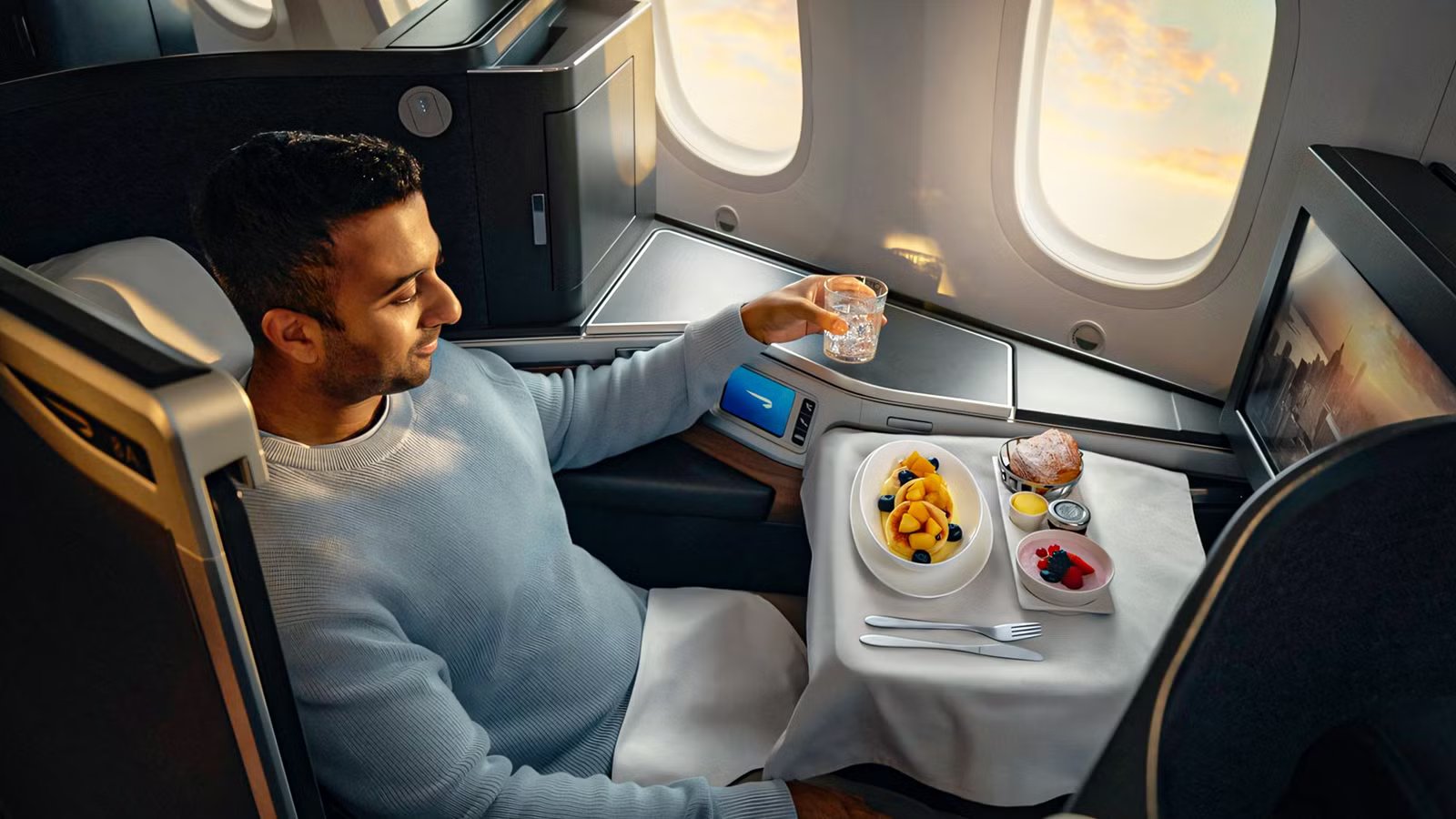
Back in 2000,  British Airways was the first airline to introduce a lie-flat seat in its business class cabin, Club World, on its flagship service between
  London Heathrow Airport (LHR) and
  New York JFK Airport (JFK). By doing so, the airline redefined business class and changed expectations overnight. Since the introduction of the first lie-flat business class seat, business class cabins have become increasingly luxurious, offering sliding privacy doors, lie-flat beds, and excellent dining options.
Following the introduction of the lie-flat business class seat, it did not take long for other airlines to follow. Airlines such as Cathay Pacific and Singapore Airlines quickly followed. By 2003, British Airways and rival Virgin Atlantic had also introduced seats in their “Upper Class” and, by the end of the decade, fully flat beds had become the standard for long-haul business class.
British Airways’ Reliance On Premium Cabins

Back in the 2000s, it was not a surprise that it was British Airways that changed premium air travel forever. The airline is one of the most premium-focused network airlines in Europe, built around the unique strength of its home base in London. Due to London’s exceptionally strong origin-and-destination (O&D) demand and large catchment area, British Airways relies significantly less on connecting passengers as opposed to, for example,  Lufthansa in Frankfurt (FRA) or KLM in Amsterdam (AMS). This, combined with London’s high-yield corporate demand, especially in the transatlantic market, makes the airline one of the most premium heavy in the world.
One key factor complementing this is the capacity constraints at London Heathrow. Since slots are scarce and expensive, airlines such as British Airways must maximize revenue per movement at Heathrow. This naturally reinforces a strategy centered on premium cabins and corporate demand, and a focus on frequencies rather than pure capacity. The significance of this strategy is best illustrated when looking at the airline’s Boeing 777-300ER fleet, an aircraft type typically seating 392 passengers in a two-class configuration, according to Boeing. At British Airways, these aircraft only seat 256 seats, with around 48% of seats in premium cabins, clearly highlighting how important premium passengers are for the airlines.
While British Airways optimizes for high-yield routes, the airline takes a different approach from London’s second-largest airport, Gatwick (LGW). From here, British Airways operates flights to more leisure-focused destinations and the willingness to pay for premium cabins is lower. Destinations served from Gatwick include many leisure destinations around the Mediterranean as well as long-haul services to, for example, Florida and the Caribbean. This focus on lower yield traffic is clearly visible when looking at the Boeing 777-200ER fleet based in Gatwick. On these aircraft, only around 25% of seats are in premium cabins, whereas the 777-200ERs based in Heathrow have upwards of 41% of seats in premium cabins. Besides the number of seats, the premium products offered from Gatwick are also generally older and less competitive compared to those at Heathrow.

How Much Does It Cost Upgrade To British Airways’ Club World?
BA Business class fares are often around three times the price of premium economy fares, but there are ways to reduce the gap.
British Airways’ Unique All Business Flights

Illustrating how important premium cabins are for British Airways, especially in the market to and from the United States, is its all-business class Airbus A318 flights between London City Airport (LCY) and New York John F. Kennedy (JFK), which were discontinued in 2020 due to the pandemic. The aircraft was configured with only 32 seats in a 2-2 layout, with all seats converting into full lie-flat beds.
Back when the service was first introduced, the A318 was chosen for its ability to manage the steep approach to London City Airport. On departure from London City Airport, the aircraft needed to make a fuel stop in Shannon (SNN) as the airport’s runway was too short to depart with full fuel. However, passengers were able to clear US pre-clearance in Shannon, allowing the flight to arrive as a domestic flight in the US, compensating for the additional travel time as a result of the fuel stop.
These unique flights were originally intended to fill the premium void left by Concorde’s retirement. The flight operated under flight numbers BA001 to BA004, which were the historic flight numbers of Concorde. British Airways operated a fleet of seven Concorde supersonic airliners from 1976 to 2003, offering all-premium transatlantic flights at supersonic speeds between London Heathrow and New York (JFK) in under 3.5 hours. However, the iconic droop-nose jet was retired on 24 October 2003, following the industry downturn and the July 2000 crash.

British Airways A318 Baby Bus Embarks On One Final Flight
A Pioneer In Premium Economy

Besides pioneering the business class as we know it today, British Airways was also one of the first airlines to introduce a premium economy cabin “World Traveler Plus” on its long-haul flights, again highlighting the significance of premium cabins for British Airways. The first airline to introduce a premium economy cabin was EVA Air back in 1992.
In premium economy, passengers benefit from extra legroom, wider seats, enhanced dining options, and other premium amenities, which improve the long-haul travel experience compared to regular economy class. For airlines, the cabin offers a high-yield product that meets passenger demand for comfort at a lower price than business class. It is a product designed to attract both leisure travelers seeking more comfort and price-conscious business travelers.
The reason for British Airways introducing premium economy class alongside a lie-flat business class likely aligns with the general economic principles of the cabin class. The introduction of the lie-flat business class seats dramatically increased the travel experience, creating a larger gap and additional revenue opportunities between regular economy and business class. In recent years, this gap has only widened as business class cabins have improved even further, and many airlines have reduced service in economy class while continuing to install increasingly dense configurations on their aircraft.

The Airlines With The World’s Most Spacious Premium Economy Cabins In 2026
These cabins are incredibly comfortable.
A Look At British Airways

British Airways, as we know it today, was founded in 1974 and operates as the flag carrier of the United Kingdom with its primary hub at London Heathrow Airport. Additionally, the airline operates a smaller secondary hub from  London Gatwick Airport (LGW). British Airways is a founding member of the
  oneworld alliance, founded back in 1999, together with American Airlines, Cathay Pacific, and Qantas, among others. In January 2011, the British carrier merged with the Spanish flag carrier
  Iberia to form the International Airlines Group (IAG). Today, IAG operates multiple airline brands beyond the aforementioned and is Europe’s third-largest airline group, and the most profitable compared to the group’s largest competitors, Lufthansa Group and Air France-KLM. Interestingly enough, British Airways is not the largest airline in the United Kingdom. This title goes to the low-cost carrier (LCC) easyJet.
Today, British Airways operates a fleet of 297 aircraft with an average fleet age of 14.4 years. Its narrowbody fleet exclusively consists of the Airbus A320 family, including newer A320neo and A321neo aircraft. The airline’s widebody fleet primarily consists of Boeing aircraft with 43 Boeing 777-200ERs, 16 -300ERs, and 42 Boeing 787 Dreamliners divided over three sub-variants. In addition to this large Boeing fleet, British Airways also operates 18 Airbus A350-1000s and 12 Airbus A380-800s.
This extensive fleet of aircraft is primarily used to connect the airline’s main hub at Heathrow with high-yield destinations across the world. Considering how congested Heathrow is, and London’s attractiveness for business travel, selecting the highest yield routes is crucial for British Airways to increase profits. The United States, in particular, are an important market for British Airways, serving 27 destinations via more than 50 daily departures this summer.

50 Daily Flights: British Airways Grows Summer US Flights To The Highest Level Ever
Heathrow flights have grown from 43 daily in July 2025 to 47.
An Overview Of British Airways’ Parent Company IAG

As mentioned earlier, British Airways is part of the larger International Airlines Group (IAG), a holding company founded through the merger of British Airways and Iberia. Since then, IAG has, among others, also acquired Spanish low-cost airline Vueling in 2012 and the Irish flag carrier Aer Lingus in 2015. The company also attempted to acquire Spain’s Air Europa, of which it currently owns 20%. However, in the summer of 2024, a potential full acquisition fell through due to regulatory hurdles stemming from fears of reduced competition between Europe and Latin America. Alongside acquiring other airlines, IAG also founded low-cost carrier LEVEL in 2017, which operates long-haul flights from Barcelona El Prat (BCN).
Today, IAG is one of Europe’s largest and most profitable airline groups, and is publicly traded on both the London Stock Exchange and the Madrid Stock Exchange. Furthermore, OneWorld partner Qatar Airways holds a strategic position of 26.5% in the group. Also, 2025 has proven to be a strong financial year for the airline group with a record-breaking 15.1% operating margin. “We reported another year of exceptional performance in 2025, delivering for our customers with continued improvements in on-time performance and customer satisfaction,” said Luis Gallego, IAG CEO. “This sector-leading operational performance is translating into world-class financial results, with outstanding margins and superior return on capital.”
“We are confident as we look to the future, with compelling market dynamics, long-term secular growth and a clear plan to leverage our business model and deliver our strategy.”
– Luis Gallego, IAG CEO