dailynewsnblog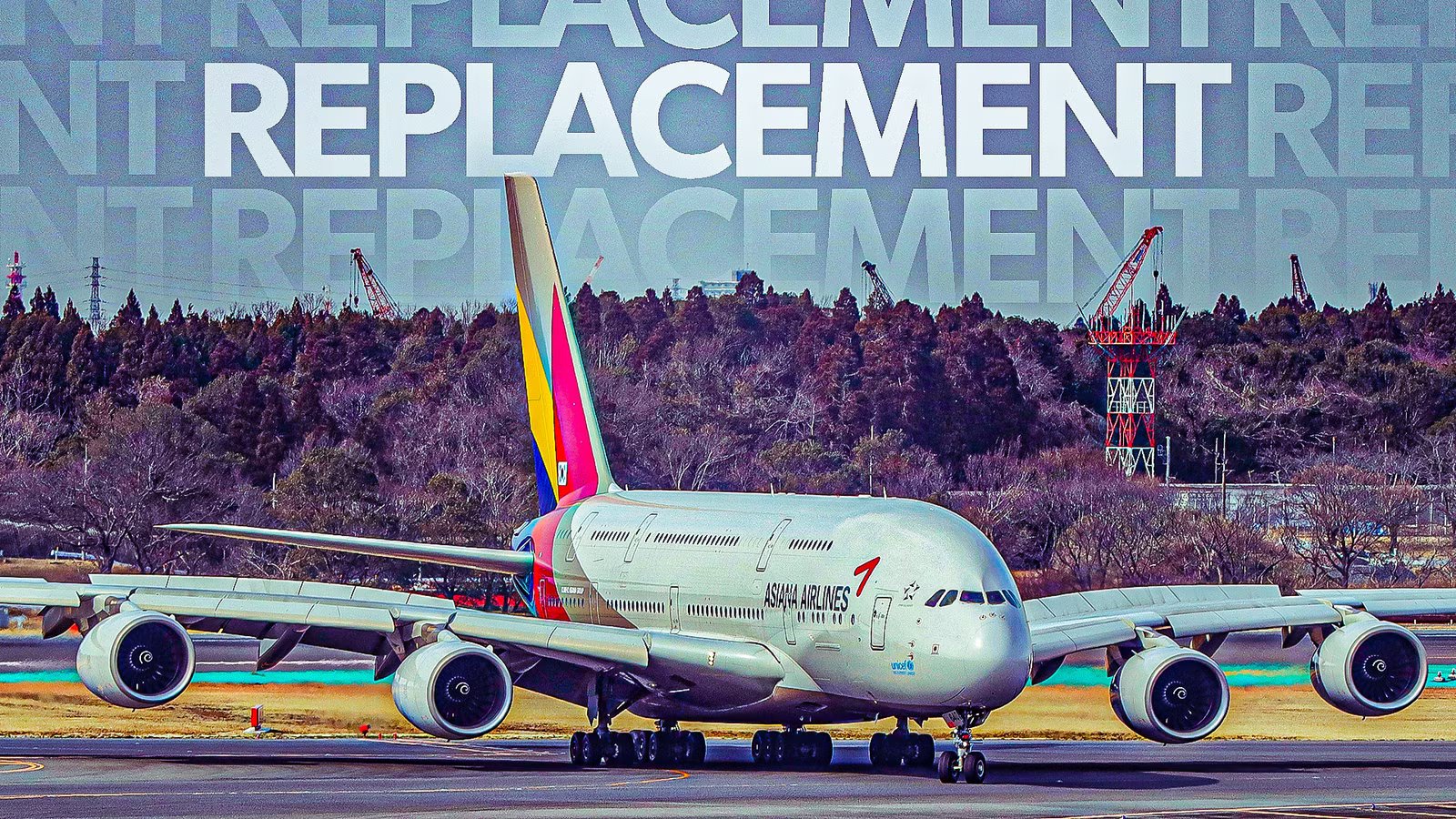
Commercial aviation is made up of a very diverse group of aircraft today. There are propeller planes, twin-engine planes, three-engine planes, and four-engine planes. Among these, few aircraft are more iconic than the Airbus A380. Its massive wingspan, four engines, and full-length double-deck make it recognizable even to those outside the aviation community. The A380 is the world’s largest commercial airliner flying today, but its reign may be coming to an end in the near future as airlines look for replacements.
The days are limited for commercial airplanes operating with four engines. The economics, among other operational factors, no longer make sense given the technology on the market now. It is no secret that aircraft manufacturers,  Boeing and Airbus make up the vast majority of the aircraft being used by Airlines today. And as the A380 begins to be phased out, these two companies find themselves at the forefront of replacement discussions.
The Rise And Fall Of The A380

To understand the life of the A380, it is important to understand the history of super jumbo jets. In 1970, Pan Am flew the first Boeing 747flight. This was a huge moment in commercial aviation. The new four-engine airliner with its defining second-deck hump, became the largest commercial airliner in the world. It was designed for long-haul service between major airport hubs. The 747 became a cultural icon too, known as the Jumbo Jet with features in magazines and movies.
The 747 dominated the high-capacity long-haul market for many years until Airbus challenged its dominance in the early 2000s with the A380. The project faced some setbacks and delays during development, but nevertheless, the A380 was introduced by  Singapore Airlinesin 2007. The design mission was nearly the same, but the A380 offered more range and much more passenger capacity. The A380 became a popular choice for the world’s largest airlines. By mid-2013, over 65 million people had flown on the A380. By September 2015, this number crossed 100 million. In particular, Dubai-based
  Emirates added the largest number of A380s to its fleet and still has the most today. They were also the first airline to work with Airbus to develop ultra-premium amenities only the A380 could offer, such as spa-like shower suites in first class.
The problem was that at the time of introduction, the air travel industry was already beginning to move away from the hub-and-spoke model towards more point-to-point operations. The A380 never fully competed with the 747, but beyond that, it entered the market just as Boeing and Airbus were developing new twin-engine widebody aircraft that were more efficient. The A380 still has a place for some airlines, but it no longer makes sense for most airline business strategies and is on its way to being completely replaced.
What Airlines Want Today

The story for airlines today is efficiency. This can mean many things. On the route network side, point-to-point operations have been growing in popularity, as travelers prefer fewer connections. Airlines have also opted for frequency over capacity. For example,  British Airways stopped its daily A380 service from
  London Heathrow Airport to
  New York JFK Airport in favor of multiple flights operated by twin-engine widebodies like the 777. Part of this decision was driven by passengers’ preference for more flexible options.
Efficiency in operations is one of the biggest points of interest today. A slight improvement in aircraft performance can justify an order of a dozen new aircraft. The industry has shifted its focus away from ultra-high-capacity jumbo jets to twin-engine aircraft that can fly further and more efficiently. Better engines that consume less fuel, lighter airframe materials, and other technological advancements in new aircraft have made operating a four-engine plane economically impractical.
Fleet efficiency is the last point. An A380 can only be used on select routes; it has to be a very popular route and between airports with the infrastructure to support the large aircraft. A smaller widebody can be used on a wider variety of routes and gives airlines more flexibility.
The Answer For Airbus: A350

The A350 family of aircraft has been a huge winner for Airbus ever since its introduction in 2013. It has established itself as the premier aircraft for ultra-long-range operations thanks to its increased fuel efficiency and lower operating costs. In 2022, the A350-1000ULR (which is still in development) was chosen as the plane to serve Project Sunrise for Qantas. The project aims to connect Australia’s East Coast to cities like New York and London with nonstop service, expected to begin in 2027.
This confidence in the A350 model is not unique to Qantas. Airlines all over the world choose the A350 for its range and efficiency. Through November 2025, 157 A350 aircraft have been ordered this year. There is strong momentum with the A350, and it serves as the flagship aircraft for many of the world’s biggest airlines.
|
A380-800 and A350-900 Comparison |
|||||
|---|---|---|---|---|---|
|
Typical Seat Count |
Length (Feet) |
Fuel Capacity (US Gallons) |
Cruise Speed (Mach) |
Range (Nautical Miles) |
|
|
A380-800 |
525 |
239 |
83,452 |
0.85 |
7,991 |
|
A350-900 |
315 |
219 |
37,194 |
0.85 |
8,500 |
The A350 is smaller than the A380, but it can fly further. Another key metric to compare is operating cost. While this number can vary based on how each operator uses the A350 and A380, the general comparison is that the A350 is much cheaper to operate. For one, maintenance costs are lower. Having four engines means the A380 has to do twice the amount of engine maintenance as a twin-engine aircraft like the A350. Plus, the A350 engines are much more advanced and use less fuel per seat on the same route.
Boeing’s 787 Dreamliner

For Boeing, the answer to the A380 is two-fold. The first part of the answer is the 787 Dreamliner family. With three variants on the market, the Dreamliner is a very popular aircraft today. What made the 787 unique when it first hit the market in 2011 with All Nippon Airwayswas that it was the first commercial airliner with an airframe made mostly of composite materials. Boeing advertises the airframe as 50% composite by weight. Another key difference was the broader use of electrical components in the aircraft systems.
Since its first flight, the 787 has experienced tremendous popularity. Through the end of October 2025, 321 total 787 aircraft have been ordered this year. The biggest airline in the world by fleet size,  United Airlines, currently operates 80 787 aircraft and has 141 on order. The 787 has proven to be a versatile family of aircraft. Its ability to serve transcontinental routes within the US and long-haul international routes has given airlines increased flexibility.
|
A380-800 and 787-9 Comparison |
|||||
|---|---|---|---|---|---|
|
Typical Seat Count |
Length (Feet) |
Fuel Capacity (US Gallons) |
Cruise Speed (Mach) |
Range (Nautical Miles) |
|
|
A380-800 |
525 |
239 |
83,452 |
0.85 |
7,991 |
|
787-9 Dreamliner |
296 |
206 |
33,399 |
0.85 |
7,565 |
The 787 also offers one of the most passenger-friendly cabins on the market today, thanks to its low effective cabin altitude. But again, like the A350, the place the 787 truly wins against the A380 is in operating cost. The reasons are similar too. Airlines operating the 787 save on maintenance and fuel costs thanks to two advanced Rolls-Royce Trent 1000 Engines. While these numbers are not exact across all operations, the operating costs are significantly lower. This has been the primary reason for the adoption of the 787 Dreamliner. However, the Dreamliner is not as much a direct competitor to the A380 as it is a byproduct of the changing commercial aviation industry.

787-8 Vs 787-9 Vs 787-10: How The Dreamliner Variants Differ
The three 787 variants are tailored to different market segments to fill niches and offer a placement for different previous-generation aircraft.
Make Way For The 777X

The other part, and the main part, to Boeing’s answer for replacing the A380 is the 777X. The new aircraft will come in 777-8 and -9 variants. On paper, the 777X is the only true replacement that is in any way comparable to the A380 in size. Notable features of the 777X include folding wingtips and two GE9X engines, the most powerful engine ever put on a commercial airliner.
Boeing promises that “the 777-9 will achieve 20% lower fuel use”. This would be a huge win for airlines, but it is yet to be realized due to the seemingly endless delays the 777X program has been experiencing. For now, the current 777 variants, such as the 777-300ER, remain a popular choice on the market. Many airlines still hold the 777-300ER as their flagship carrier too.
|
A380-800 and 787-9 Comparison |
|||||
|---|---|---|---|---|---|
|
Typical Seat Count |
Length (Feet) |
Fuel Capacity (US Gallons) |
Cruise Speed (Mach) |
Range (Nautical Miles) |
|
|
A380-800 |
525 |
239 |
83,452 |
0.85 |
7,991 |
|
777-9 |
426 |
251 |
52,136 |
N/A |
7,285 |
It is important to note that some of the performance metrics advertised by Boeing for the 777X aircraft are not truly verifiable yet. Yes, flight testing produces a lot of important data. But since the 777X hasn’t hit the market yet and flown revenue flights, the impact of the design is yet to be known. Regardless, if Boeing does deliver a 777X in the next few years, it will certainly challenge the A380.

Boeing 777-8 Vs. 777-9: What’s The Difference & Who’s Buying?
Two long-haul champions, one clear favorite: airlines make their choice between Boeing’s 777-9 and 777-8.
Current Landscape

As it stands now, airlines have to operate under the assumption that the 777X is not an option for them. In reality, there are only a handful of airlines truly expressing interest in the aircraft. Instead, airlines have looked to the A350 and 787 as the airliners of choice for current industry dynamics. Especially for airlines with current fleets containing the A330 and A330neo, choosing the A350-900 and -1000 variants is a clear choice.
None of these aircraft will ever be able to truly replace the A380, even though the 777X may come close. The more important takeaway should be that the industry is changing. These changes are driving the A380 out of style, and what drove the 747 out of style as a commercial airline. Emphasis is now on nonstop point-to-point operations and route frequency between major hubs. Couple these trends with advancements in aircraft design and engine technology, and four-engine jumbo jets may be a permanent thing of the past.