dailynewsnblog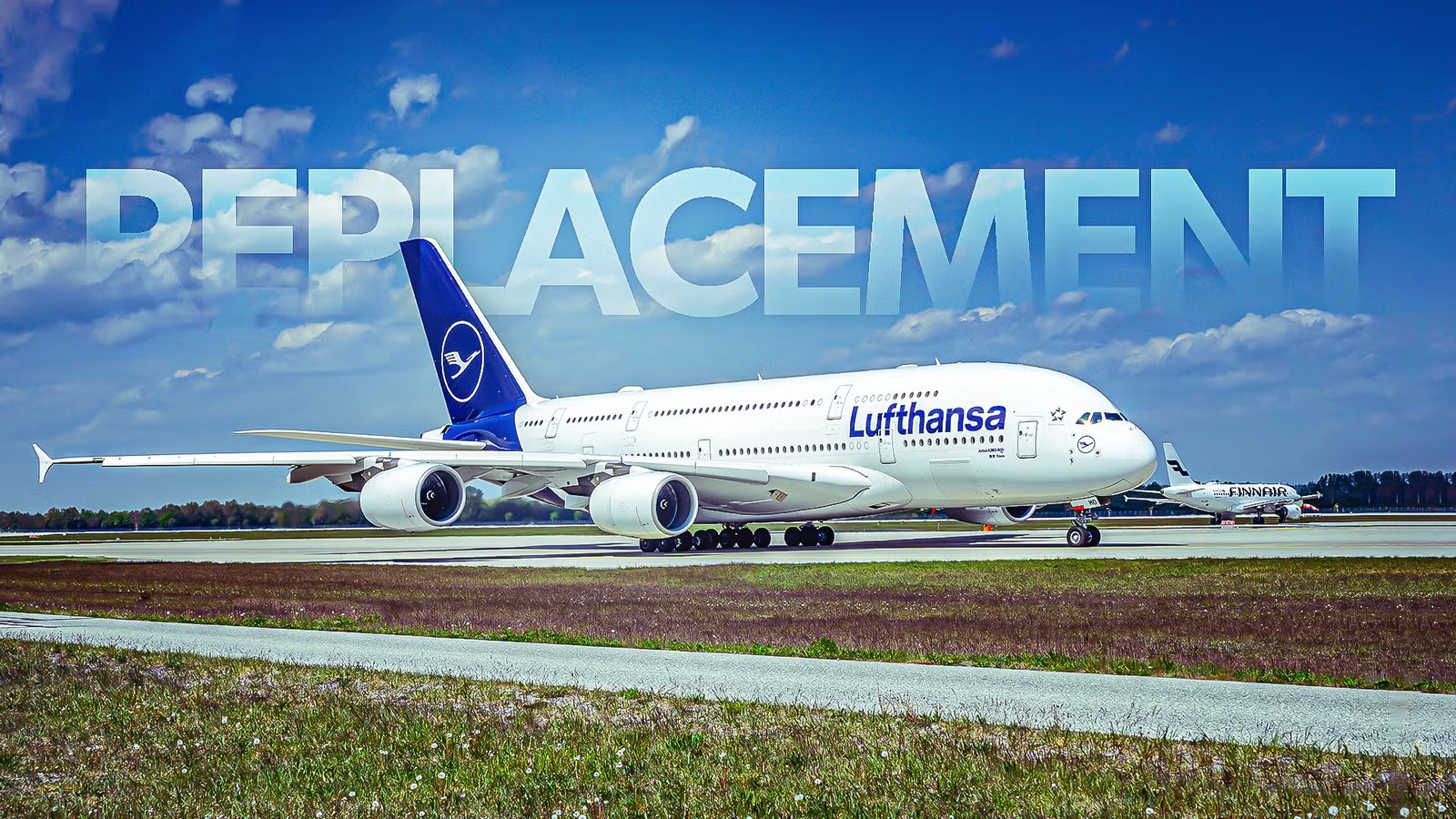
For more than as long as many can remember, the Boeing 747 and more recently the Airbus A380 have been the icons of the modern jet age, towering above every other jet physically and symbolically. However, with the final iterations of these types having rolledoff the line and quad-engine giants steadily disappearing from passenger fleets, airlines are preparing for a new generation of long-haul flagships. The focus now is on aircraft that can match their high capacity without fuel penalties and infrastructure limitations.
At the center of this transition is the Boeing 777X, the future longest commercial aircraft ever built, which is readily positioned as the natural heir to the era-defining giants of the sky. The shift from four engines to two marks a structural change in how airlines operate, how engines are built, and ultimately, how passengers travel. From ETOPS rules that paved the way for these next-generation twinjets to the immense efficiency of new-generation turbofans, the market has moved firmly toward large, long-range aircraft with just two engines.
From Four To Two

The end of Boeing 747 production in 2022 marked the end of one of aviation’s most iconic symbols, one that inspired so many around the world to travel or be part of the incredible world of aviation. The final 747-8 freighter left the Everett factory ahead of delivery to Atlas Air in early 2023, putting the finishing touch on what is undeniably an era-defining legacy. Built across 54 years and totalling 1,574 units, the 747 reshaped global travel and introduced affordable long-haul flying to millions around the world.
The A380 would later eclipse it in size, but neither aircraft could outrun shifting economics and operational realities. For most of aviation’s history, four engines were a necessity. Early jetliners like the Boeing 707 and Douglas DC-8 relied on multiple engines for redundancy and long-range performance, especially under the FAA’s early restrictions, which required twinjets to remain within 60 minutes of diversion airports. However, as engine technology matured, the need for four engines rapidly diminished.
The introduction of ETOPS regulations, along with the steady expansion of allowable diversion times, unlocked long overwater routes for twin-engine aircraft, helping set the stage for their future. By the time the A380 entered service in 2007, the market had already begun pivoting. High fuel prices, airport infrastructure limitations, and an industry-wide shift toward point-to-point flying left very large aircraft with a shrinking customer base.
While the A380 survives thanks to Emirates’ unique network model, some airlines have already parked or retired theirs, often long before their expected lifespan. The same has been the case for the 747-8, which was expected to help continue the legacy of the 747 into the future. The vast majority of these can be found as freighters, with only a small number of passenger variants taking to the skies today.
What Caused The Downfall?

Today’s twin-engine aircraft can fly nearly every route once monopolized by the likes of 747s and A380s, and they do it far more economically. New turbofan engines, such as the GE9X powering the 777X, produce more thrust individually than the four engines on an early Boeing 707 combined, according to SPS Aviation. This extraordinary leap in power and efficiency means large twinjets can replace quadjets on almost any mission profile, offering lower maintenance costs, fewer inspections, and significantly reduced fuel burn, just to name a few.
Passenger demand patterns also contributed to the downfall of the superjumbo. Airlines increasingly favor multiple daily departures on smaller widebodies instead of a single high-capacity flight on a very large aircraft. This gives carriers more flexibility to match seasonal demand, cancel flights selectively, or simply adjust capacity without risking hundreds of empty seats. Even  Emirates, the staunchest defender of the A380, only operates the type profitably because its Dubai hub has been built to funnel exceptional volumes of long-haul traffic.
However, despite these trends, the superjumbo hasn’t vanished overnight. Several airlines have recently brought A380s back into service as travel demand surges, and Emirates has committed to operating the type well past 2040, according to Aerospace Global News. Even so, no manufacturer is considering a new quadjet for the time being. The future, in almost every scenario, belongs to large twin-engine aircraft, and that is what we have been progressively seeing more of in recent years.

Airbus A380 Vs. Boeing 777X: Which Is the Bigger Aircraft?
The answer depends on the measure used.
The Next Step For Aviation

The Boeing 777X represents the aviation industry’s answer to the A380’s eventual departure. While it won’t surpass the A380 in pure cabin width or double-deck grandeur, it offers near superjumbo capacity with the operational efficiency of a twin. The aircraft will become the world’s longest commercial jet at 76.7 meters once it enters service, surpassing even the 747-8, which is currently the longest in-service airliner at 76.2 meters.
Its most distinctive feature is its composite folding wingtip, a first of its kind for a commercial airliner. The unfolded 71.8-meter wingspan delivers long-range aerodynamic efficiency, while the folded 64.8-meter span allows it to use the same airport gates as today’s 777s. This innovation directly addresses one of the major limitations of the A380 and 747, which was the incompatibility with existing airport infrastructure, necessitating the refurbishment or entire redevelopment of existing infrastructure at many airports.
|
Specifications |
Value |
|---|---|
|
Capacity (2 class) |
400–426 passengers |
|
Range |
7,285 NM (13,500 km) |
|
Length |
251 feet, 9 inches (76.7 meters) |
|
Wingspan (flight) |
235 feet, 5 inches (71.8 meters) |
|
Wingspan (folded) |
212 feet, 8 inches (64.8 meters) |
|
Engines |
2 × GE9X |
|
MTOW |
775,000 lbs |
The aircraft is expected to deliver a 10–12% fuel-burn reduction compared to the Boeing 777-300ER. This efficiency makes it far more aligned with current airline strategies than any four-engine design could be. For where the industry is today, so heavily focused on achieving the highest efficiency and performance, it makes perfect sense to opt for an aircraft like the 777X.
A Long Wait

Although the 777X is expected to replace the A380 for many airlines, its journey to the skies has been far from straightforward. Originally planned to enter service around 2020, the programme has faced certification changes and Boeing-wide workflow delays. These issues have pushed entry into service to 2027, with Lufthansa slated as the launch customer.
The drawn-out certification stands in stark contrast to the development of the original 747, which Boeing designed in an astonishing 28 months to meet Pan Am’s demands, according to Works That Work. Gone are these days for Boeing, although modern regulatory scrutiny is far more rigorous than it once was, and twinjet flagships must meet the highest standards for ETOPS approval and overall structural performance.
Despite the delays, airlines such as Emirates, Qatar Airways, and Lufthansa continue to treat the 777X as a key part of their long-haul planning. Once it enters service, it is positioned to become the largest twin-engine jet in the world, and the most capable replacement for high-capacity quads. It is not alone, however, with the Airbus A350 and Boeing 787 also well positioned to fight for such a title. The A350 is of particular note, being Airbus’ flagship long-haul aircraft that is already well proven in today’s airline industry.

Delayed Again: Boeing 777X Delivery Timeline Pushes Back To 2027
The long-awaited next-gen widebody will wait even longer to debut.
A Pragmatic Solution?

A central reason the A380 struggled was its reliance on extremely dense routes where 500–600 seats could be consistently filled. Even before the pandemic, many airlines reported difficulty keeping the aircraft profitable in shoulder seasons or on routes with fluctuating demand. Carriers today prioritize flexibility as a crucial element to the success of their day-to-day operations. Two flights on an A350 or 787 allow better schedule options than a single ultra-large departure.
Just by looking at route maps for many global airlines such as  Air France or Japan Airlines, this strategy can be seen clearly in action. The latter, for example, operates both the 787 and A350 on twice-daily services to key locations such as London Heathrow and New York JFK. Moreover, twin-engine aircraft bypass many airport limitations that plagued the A380, including gate compatibility, taxiway stress, and the cost of terminal adjustments.
According to Science Direct, several airlines openly stated they would not invest millions to accommodate a single fleet type, as it simply causes too many problems and risks operationally. If a whole aircraft type were to be grounded, for example, then an airline solely reliant on that aircraft would also be grounded entirely. By contrast, the 777X can slot directly into existing widebody operations, allowing airlines to maintain resilience and schedule integrity even when individual aircraft types are temporarily grounded or face maintenance bottlenecks.
The 777X hits a sweet spot for what airlines so desperately need. It’s large enough to replace both 777-300ERs and some 747/A380 operations, small enough to maintain high seat loads and frequency options, and efficient enough to meet environmental and fuel-burn targets. On paper, then, at least, it seems like the perfect answer to the next generation of long-haul aircraft, but it remains to be seen what the reality of the 777X project will be. Given its progression to date, we should expect things not to be plain sailing.
A Key Turning Point

As airlines modernize their fleets, efficiency and environmental performance dominate strategic planning. This, unfortunately, leaves little room for the return of quad-engine passenger aircraft. While the A380 will remain a flagship for Emirates and select carriers for years to come, no manufacturer is planning a new double-deck, four-engine airliner. Instead, the focus is on long-range twinjet aircraft that maximize flexibility, reduce emissions, and operate profitably across a wider range of routes.
The Boeing 777X stands at the forefront of this transition. It offers similar capacity, extended range, and cutting-edge aerodynamics without the structural compromises of a double-decker or the weight penalties of a quad. In an industry where margins are thin and sustainability goals are tightening, the 777X looks set to become the aircraft that ultimately succeeds the world’s largest commercial jet. As such, the next chapter of aviation will be written not by ever-bigger aircraft, but by ever-smarter ones.