dailynewsnblog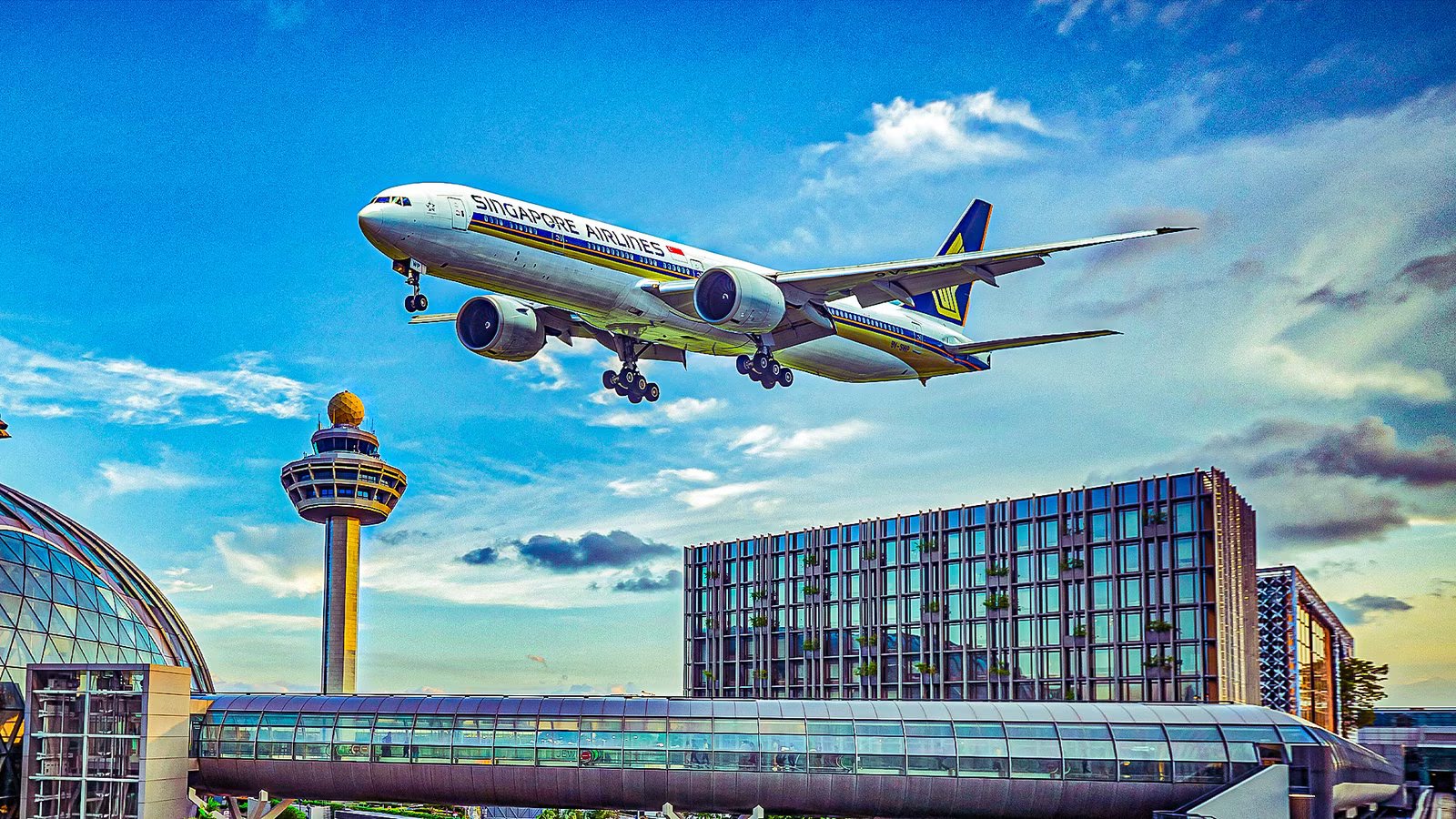
 Singapore Changi Airport (SIN) sits at the crossroads of global air travel, and flag carrier
  Singapore Airlines has a dynamic long-haul network that turns this facility into a true nonstop hub for some of the world’s most demanding missions. The Boeing 777, and specifically the 777-300ER flagship, remain key pieces of that story. The widebody itself, alongside other models like the Airbus A350 and the Boeing 787, serves as a key element of the airline’s network, all jets that are built for distance, payload, and a premium-oriented cabin that matches the airline’s positioning within the market. Today, however, range is used for strategy as much as it is for engineering. Airlines have to balance winds, crew duty limits, maintenance planning, and cargo revenue allocations on top of trying to make sure they fill enough seats day after day to break even.
We analyze the seven longest nonstop routes operated from Singapore Changi International Airport, services that top out at around 9,500 miles (15,300 km). We aim to compare who flies each of these individual services, where Singapore Airlines goes head-to-head with rivals, and what kind of aircraft are most used on these exceptionally long routes. We aim to develop a route-by-route snapshot of endurance flights and the role that Singapore Airlines plays in all of this, further discussing how a single aircraft choice can fundamentally reshape both the onboard experience and the business case that can be made for long-haul travel. All along the way, we aim to connect the dots between distance and capacity, and what they reveal about Singapore’s role in the global aviation industry.
7
Singapore – Manchester
6,810 miles (10,960 km)

An intercontinental route, this nonstop service stands out as Singapore Airlines’ longest European route. The airport connects the airline’s Singapore hub to Manchester Airport (MAN), one of the busiest airports in the United Kingdom outside the greater London area.
|
Category |
Specification |
|---|---|
|
Operator(s) |
Singapore Airlines |
|
Typical Aircraft |
Airbus A350-900 |
A flight operated using the standard Airbus A350-900, this nonstop link gives passengers direct access from Singapore to Manchester and northern England. A route that fills a niche in demand between Europe and Asia, this allows passengers to bypass congested London hubs in favor of a more convenient and direct alternative.
This is a route that feeds demand directly from leisure and business passengers. By deploying the Airbus A350 (a lighter and longer-range twin-engine aircraft), Singapore Airlines is able to effectively balance its needs for both capacity and fuel economy. This allows the airline to capture European demand without an over-commitment of its widebody resources on routes that see slightly lower yields than the airline’s more traditional ultra-long-haul network.
6
Singapore – Vancouver
7,965 miles (12,818 km)

This trans-Pacific route is operated by Canadian flag carrier  Air Canada, and it links Singapore with Vancouver International Airport (YVR). As of the route’s April 2024 launch, it has been the only nonstop service between Southeast Asia and Canada.
|
Category |
Specification |
|---|---|
|
Operator(s) |
Air Canada |
|
Typical Aircraft |
Boeing 787-9 |
This flight is one of the longest flights in Air Canada’s entire network, and it is served four times per week with a Boeing 787-9, and it is a key piece of why Vancouver is Air Canada’s primary gateway for travel to Asia-Pacific. This service targets both business and leisure travelers while also capturing high-yield cargo flows across the Pacific.
Given the lower frequency of this service in comparison to other major Singapore Airlines routes, this is a niche link that offers some strategic value. It provides a direct option for passengers heading to western Canada or onward to other North American cities without the penalties that come along with a multi-stop itinerary.

Singapore Airlines Vs. Cathay Pacific: Which Airline Has More Widebody Aircraft?
Despite Singapore Airlines carrying more passengers each year, Cathay Pacific operates a larger overall fleet and a larger widebody fleet.
5
Singapore – Seattle
8,068 miles (12,984 km)

This nonstop route between Singapore Changi International Airport and Seattle-Tacoma International Airport (SEA) reflects the airline’s expansion to secondary hubs on the American West Coast. The carrier serves this route with its standard Airbus A350-900, and the service targets demand from the technology industry, which has only continued to grow in recent years as Seattle maintains a rapidly growing software and cloud sector.
|
Category |
Specification |
|---|---|
|
Operator(s) |
Singapore Airlines |
|
Typical Aircraft |
Airbus A350-900 |
The airline also operates a number of cargo-heavy transpacific services on this route, due to the fact that it can use a standard Airbus A350-900 and has limited weight restrictions. A nonstop link that is popular with diaspora travelers, this flight offers a convenient alternative to one-stop flights through East Asia or another US gateway.
This kind of service is especially valuable when time and efficiency matter. Operating less frequently than the major West Coast routes, this flight helps round out Singapore Airlines’ US West Coast coverage, and it expands its reach beyond the traditional pair of Los Angeles and San Francisco, something which only helps the airline increase its monetization and the way it offers products to the US market.
4
Singapore – San Francisco
8,440 miles (13,583 km)

With over 700 flights per year in each direction, this route is Singapore Airlines’ most frequently operated long-haul Airbus A350 service. This nonstop flight taps into not only the West Coast’s substantial diaspora population but also the large amount of tech-driven business traffic coming from Silicon Valley.
|
Category |
Specification |
|---|---|
|
Operator(s) |
Singapore Airlines, United Airlines |
|
Typical Aircraft |
Airbus A350-900ULR, Airbus A350-900, Boeing 787-9 |
This connection also serves leisure travelers and other kinds of passengers looking to cross the Pacific Ocean. On this service, Singapore Airlines deploys the Airbus A350-900 as well as the Airbus A350-900ULR, giving it a dynamic mix between multiple kinds of premium and non-premium cabins.
The route is also served by United Airlines, Singapore Airlines’ principal US-based airline partner, which also operates a single daily Boeing 787-9 service on this route. The competition between these two carriers gives consumers both cost and schedule flexibility while maintaining high capacity and competitive yields on a journey this long. United Airlines also operates a premium-heavy configuration on this flagship long-haul route.

Singapore Airlines’ Ultra-Long-Haul New York Flights: 5 Fascinating Facts
The Asian carrier is known for operating the longest scheduled passenger flights in the world.
3
Singapore – Los Angeles
8,758 miles (14,095 km)

This east-to-west Pacific route connects Singapore with the United States West Coast’s largest gateway at Los Angeles International Airport (LAX). This route also uses the premium-oriented Airbus A350-900ULR, which is operated exclusively by the carrier. This service was originally launched in 2018 as part of Singapore Airlines’ broader West Coast expansion.
|
Category |
Specification |
|---|---|
|
Operator(s) |
Singapore Airlines |
|
Typical Aircraft |
Airbus A350-900ULR |
This nonstop route aims to capitalize on strong tourism demand, the entertainment industry’s corporate travel, and diaspora links between California and communities across Southeast Asia. Per the latest scheduling data provided to Simple Flying by Cirium, this route operates daily in both directions, and it offers a roughly 17- to 18-hour block time.
On a service that mixes tourism, business, and visiting friends and relatives (VFR) traffic, the lack of an economy-class cabin is a noteworthy omission. This helps the airline preserve yields by focusing on serving business and premium economy passengers exclusively. This allows the carrier to appeal to passengers in search of comfort on such long journeys while also helping manage overall fuel costs.
2
Singapore – Newark
9,484 miles (15,263 km)

This route is nearly identical in distance to the carrier’s nonstop JFK service, and the route between Singapore and Newark gives the airline another non-stop gateway to the United States East Coast under Singapore Airlines. This allows the carrier to continue enhancing its connectivity.
|
Category |
Specification |
|---|---|
|
Operator(s) |
Singapore Airlines |
|
Typical Aircraft |
Airbus A350-900ULR |
A route served by the Airbus A350-900ULR, the service covers the same roughly 18-hour block time, and it operates daily in both directions. This Newark option provides better access to the broader tri-state area and the mid-Atlantic region compared to JFK.
This makes it a much more attractive route for business travelers looking to efficiently go from the airport to major business districts like the Financial District or Hudson Yards. This service ensures that Singapore Airlines is able to maintain a near-complete presence in the New York Area.

Why Singapore Airlines Doesn’t Have Economy On Its Airbus A350-900ULRs
The carrier operates these aircraft with only premium seating.
1
Singapore – New York-JFK
9,487 miles (15,268 km)

The nonstop route between Singapore Changi and John F. Kennedy International Airport (JFK) in New York City remains the flagship ultra-long-haul service operated by Singapore Airlines. The service utilizes the Airbus A350-900ULR and is cited routinely as the longest regularly scheduled commercial flight in the world.
|
Category |
Specification |
|---|---|
|
Operator(s) |
Singapore Airlines |
|
Typical Aircraft |
Airbus A350-900ULR |
The service itself takes roughly 18 hours and runs daily in both directions, making it a cornerstone in Singapore Airlines’ long-haul Pacific-Atlantic connecting strategy. Demand is ultimately driven by high-value passengers, business travelers, high-end leisure customers, and diaspora transfers that value time savings over a one-stop itinerary.
The ULR aircraft that operates this route is uniquely configured with only business and premium economy cabins, offering maximum comfort on a roughly 19-hour journey. This also allows the carrier to optimize for fuel and payload economics. The nonstop nature of this route offers the airline exceptional pricing power in premium cabins.