dailynewsnblog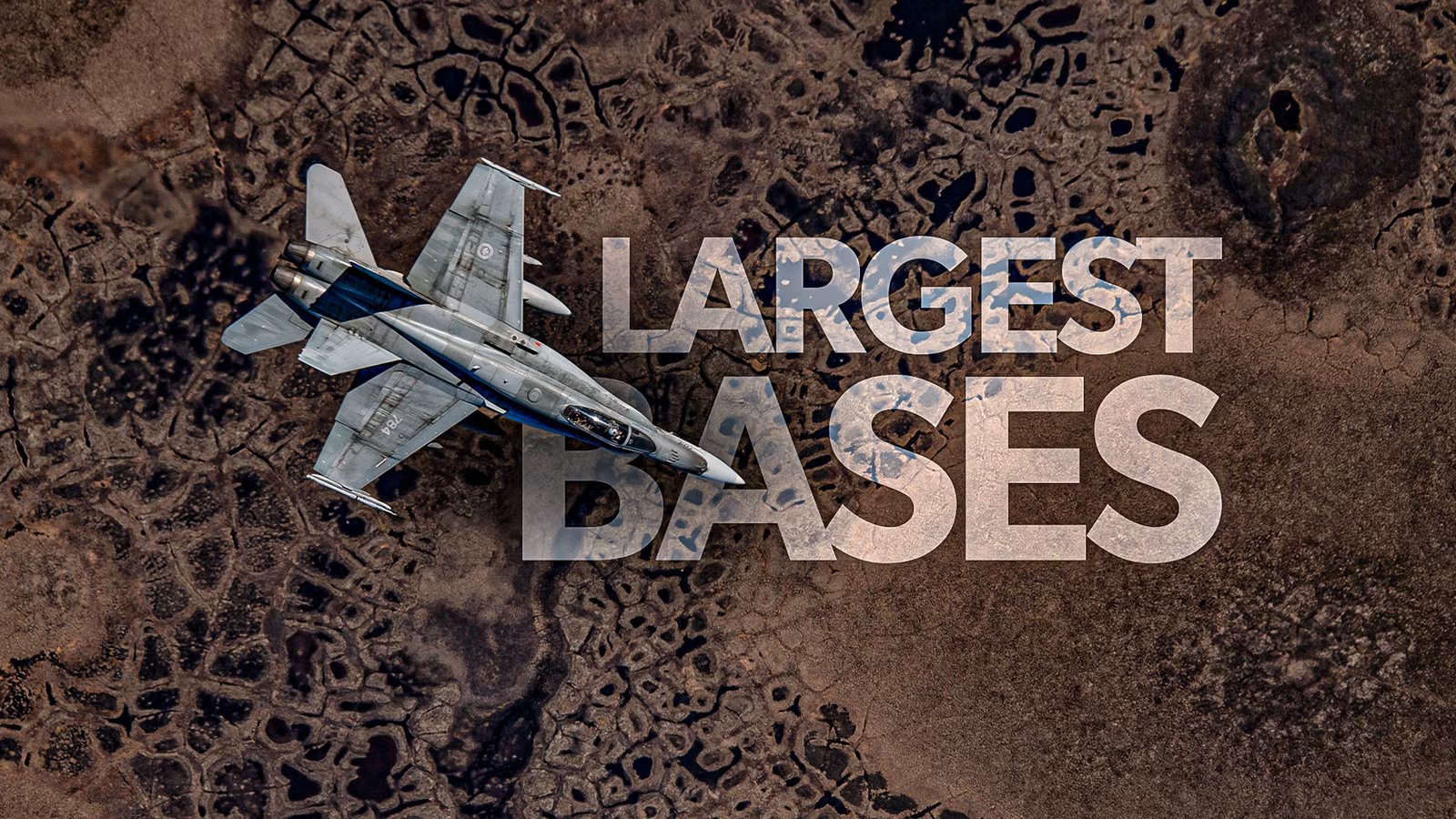
The Royal Canadian Air Force is an integral part of the defense forces of Canada. As such, there were a number of airbases around Canada and even Operational Support Hubs (OSHs) overseas to support the fleet of advanced fighter jets, airlifters, helicopters, and more. One of the primary missions of the RCAF is to support the North American Aerospace Defense Command (NORAD), which means the fighter fleet is concentrated on territorial defense operations.
Canada routinely trains with American armed forces as well as partner nations from the North Atlantic Treaty Organization (NATO) and other International Security alliances. The expeditionary operations of the RCAF make OSHs crucial; however, access to Joint Bases around the world eliminates the need for large installations. The Canadian Defense Forces currently have a small footprint of OSHs in Germany, Kuwait, Jamaica, and Senegal, which are hosted by the local military.
By far the largest air bases in the Canadian Forces are all within the borders of ‘The Great White North.’ Canada has one of the most modernized, modestly sized military forces in comparison to the top global powers. Using military force comparisons such as the Global Firepower Index, the Canadian military stands in the top 30, ranking somewhere around 28 out of 145 nations. In order to maintain its high level of readiness and capability, Canada has established a number of large air training facilities with expansive weapons ranges and training areas.
7
CFB Moose Jaw
1.5 Square Miles

Canadian Forces Base Moose Jaw, also known as 15 Wing Moose Jaw, is the primary training hub for new aviators through 2 Canadian Forces Flying Training School (2 CFFTS). It is also the home base for the 431 Air Demonstration Squadron, better known as the Snowbirds. The base occupies approximately 1.54 square miles and is situated just south of the city of Moose Jaw, Saskatchewan.
The base is a central site for the $11.2 billion Future Aircrew Training (FAcT) program, which will modernize training infrastructure and aircraft to prepare pilots for advanced platforms like the F-35. Among the other missions it hosts, the base is the principal site for NATO Flying Training in Canada (NFTC) international program, which trains approximately 140 pilots per year from various NATO and allied countries.
6
CFB Comox
2.0 Square Miles

CFB Comox, also known as 19 Wing Comox, is the RCAF’s primary installation on the West Coast, located on the Lazo Peninsula of Vancouver Island. The base provides support for NORAD fighter detachments monitoring the Pacific coastline. It also serves as the main hub for anti-submarine warfare and sovereignty patrols across the Pacific Ocean.
Below is a list overview of all the bases in this review, showing CFB Comox among the smallest of the major RCAF operational sites:
|
Base Name |
Land Area / Airspace |
Wing |
Primary Mission |
Key Feature |
|---|---|---|---|---|
|
CFB Goose Bay |
50,193.3 square miles (130,000 square kilometers) |
5 Wing |
Allied Training |
Manages world-class low-level flying areas |
|
CFB Cold Lake |
4,517.4 square miles (11,700 square kilometers) |
4 Wing |
Fighter Pilot Training |
Home of the Cold Lake Air Weapons Range |
|
CFB Greenwood |
5.41 square miles (14 square kilometers) |
14 Wing |
Maritime Patrol / SAR |
Largest air base in Atlantic Canada |
|
CFB Bagotville |
3.86 square miles (10 square kilometers) |
3 Wing |
Air Defense / Interception |
Currently undergoing massive F-35 upgrades |
|
CFB Trenton |
2.12 square miles (5.5 square kilometers) |
8 Wing |
Air Transport / Logistics |
Canada’s busiest air base by personnel/ops |
|
CFB Comox |
1.93 square miles (5 square kilometers) |
19 Wing |
Maritime Patrol / SAR |
Primary Pacific Coast air installation |
|
CFB Moose Jaw |
1.54 square miles (4 square kilometers) |
15 Wing |
Pilot Training |
Home of the Snowbirds demonstration team |
Comox is the home of 442 Transport and Rescue Squadron, covering one of the most challenging SAR regions in the world, from the ocean shore to the Rocky Mountains, as described on the official 19 Wing site. The base is unique because it shares its airfield with civilian commercial flights and houses the Comox Air Force Museum.

Why Might Canada’s F-35 Order Have The US Worried?
The threat to the Lightning II.
5
CFB Trenton
2.0 Square Miles

Trenton is home to 8 Wing and the busiest air force base in the Canadian Forces. The base is the largest hub for air mobility and transport operations both domestically and abroad, housing almost all of the fixed-wing airlifters in the RCAF. Today it is undergoing a massive $850 million modernization project to support the new CC-330 Husky strategic tanker transport fleet.
Trenton is designated as the Main Operating Base East, providing aerial refueling and strategic transport capabilities for NORAD and NATO operations. There are six squadrons stationed at the airfield. These units operate a variety of different platforms including the McDonnell Douglas CC-177 Globemaster III, Lockheed CC-130J Hercules, CC-150 Polaris, and even helicopters.
Below is a quick comparison of the RCAF and USAF for reference:
|
Category |
Canada (Rank 28) |
United States (Rank 1) |
|
Total Personnel |
146,000 including reserves |
2,111,000 including reserves |
|
Fleet |
406 total aircraft |
13,000+ total aircraft |
|
Fighter Jets |
85 |
1,850+ |
|
Defense Budget |
$20 billion USD |
$800+ billion USD |
Located in Quinte West, Ontario, Trenton is just over 100 miles east of Toronto. The base grounds are just over two square miles in total area and accommodate a 10,000 ft runway. There are around 3,000 service members and 600 civilian employees that man the facility. The National Air Force Museum of Canada is also housed on-site.
4
CFB Bagotville
4.0 Square Miles

Under the stewardship of 3 Wing, Bagotville is located in Saguenay, Quebec, and serves as one of Canada’s two primary fighter bases. It is a central piece of Canada’s NORAD modernization plan. The command is responsible for protecting the airspace over eastern Canada, the Atlantic, and the Canadian Arctic. The 433 and 425 Tactical Fighter Squadrons operate the CF-18 Hornet fleet, maintaining a constant Quick Reaction Alert to intercept unidentified aircraft entering Canadian airspace.
Bagotville is currently undergoing its largest transformation in decades to house the new F-35A Lightning II fighter jets. The first of the fifth-generation fighters is expected to arrive in the next few years. The new facilities include a new hangar facility featuring 16 aircraft bays, high-security briefing rooms, and advanced flight simulators.
Bagotville is also the headquarters for 2 Wing, the RCAF’s deployable wing that provides the tents, power, and logistics to set up an airfield anywhere in the world. The 439 Combat Support Squadron also flies CH-146 Griffon helicopters for support or search and rescue missions. Like CFB Comox, Bagotville is a dual-use airport. It shares its runways with Bagotville Airport (YBG) and hosts the famous Spectacle Aérien International de Bagotville (SAIB), which is one of Canada’s largest air shows.
3
CFB Greenwood
5.5 Square Miles

Greenwood’s 14 Wing is responsible for the RCAF’s primary hub of maritime patrol and search and rescue (SAR) operations on the East Coast. It is the largest RCAF operational air base in Atlantic Canada, situated in the Annapolis Valley of Nova Scotia. The base is preparing for the arrival of the Boeing P-8A Poseidon, which will eventually replace the current CP-140 Aurora fleet, and the introduction of Remotely Piloted Aircraft Systems (RPAS).
Major reconstruction of the secondary runway recently broke ground to meet the updated RCAF standard for safety and performance in advance of the base expansion. To accommodate growing personnel numbers, a $97-million investment was announced last month to build 208 new residential units at the base. A new $33-million aircraft refueling facility is slated for completion by September of this year to provide 24/7 support for flying missions.
The airfield is also shared with civilian general aviation through a lease agreement with the local government. Greenwood also oversees extensive military exercise areas off the coast of Nova Scotia and Newfoundland. These are used for anti-submarine warfare (ASW), sovereignty patrols, and maritime search and rescue training.

Could Canada Choose Sweden’s Gripen Fighter Jet Over The F-35?
Canada’s ‘Plan B’ for air superiority.
2
CFB Cold Lake
4,500+ Square Miles

Cold Lake is by far the largest and busiest fighter base, including its Cold Lake Air Weapons Range (CLAWR). The range straddles the Alberta-Saskatchewan border, and it is considered one of the world’s premier fighter training bases due to the massive, unrestricted airspace and unique terrain. Currently, 401 and 409 Tactical Fighter Squadrons of 4 Wing are stationed here, and both fly the CF-18 Hornet.
Cold Lake is currently the site of a multi-billion-dollar infrastructure overhaul for the CF-35A Lightning II stealth fighters. The first batch will go through transition training at Luke AFB in Arizona, USA, while Cold Lake finishes its domestic infrastructure. The first jets are expected to arrive physically at Cold Lake in 2028. Massive projects are underway, including six hangars, specialized secure enclosures, and power grid modernizations to support advanced simulators.

Here’s Why Canada Is Moving Forward With Its Order For F-35 Fighter Jets
A closer look at the status of the controversial procurement program.
1
CFB Goose Bay
50,000+ Square Miles

While smaller in permanent infrastructure than Cold Lake, CFB Goose Bay, and 5 Wing manage one of the largest military flight training areas in the world. It provides over 100,000 square kilometers of unrestricted area for NORAD and allied training. Its main runway is also one of the longest in Eastern Canada at over 11,000 feet, capable of handling the world’s largest aircraft. According to Skie Mag, the 75-strong unit at Goose Bay now manages what was a Cold War USAF base made for 12,000 troops.
It is world-renowned for ultra-low-level flight training (down to 100 feet), which NATO and allied forces utilize to practice evading radar in rugged, austere terrain. The base frequently hosts international partners, like America or NATO partners such as Germany, for winter warfare training in its Dakota Range and Practice Target Area (PTA).
The base at Goose Bay is also the main hub for Operation BOXTOP, a unique mission to resupply CFS Alert. RCAF aircrew make an annual trek to the world’s northernmost permanently inhabited site, which serves the NORAD mission, performs scientific studies, and provides SAR to the Arctic region. The RCAF also operates alongside the Goose Bay Airport (YYR), sharing runways with commercial and private traffic.