dailynewsnblog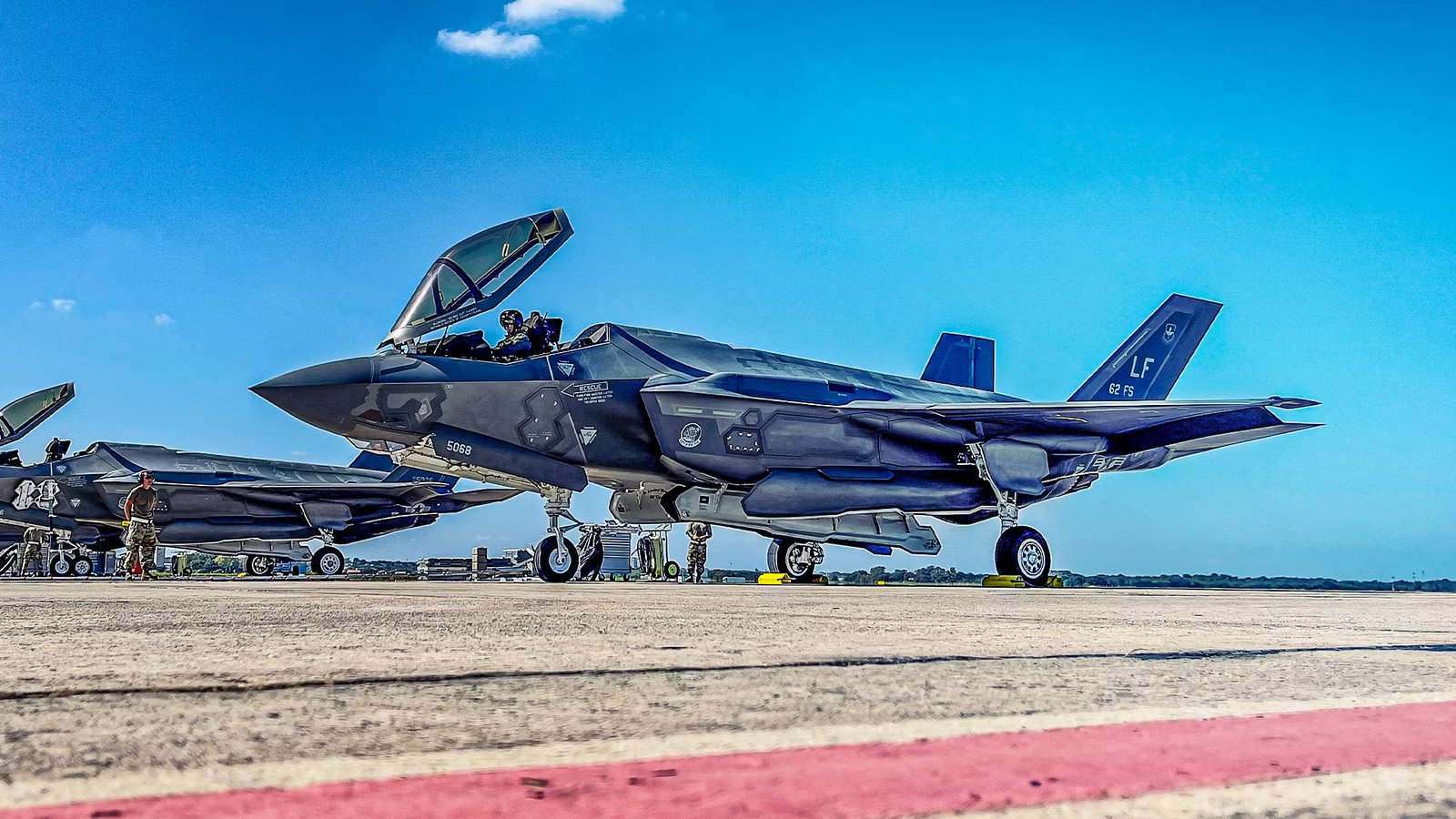
The continent of North America is divided by the United States, Mexico, and Canada. However, in the contest of military air power, the USA leads the way. The United States has more aircraft in its military inventory than the next four members of the top five combined. The US Army alone has more helicopters than many nations have in their entire air force.
So when it comes to air bases, there are none more impressive than the ones you find in America. There are many military air stations around the US. However, this list is focused solely on the ones with a particularly impressive concentration of air power. It may be surprising to find that the US Air Force is not the only service branch with large numbers of airframes, and in fact, the top spot goes to the US Navy.
6
Eglin AFB
90+ Aircraft

Located in the northwest corner of the Florida Panhandle, Eglin AFB is the primary aircraft and weapons testing facility in the US Air Force. Not only does the base cover more than 700 square miles, it is also responsible for an enormous over-water range that extends into the Gulf of Mexico. On any given day, there are more than 90 aircraft that can be found on the base, with a diverse mix of airframes among them.
Headquartered at Eglin, the 53rd Wing is responsible for operational testing and evaluation of nearly every aircraft and weapon system in the Air Force inventory. The 40th Flight Test Squadron and 85th Test and Evaluation Squadron operate a variety of platforms for developmental and operational testing, including F-16 Fighting Falcons, F-15 variants, and A-10 Thunderbolt IIs. Meanwhile, the 33rd Fighter Wing is a major joint training hub for Lockheed Martin F-35A Lightning II.
The base is a ‘superbase’ with over 50 tenant units, including the Army’s 7th Special Forces Group at Camp Bull Simons and the 6th Ranger Training Battalion, which conducts the ‘swamp phase’ of Ranger School. Eglin even shares its runways with the Destin-Fort Walton Beach Airport (VPS), making it one of the few military bases with an on-site commercial airport. Nearby Duke Field also hosts the 919th Special Operations Wing, the only such wing in the Air Force Reserve, operating C-146A Wolfhound and other specialized aircraft.
5
JB Elmendorf-Richardson
100+ Aircraft

Joint Base Elmendorf-Richardson is a very large air base that was created by combining the Legacy Airfield and Army Fort into one super complex. The base has evolved into the primary power projection platform across the Arctic and Pacific theaters for the US Air Force, especially noteworthy for its extremely high concentration of 5th-generation stealth fighters.
The base is home to the largest number of Lockheed Martin F-22 Raptor stealth fighters, the first 5th gen ever made. There is a steadily growing number of F-35A stealth fighters at nearby Eielson Air Force Base as well, which frequently operate from JBER during exercises and other operations. There are two active-duty fighter squadrons that operate the F-22 permanently based at JBER and a reserve fighter squadron as well.
In addition to fighter jets, the 176th Wing of the Alaska Air National Guard and the USAF Third Wing operate the McDonnell Douglas C-17 Globemaster II Strategic Air Lifter. JBER is also home to an Airborne Command and Control Squadron (AWACS) that flies the Boeing E-3 Sentry. During exercises like Northern Edge or Red Flag-Alaska, squadrons arrive from the US Navy and Marines as well as international partners, surging the total airframe counts into triple digits.
4
Little Rock AFB
100+ Aircraft

Little Rock Air Force Base is the home of the largest Lockheed C-130 Hercules fleet in the world. Located near the city of Jacksonville in Arkansas, it is the primary training home for the entire Department of Defense, the US Coast Guard, and more than 47 allied nations that operate the C-130. The base is typically home to more than 100 examples of different variants of the C-130.
Below is a snapshot of how Little Rock compares to the other largest airbases in NA, by the numbers:
|
Base Name |
Location |
Aircraft Count |
Role |
|---|---|---|---|
|
NAS Oceana |
Virginia |
250+ |
Primary home for the Navy’s Atlantic Fleet strike fighters |
|
Luke AFB |
Arizona |
150+ |
Largest fighter wing for F-35 training |
|
Nellis AFB |
Nevada |
150+ (variable) |
Advanced combat training and Red Flag exercises |
|
Little Rock AFB |
Arkansas |
100+ |
Global combat airlift and C-130 training |
|
JB Elmendorf-Richardson |
Alaska |
100+ |
Strategic joint base for Air Force and Army |
|
Eglin AFB |
Florida |
90+ |
Weapons testing and multi-service training |
Although there are many specialized configurations, the baseline variance that will be found here is derived from one of two models, the C-130H or the C-130J Super Hercules. The base features a 12,000-foot concrete runway and a dedicated assault landing strip for training. The 314th Airlift Wing trains more than 1,500 student aircrew every year. There is also the 29th Weapon Squadron, which is a specialized unit that provides advanced tactical training for C-130J pilots.

The 4 Largest Air Force Bases By Bomber Fleet Presence
A closer look at the homes of the USAF’s heaviest-hitters.
3
Nellis AFB
150+ Aircraft

Just like the massive fighter base that takes the top spot on this list, technically, the number of aircraft found at Nellis AFB is variable; however, the continuous transition of squadrons and units in and out keeps the average very high. Nellis is one of the training hotspots of the entire Western Bloc of allied militaries. Aside from hosting many squadrons from all of the US service branches, fighters and other platforms from international partners are very often found here as well.
Red Flag is a premier two-week aerial combat exercise held several times a year to provide aircrews with their first ten combat missions in a realistic environment. During these exercises, nearly 100 aircraft typically depart the base twice a day, conducting both daytime and night missions that can last up to five hours each.
There is a substantial fleet of permanent aircraft at Nellis with units like aggressor squadrons, support and logistics, search and rescue, air-to-air tankers, and more. The colossal facility has evolved over the decades with extensive infrastructure that can support virtually any platform flown by any allied military force. The base is frequently host to LM F-22 Raptors, F-35 Lightning IIs, Boeing F-15E Strike Eagles, and even Eurofighter Typhoons.
A unique permanent feature is the 65th and 64th Aggressor Squadrons, which fly F-35s and F-16s painted in adversary schemes to simulate enemy threats during training. Beyond fighters, the base accommodates heavy aircraft such as B-1B bombers, B-52s, C-130s, C-17s, and KC-135 tankers.

What US Air Force Bases Have F-35s?
Ten air force bases are listed as bases for the USAF F-35A, although they can operate from many more bases.
2
Luke AFB
150+ Aircraft

Occupying a vast expanse of the Arizona desert, Luke Air Force Base is home to the 56th Fighter Wing, the largest Fighter Wing in the US Air Force. Once famous for training virtually all the world’s pilots of the general F-16 Fighting Falcon, Luke’s new mission is to train F-35 pilots. Today, the base is fully transitioned and now trains around 75% of the world’s pilots of the Lockheed Martin Joint Strike Fighter. The number of aircraft at the base is steadily increasing, as the last F-16 fighters rotate out; a total of 150 F-35s are expected to be based here.
The base not only has an enormous number of jets but is also responsible for nearly 2 million acres of training area known as the Barry M Goldwater Range. Luke is still training a handful of pilots for the F-16, including one of the last cadres that will go to the Republic of Singapore Air Force. In the past, pilots for many nations, including those of the North Atlantic Treaty Organization (NATO) like the Netherlands, Denmark, and Belgium, have trained here alongside US Airmen.

Where Are The US Navy’s Most Advanced F-35C Fighter Jets Based?
Discover where the US Navy’s elite F-35C fighter jets are stationed, their cutting-edge capabilities, and their pivotal operational roles.
1
NAS Oceana
250+ Aircraft

Naval Air Station Oceana is known as the master jet base of the East Coast. Its enormous airfield was established during WWII and has grown and developed along with the ever-increasing performance of USN carrier aircraft. Today, depending on the deployment cycles of the air wings that call this base home, there can be anywhere from 200 to over 300 fighter jets on its grounds at the same time. However, typically most of these planes are on one of the 11 aircraft carriers at sea, with around half of the squadrons being on deployment while the others are on shore duty.
The installation spans nearly 6,000 acres with hangars and facilities to support four Carrier Air Wings as well as the headquarters for Strike Fighter Wing Atlantic and a training squadron. Its airfield, Apollo Soucek Field, features four runways, with the longest reaching 12,000 feet to accommodate high-performance jets. The base also manages NALF Fentress in nearby Chesapeake for field carrier landing practice and Dam Neck Annex for specialized technical training.
In support of Carrier Air Wings One, Three, Seven, and Eight, the Fleet Replacement Squadron (FRS) trains new Naval pilots and Naval flight officers to fly the Boeing F/A-18E/F Super Hornet. There is also one C-40 Clipper logistics squadron, and the Navy is exploring when it may introduce the Lockheed Martin F-35C Lightning II stealth fighter to squadrons stationed at Oceana.