dailynewsnblog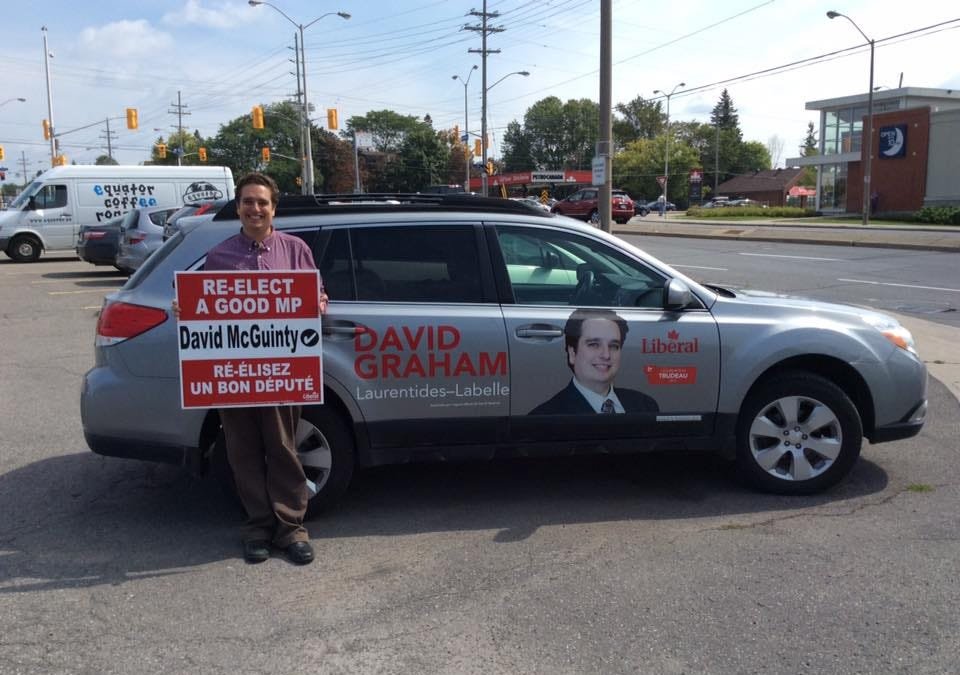
One feature Prime Minister Mark Carney offers Canada more than almost any other is a sense of control and stability. He is on the cusp of capturing the majority government that the general election did not provide just a year ago, as three by-elections follow a fourth floor-crossing. What does it mean for us?
Canada has only had three governments backed by majority parliaments this century, including Jean Chrétien’s final term. In 2004, 2006, 2008, 2019, 2021, and 2023, Canadians chose minority parliaments with all the uncertainty, brinksmanship, and the constant threat of election that comes with them.
When Stephen Harper won his only majority in the 2011 election, I was serving as the data chair on the campaign of an Ottawa-area MP in whose office I had worked for less than a month before the government fell. After the end of voting, scrutineers returned with local data from each of the polls. I plugged the numbers from the papers they brought into a spreadsheet to make sure our own assessment matched the preliminary public results, providing granular data in near real time. On the television playing in the background a Conservative majority was projected, and there was palpable relief in the room, even though it was not our majority.
After seven years of serving as an MP in consecutive minority parliaments, my candidate in the election, David McGuinty, stood in front of a burgeoning room full of dedicated volunteers and started his speech: “Have you heard the news? We won!”
Both cheeky and accurate, those seven words spoke volumes and have been stuck in my head ever since.

In our system, we do not have one election across the country, rather we have one election in each of the then-308 ridings, now up to 343. The local candidates matter. Not as much as they should, of course, but they do. While the Liberal party collapsed to just 34 seats that night, my candidate had been one of the party’s very few survivors.
It meant that I, as a brand new Hill staffer who, while I had worked in a constituency office, had had a paid position in Ottawa for a mere 28 days, might also survive while hundreds of staffers from defeated MPs and the shrunk leader’s, Whip’s, and House Leader’s offices were sent packing. As well as more than half of caucus, the leader, Michael Ignatieff, and the Whip, Marcel Proulx, had both been defeated.
As the party’s House Leader, McGuinty was the only surviving House officer and had the unenviable task of making the cuts in the three offices whose caucus-size-based budgets had been slashed by more than half. A few weeks later, when my own part-time position was confirmed, I felt a kind of survivor’s guilt. How had I survived when so many far more experienced staffers had been let go?
There were so many contradictions in what I was seeing that I am still not sure I got it all straight.
We were in a very real sense relieved that there was a majority parliament, despite knowing that the values of the Harper government largely contradicted our own.
Living and working in national politics under minority parliaments is tiring and expensive. Elections Canada has to maintain a high state of election readiness, able to deploy across every riding in the country within hours if the government falls. So does every candidate in every party. Campaign offices need to be planned, along with contingencies as the commercial real estate market carries on. Wealthier campaigns can open permanent campaign offices, but most have to be ready to scramble. Volunteers need to be campaigning and door-knocking to a higher degree and frequency than during a majority term. The parties have to conduct nomination races and keep a roster of candidates and backup candidates available across the entire life of the Parliament, as an election can happen, by accident and without warning, at any time.
Each electoral defeat brought us a new leadership race. Paul Martin’s first election as prime minister saw the majority he inherited reduced to a minority in 2004. Less than two years later, over the 2005-2006 winter holidays, he was defeated and resigned, resulting in the last delegated leadership convention the party held later that year.
In 2008, Stéphane Dion won an even smaller caucus, tried hard to hold on and wage a principled fight against an unprincipled prime minister, before being pushed out and replaced in a perfunctory leadership race by Michael Ignatieff in 2009, who brought us to the election in this story and a caucus smaller than the cabinet it challenged. Each race was relatively quick, offering time to update the name at the top but not to properly rebuild the finances, organisation, and values of the party.
A majority offered a break, time to rest and rebuild, to wage a longer and more in depth leadership race. It was nearly two full years between that May, 2011 defeat and Justin Trudeau taking the reins of the party in April, 2013. There was time to rebuild the party’s infrastructure, fundraising, nomination process, voting system, membership rules, and everything else. Trudeau’s team literally threw out the party’s outdated constitution and presented a new one written from scratch for the membership to adopt.
In the face of a majority, there was time.
But here we find the fundamental contradiction of our system. My candidate had won. In the 2011 election, nearly every Liberal candidate who had done so had a strong local profile. Their own brand and work had carried much of the weight of their wins.
For many, the party name had been a liability rather than an asset in that campaign. Of the 34 members of caucus, only 2 were new MPs, in Kingston and Charlottetown, and neither had taken the riding from another party.
In the present by-elections in Toronto and Terrebonne, as in all by-elections, the local candidate is thrust into the spotlight to a much greater degree than in a general election. By-elections are often portrayed in the media as a relatively low-risk referendum on the government, but, having worked on several by-elections, the candidates’ local profiles matter more than normal, not less. And this time the stakes are high.
The Liberal party led by Mark Carney won this century’s 6th minority. Augmented by floor crossings from both the Conservatives and the NDP, three by-elections are likely to push this parliament over the edge from a minority to a majority of just one seat.
I am not aware of any previous instance where a minority was converted to a majority — or vice versa — through floor-crossings and by-elections alone rather than through a general election, but nothing about our current era would suggest that historical precedent is much to go on.
In a minority, especially one so close to the boundary of a majority as we have today, every member of every party has greater autonomy and independence, a stronger voice, more weight to their decisions. A government can live or die on the whim of a single opposition member while government members know the stakes and work together. The need to work across party lines opens the government’s own backbench to collaboration. Nothing can get done without it and an election can happen on any morrow.
The very fact of the four floor crossings is a demonstration of the power of individual members.
The moment we cross the rubicon into a majority, however, the dynamics completely change on both sides of the aisle.
The opposition is free to oppose whimsically and performatively. The bluster can be stronger. There is no bluff to be called. Against a majority, opposition is, quite frankly, more fun. It becomes consequence-free. Opposition strategists no longer have to decide if they have to support or abstain, or simply hide a couple of members, on a confidence vote to discreetly avoid an election.
A majority offers relief to both a government who can more easily carry out their agenda, and an opposition who no longer needs to live on the knife-edge of standing on principle versus causing or being seen to have caused an unwanted or unneeded election. It is why, in 2011, there was palpable relief that the seven years of minority had ended, even if it was not in our favour.
But for members supporting the government, for those free-willed principled people who, through floor-crossings and by-elections, made an unexpected majority possible, their independence is about to take a torpedo in the engine room.
A majority of one cannot risk disunity. There is no room for dissent when it comes time to vote. A single person walking off the toe-line can break the majority. The unexpected election, prepared for through the minority years, yet no longer apparently on the table, can happen through a simple miscommunication or miscalculation by a single government member. And the opposition can needle mercilessly, trying to break that unity.
The need to work across party lines to accomplish anything gives way to the freedom of the opposition to mercilessly oppose and the government to close ranks and depend on that single-seat majority to function. If committees are adjusted to reflect the majority, government members will be stretched across multiple committees while opposition members find themselves with more free time.
Obtaining a majority risks killing the very independence that created it. The role of the backbenchers on all sides risks going from substantive and essential to largely performative. The government will be able to advance its agenda more freely, yet the individual representatives elected in their ridings and choosing the party with which they sit — as our system was designed — risk losing much of their voice.
In our current threat environment, a majority means greater stability and a stronger position on a volatile international stage. It also means that the collective independence of the country will, for now, trump the individual independence of its political representatives.