dailynewsnblog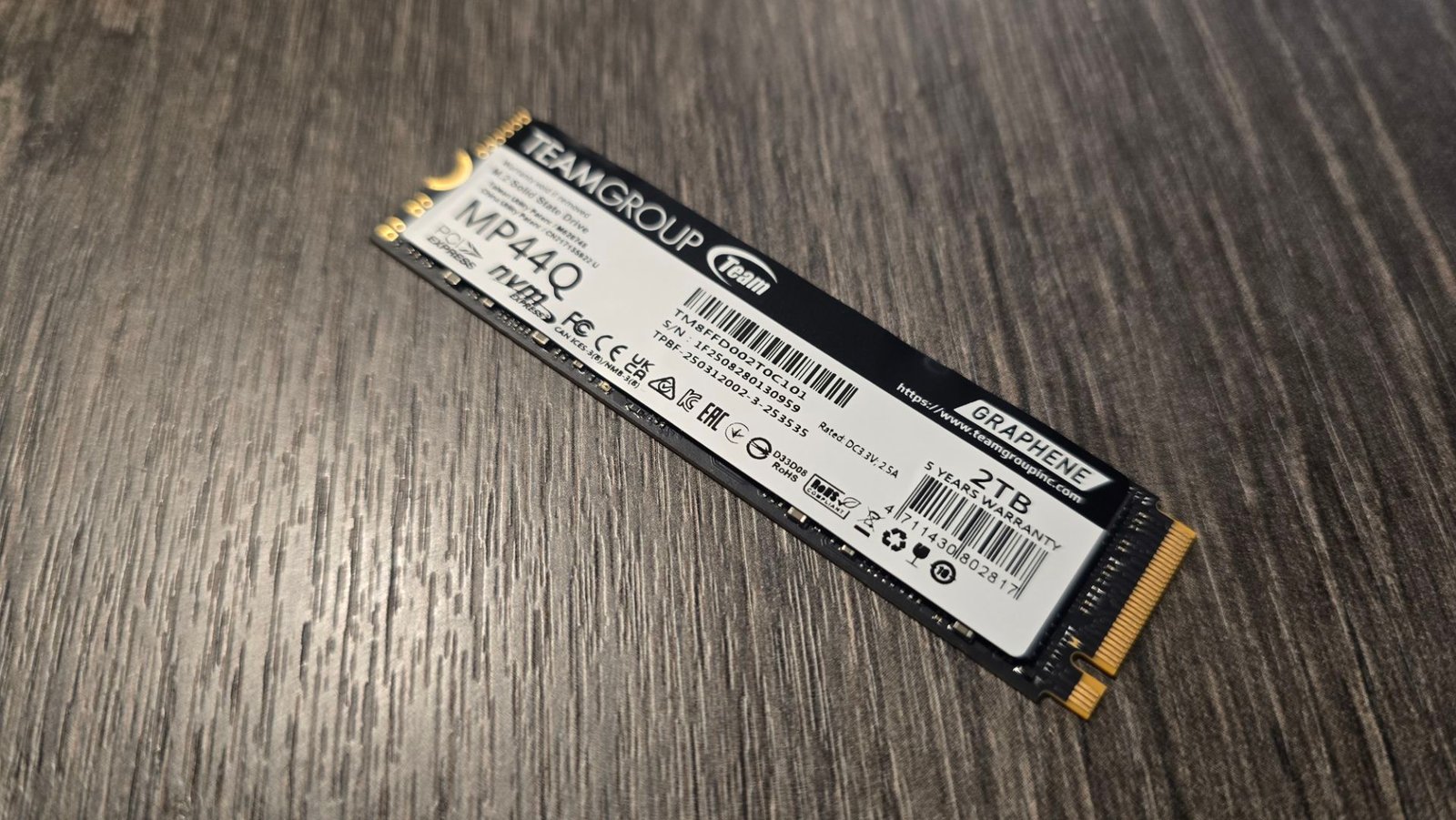
Everything changed when the fire nation attacked… Honestly, that’s what it feels like writing this review. Teamgroup’s MP44Q PCIe 4.0 SSD has finally landed with me for testing, and it’s a curious little QLC number that, once upon a time, would have offered itself up as a nice, affordable, tantalizing opportunity for any would-be budget gamer’s rig. The problem is that it’s 2026, this sorta QLC feels a bit old fashioned, and SSD prices are through the roof.
It’s especially tough as we’ve seen even superb budget drives such as the WD Blue SN5100 totally hampered by an extraordinarily high price tag. And that’s a problem, a real big one, especially for Teamgroup. Side-by-side these drives, although targeted at the same audience, and with similarly high price tags (at time of writing the MP44Q is $305 and the SN5100 is $317), perform wildly differently.
As for that core hardware, you get a Maxiotech MAP1602A controller (a slightly older model, and the same one found inside of the Lexar NM790), and die packages built out of YMTC’s 232-layer 3D QLC NAND flash (you “might” find similar density YMTC TLC in Biwin’s Black Opal NV7400, or Micron flash who knows…). There’s no dedicated DRAM cache here, mostly to keep costs down, but you do get a healthy dose of 40 MB of system memory allocated via HMB, and a big chunk of pseudo SLC, and that’s kind of it.
MP44Q specs
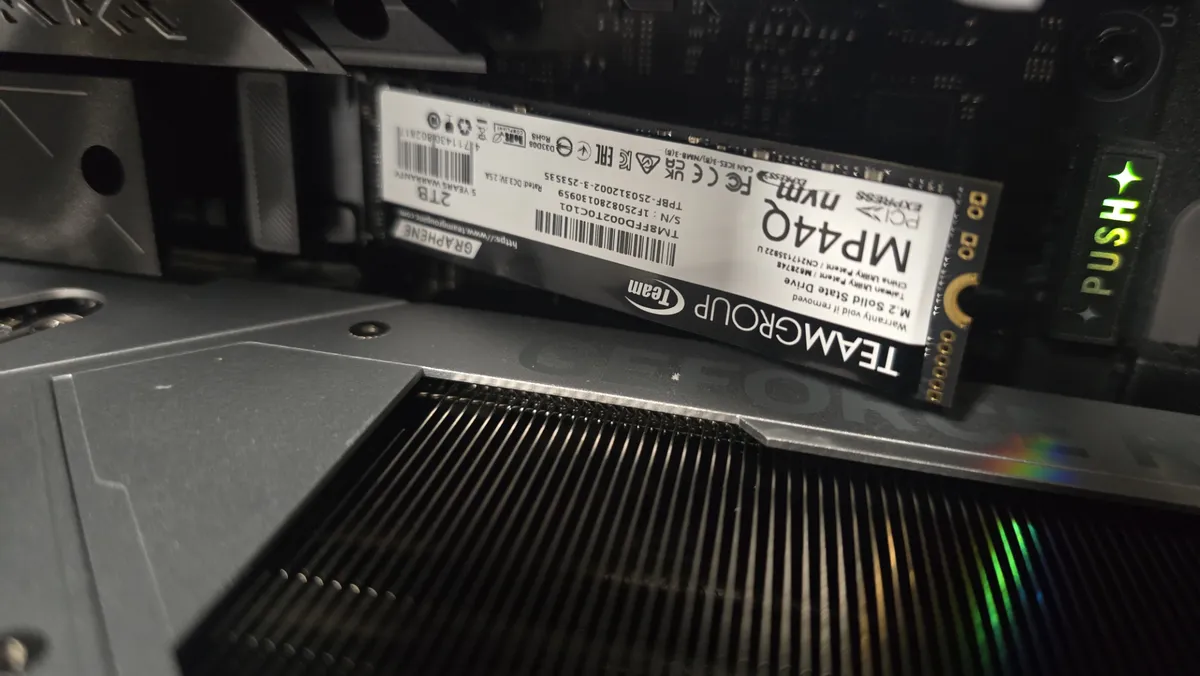
Capacity: 2 TB
Interface: PCIe 4.0 x4
Memory controller: Maxiotech MAP1602A
Flash memory: YMTC 232-layer 3D QLC NAND
Rated performance: 7,000 MB/s sustained read, 5,900 MB/s sustained write
Endurance: 1000 TBW
Warranty: Five years
Price: $320 | £305
There’s no drama, no new flagship parts or anything, just off-the-shelf OEM components—tried and tested and ready to go. What is interesting, however, is the endurance rating, as Teamgroup’s got this clocked at 1000 TBW, which for a budget QLC drive is quite impressive. The default rating for most SSDs these days is 600 TBW for 1 TB, and practically all manufacturers abide by that, so it’s nice to see an improvement here. Although you still get the same 5-year warranty anyway.
As for pricing, at the time of writing, it’s kind of on the high side for a budget drive, especially compared to that SN5100. The reason I’ve been slamming that comparison so hard in this review is purely because, by the metrics that matter, the SN5100 outclasses the MP44Q in almost every way while being cheaper as it does it.
Benchmarks: SSDs
020406080
Peak temperature (°C)
| Product | Value |
|---|---|
| Teamgroup MP44Q 2 TB l Gen4 | 54 |
| Sandisk WD Blue SN5100 2 TB | Gen4 | 61 |
| Lexar NQ780 4 TB l Gen4 | 62 |
| Biwin Black Opal NV7400 2 TB | Gen4 | 48 |
| WD Black SN7100 1 TB | Gen4 | 48 |

Buy if…
✅ It’s on offer: If it’s really cheap, like 30% off, it could be a stunning drive to have as a secondary storage solution on your main rig (if you don’t mind slightly sluggish load times).
Don’t buy if…
❌ It’s not on offer: It’s not a great time to buy an SSD, but especially a very expensive QLC one.
3DMark’s storage benchmark comes back with a score that’s 1000 points higher straight out of the gate, with a much broader bandwidth figure, and slightly lower access times. That result is all thanks to the random 4K performance. The MP44Q really struggles here, delivering just 70 MB/s on the read and 288 MB/s on the write, making it slower than even Lexar’s latest NQ780 QLC drive as well. Compare that to the 107 and 308 MB/s from the SN5100, and there’s almost no contest.
Yes, it does eek back a win in the sequential read front being 89 MB/s faster (or 1.21% faster), but that’s such a niche use-case for most of us gamers, it’s almost not worth mentioning.
That all then translates into game load times too, and although the SN5100 doesn’t particularly break any records in that department, scoring 7.125 seconds, the fact that the MP44Q lands in at 7.970 seconds is just, well, less than ideal. Physically, it’s cool, mind you, and efficient as a result, but that’s not enough to offset those massive deficits in the metrics that matter most.
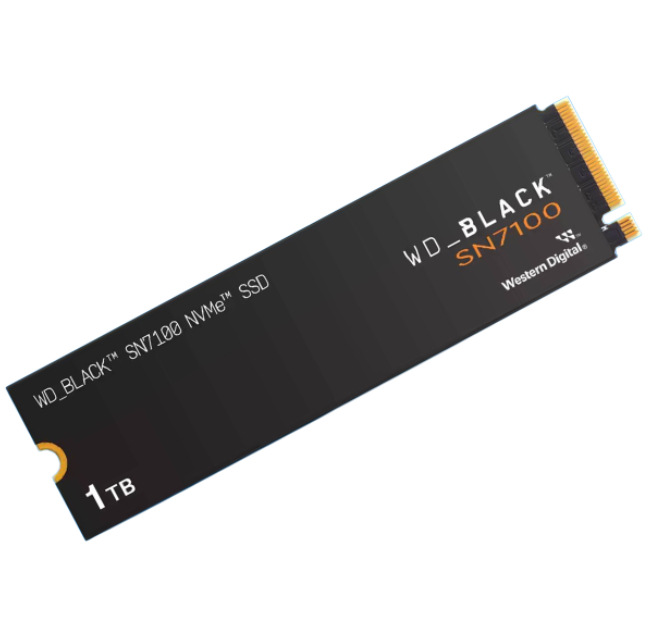
Best SSD for gaming 2026