dailynewsnblog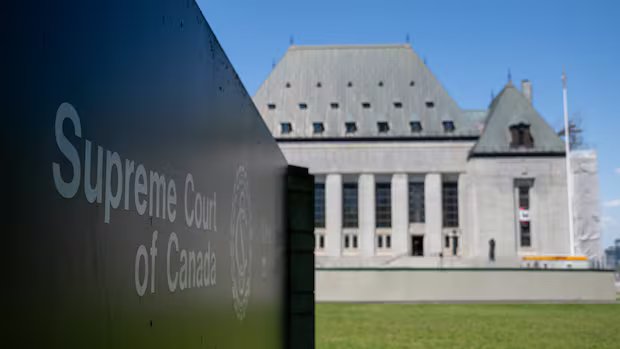
The Supreme Court of Canada has ruled Quebec cannot bar asylum seekers from subsidized daycare.
In an 8-1 ruling handed down Friday, the Supreme Court rejected the province’s appeal of a lower court’s ruling.
Supreme Court Justice Andromache Karakatsanis concluded the province’s regulations on subsidized daycare, which date back to the previous Couillard government, discriminate against women refugee claimants and infringes on their Charter rights.
“While all refugee claimants are denied access to subsidized daycare … the discriminatory impact on women is unique because they carry a greater share of child-care responsibilities,” the ruling states.
It goes on to say barring refugee claimants from accessing the daycares not only impedes their ability to work, but further marginalizes them from Quebec society.
This also has a cost on the province, the Supreme Court argues, as it forces many to rely on social assistance instead.
The Supreme Court ruling goes even further than a previous Quebec Court of Appeal decision that had suggested Quebec should grant access to all asylum seekers with a work permit.
Canada’s highest court says all refugee claimants who are parents should have access to the subsidized daycare system — work permit or not.
Quebec had cited severe capacity limitations
Quebec’s sought-after subsidized daycare system has aimed to keep child care affordable in the province for years. In 2026, the daily cost of a subsidized daycare is $9.65.
The case before the courts originated with Bijou Cibuabua Kanyinda, a woman from the Democratic Republic of Congo who applied for asylum and obtained a work permit. Her three children were denied access to the heavily subsidized daycare network because Quebec’s rules provided access to the system only once refugee status was granted by the federal government.
The Quebec government had challenged two previous court rulings, arguing the province’s daycare system does not have the capacity to accommodate so many asylum seekers as there are already lengthy waitlists to get in.
It argued the service should be reserved for those with a deeper connection to the province.
But the Supreme Court rules that while there may be a pressing need to limit daycare services to those with a “sufficient” link to Quebec, the province failed to prove how barring access to asylum seekers achieves that.
“There is no rational connection between that goal and excluding refugee claimants when the subsidy is extended to others,” the ruling says, pointing out foreign students have access to subsidized daycares, for instance.
“More than half of refugee claimants in Quebec are ultimately approved and make their permanent home in Quebec,” the ruling adds.
Kateri Champagne Jourdain, Quebec’s minister responsible for families, says her government will take the time to look over this latest court ruling.
“Let’s remember that our [daycare] network is facing strong pressure as it had to absorb the arrival of thousands of children of asylum seekers,” she wrote in a statement on social media. “Our goal has always been to ensure the sustainability of our network to favour the best possible development for the children.”
Back in 2024, the Quebec government claimed the province would need the equivalent of an additional 88 subsidized daycare centres to be able to place the children of asylum seekers, and that this could cost some $300 million in infrastructure investments and $120 million in subsidies.
Newfound dignity for some women
Tanya Henriques fled Angola three years ago, settling in Quebec with her young daughter.
A single mother with no access to subsidized daycare, she said she was left in such a precarious situation that she was forced to live in rundown, unhealthy housing conditions.
“Did I want to stay on social assistance? No. But how am I supposed to work?” she said.
Henriques said she found a private daycare, but it cost $100 a day. With this latest ruling, she says she and thousands of others will get their dignity back.
“I think women are now free,” she said. “We have a right to live…. We have a right to work.”

Sohair Kedana, who left Sudan for Quebec, also hopes to enrol her child in subsidized daycare.
She said it will allow her more time to focus on her French courses, in order to better integrate in Quebec.
“Before, it was very difficult to do that because I have to be a mom 24 hours,” she said.
Community groups, including the Welcome Collective, were also pleased with the decision, which they said was almost eight years in the making.
‘A slap in the face,’ promise of notwithstanding clause
Quebec’s political class was quick to react to the judgment Friday.
Bernard Drainville, who is running for leadership of the Coalition Avenir Québec (CAQ), is promising to use the notwithstanding clause if he is elected to ensure Quebecers are prioritized in the granting of subsidized daycare spots.
“The Supreme Court judgment is a slap in the face for the thousands of Quebecers who have been waiting for a daycare spot for their child, often for years,” he wrote in a statement.
His opponent, Christine Fréchette, also said she would be willing to use the notwithstanding clause for this.
“What is primordial to me, is that the children of Quebecers have priority access to the daycare network,” she wrote. “I will take all means necessary to defend this principle.”
Fréchette also took the time to repeat the province’s calls to have the federal government ensure more asylum seekers settle elsewhere in Canada.
Whoever wins the CAQ leadership race next month would automatically become the Quebec’s premier until the provincial election slated for this fall.
Opposition parties also spoke out against the ruling. In a lengthy post on social media, Parti-Québécois Leader Paul St-Pierre Plamondon accused the Supreme Court of interfering again in Quebec politics, and sending the message that the province should welcome an unlimited number of asylum seekers and offer them free services.
“This judgment also represents a distortion in the interpretation of the right to equality under the Charter,” he wrote, saying he agrees with the dissenting judge.
Quebec Liberal Party Leader Charles Milliard said his party would also be open to using the notwithstanding clause in this case, but would like to look into the potential impact of the judgment first.
He said a Liberal government would “be open to using the notwithstanding clause, including an acquired rights clause, if there are important challenges for Quebec families.”