dailynewsnblog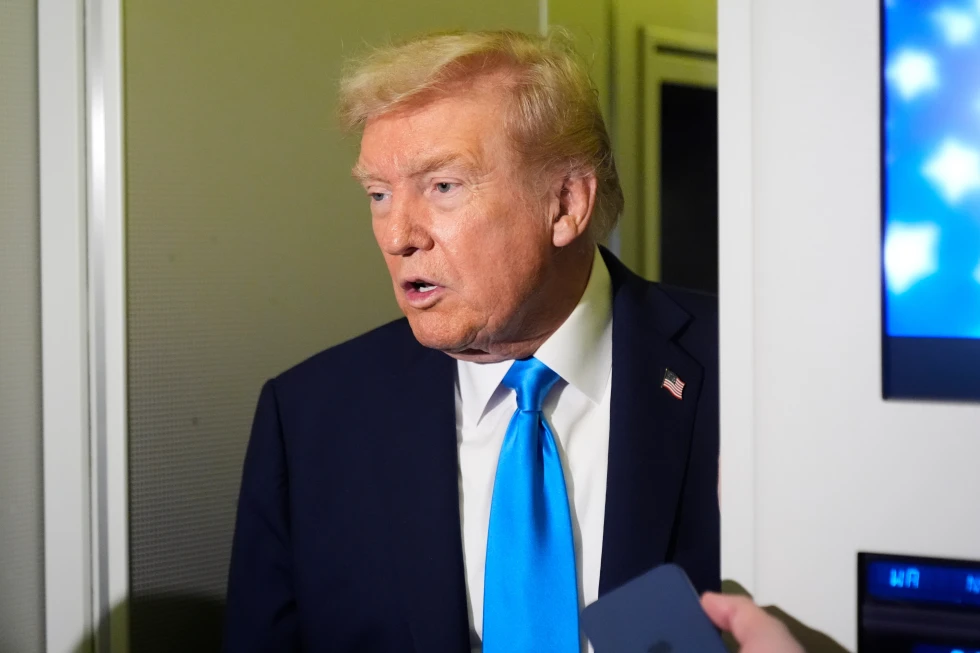
Good evening, readers.
The court decision heard around the world.
The U.S. Supreme Court struck down President Donald Trump’s far-reaching global tariffs on Friday, handing him a significant loss on an issue crucial to his economic agenda.
The decision centres on tariffs imposed under an emergency powers law, including the sweeping “reciprocal” tariffs he levied on nearly every other country. However, it doesn’t impact the sector-specific tariffs he’s imposed, which have hammered Canada’s auto, steel and aluminum producers.
It’s the first major piece of Trump’s broad agenda to come squarely before the nation’s highest court, which he helped shape with the appointments of three conservative jurists in his first term.
The Associated Press reports, with assistance from iPolitics‘ Sydney Ko.

Trump responded to the decision on Friday afternoon in typical Trump fashion — threatening more tariffs.
He told reporters after the ruling came down that he will sign an executive order to impose a 10 per cent global tariff.
Trump says he will use the Section 122 of the 1974 Trade Act to hit the world with the tariffs — but that duty can only stay in place for 150 days, unless Congress votes to extend it.
Trump says the new tariff will take effect in three days.
It was not clear whether the new tariff would have a carveout for goods traded under the Canada-U.S.-Mexico Agreement on trade, better known as CUSMA.
It also was not clear whether the new 10 per cent levy would stack on top of Trump’s separate tariffs on steel, aluminum, automobiles, lumber and furniture.
As for the ruling, Trump called it a “disgrace” and attacked the conservative justices that ruled against him.
The Canadian Press has this one, with an assistance from our Sydney Ko again.

Senators are sending early signals to the Liberals that they’re prepared to rewrite the government’s signature affordability legislation over concerns about new measures exempting political parties from federal privacy laws.
It could prompt a rare overhaul of a tax bill by the Upper Chamber and pit senators against Canada’s largest political parties, which are in support of the changes.
Bill C-4 was one of the first pieces of legislation introduced by the Liberals after winning another term in office in the April 2025 election.
It cuts the lowest tax rate from 15 to 14 per cent, and eliminates the GST on new homes priced up to $1 million for first-time buyers.
But it also removed requirements for political parties to comply with federal or provincial privacy laws. The bill would only require parties to come up with their own privacy policies and have one annual meeting with the Chief Electoral Officer.
Parties that fail to comply with their own privacy policy could face administrative monetary penalties from the Commissioner of Canadian Elections, though the maximum fines range from $5,000 for a party and $1,500 for a person.
The bill also provides retroactive exemptions for the parties back to 2000. This is likely because of a 2024 decision by B.C.’s Supreme Court that ruled that the federal Liberal party had to comply with the province’s privacy law.
Critics have called the changes to privacy rules problematic, arguing that political parties amass large swaths of identifying personal data to help micro-target voters and oversight is needed to ensure this information isn’t misused.
Senators on the Upper Chamber’s legal and constitutional affairs committee filed a report this week saying the bill “falls far short of the minimum standards required to protect the individual and national interests of Canadians, at a time when global experience indicates that these interests are increasingly at risk.”
Marco Vigliotti has this story, the latest edition of Adjournment Proceedings, our weekly long-read series.
Lobby Wrap: Terrestar wants to talk about replacing the need for foreign satellite technology
Rebel to Rabble Review: Progressive-left media outlets weigh in on New Democrat leadership race, pro-Israel lobby groups
In Other Headlines
Internationally
Police searched the former home of Andrew Mountbatten-Windsor again on Friday, a day after he was arrested and held in custody for nearly 11 hours on suspicion of misconduct in having shared confidential trade information with the late convicted sex offender Jeffrey Epstein.
In another blow for the former Prince Andrew, the British government is considering formally removing him from the line of succession to the crown. Despite losing his status as prince and facing a police investigation, Andrew remains eighth in line to the throne. That can only be changed with new legislation.
When the king stripped his brother of his titles in the fall, the government said passing a new law would not be a good use of Parliament’s time.
But that view has changed and the government is now considering legislation once the police investigation is finished. James Murray, the government’s chief secretary to the treasury, said “the government is considering any further steps that might be required, and we’re not ruling anything out.”
AP has more.
In Other International Headlines
In Featured Opinion
The Kicker
We’re going for gold.
Canada let out a big exhale on Friday afternoon after our men’s hockey team came back to down Finland 2-1 in the first semi-finals of the tournament.
We’ll play for gold on Sunday morning, the final day of the 2026 Olympics.
Let’s bring it back!
Have a great night.