dailynewsnblog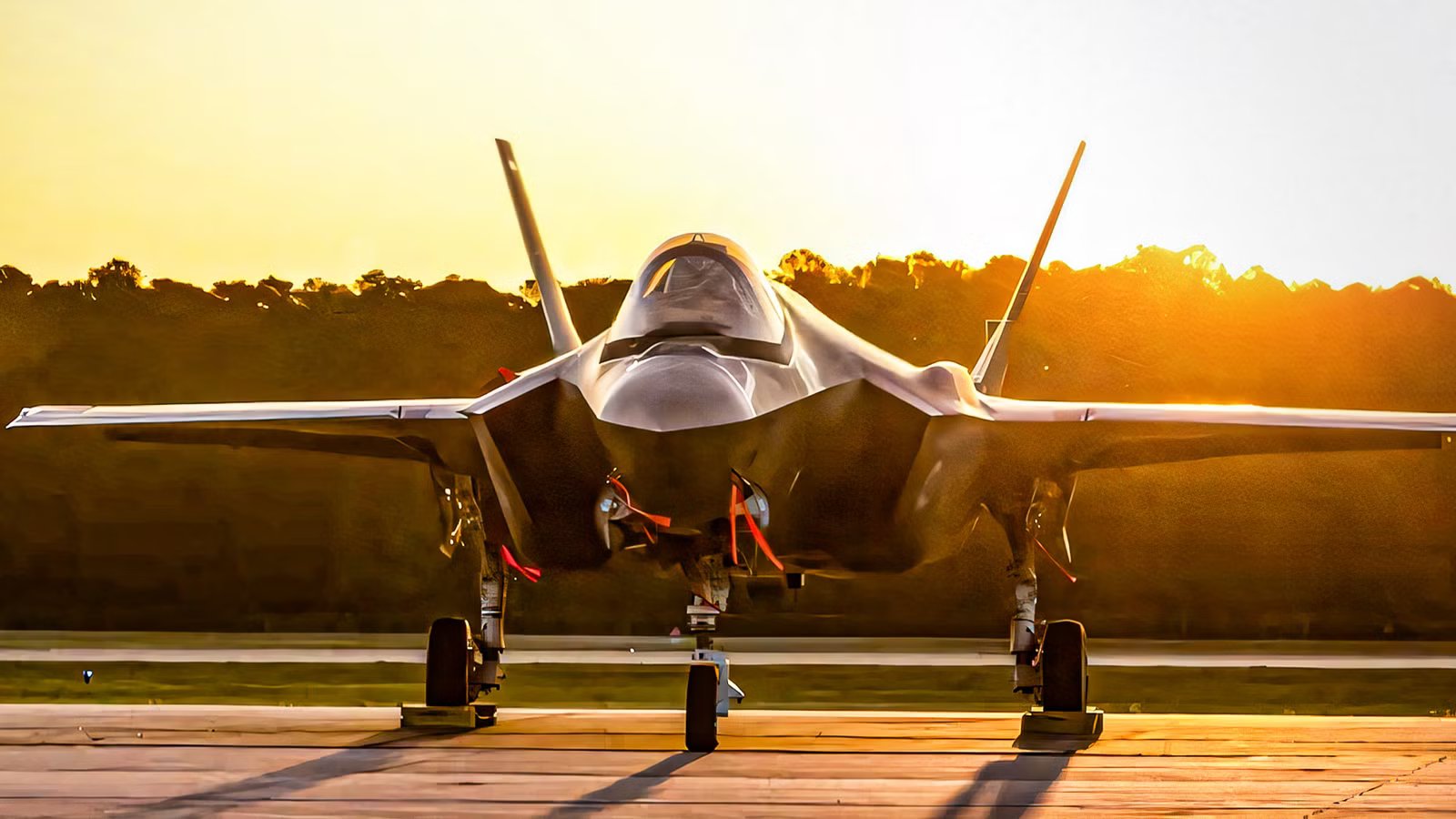
Fears that the United States could control a ‘kill switch’ for the Lockheed Martin F-35 Lightning II stealth fighter have prompted some potential partner nations to reconsider their orders for the latest and greatest American fifth-generation fighter jet. One of those countries, Portugal, is still being courted by the United States as the Portuguese Air Force seeks to replace its aging fleet of General Dynamics F-16 Fighting Falcons.
Also known as the Joint Strike Fighter, the F-35 is a direct successor to the F-16 and the most logical choice as a replacement for any air force that is modernizing into the 5th generation era of military air power. This is the premise on which the United States and Lockheed Martin have pitched their highly advanced stealth fighter to a growing list of 19 multinational partners. While the F-35 is certainly a highly capable fighter, the program’s many problems have slowly eroded faith in the plane among some allies.
The Lisbon Deal

US ambassador to Portugal, John Arrigo, has continued to insist that Portugal would make the best choice for interoperability by choosing the F-35, according to AnewZ. The stealth fighter was developed with interoperability among members of the North Atlantic Treaty Organization (NATO) as a core design tenet. Today, there are more than 1,300 active F-35 units, with several hundred in Europe.
Although other fighter jets are still in production, such as the Eurofighter Typhoon and Dassault Rafale, these aircraft are not fifth-generation platforms. The United States continues to champion the F-35 as the only option for Portugal to remain a first-rate world air power and not fall behind in the technological arms race of stealth aircraft. Despite the persuasive technological aspect, political concerns continue to undermine potential sales.
Portuguese Defense Minister Nuno Melo voiced concerns about the predictability of US policy under the Trump administration, particularly about possible limitations on spare parts and software updates. Other allies like Denmark and the Netherlands have expressed a similar anxiety. To strengthen independent European defense production and free the continent from dependence on America, Portugal has been reevaluating its options and exploring European-made alternatives.

These Are The Countries The United States Has Banned From Buying The F-35
The US has rebuffed the requests of at least eight countries to purchase the F-35 stealth fighter.
Politics Vs. Performance

Portugal, like fellow US ally Canada, is experiencing difficulties with defense acquisition. The Royal Canadian Air Force, arguably the closest military partner to the US, is currently debating whether it should procure its entire order of F-35s or stop with the small number that it has already purchased and shift to production of the Gripen E as well. Like Portugal, it has been shaken by the Trump administration’s volatility, and like Portugal, it has its formerly unwavering trust in the American military-industrial base.
The F-35 is the result of almost a century of research and development into stealth technology and high-performance fighter jets. Decades of relationship-building have been shattered by Trump and his cabinet appointees’ hostile behavior toward the longest-standing and most devoted American allies, despite this undeniable technical superiority. Defense One recounted this remark from a F-35 program staffer following Trump’s calls to annex Canada or Greenland as a ’51st State,’:
“If the current efforts to challenge the territorial integrity of those nations continue, it is very hard to see how they remain with the program.”
The F-35 program, intended to serve as the ultimate platform for collaboration across all departments of the US Armed Forces and the air forces of all partners around the world, is now at risk of undermining the strategic goal of the most expensive defense project ever. Despite the fighter jet’s many powerful capabilities, its production and sustainment problems have led its allies to rethink the plane’s presence in their air forces.

Canada & Portugal Rethink Plans To Buy F-35s Due To Trump
Two key NATO allies are reconsidering plans to buy F-35s as a result of Trump Administration communications.
The Trust Deficit

Despite the fact that the US is the only NATO member to have ever invoked Article Five and urged the allies to join it on the battlefield, Trump has called NATO antiquated and asserted that the other allies do not ‘pay their bills.’ He has also kept friendly relations with Vladimir Putin, despite Russia’s ongoing military action in Ukraine.
Since Donald Trump assumed office in 2025, his decisions as President and his cabinet members’ actions have steered US policy away from collective security and toward transactional diplomacy on the world stage. This has threatened the world order that was constructed on the sacrifice of troops during WWI and WWII to establish a new international order that assured stability throughout the Cold War and beyond.
The F-35 defense procurement program is expected to cost more than $2 trillion over its entire life cycle, dwarfing even the most expensive Boeing B-29 Superfortress and atomic bombs. In a rather contradictory move, Trump once praised the F-35 program as ‘the greatest plane in the world’ on social media after criticizing it for being too expensive.

Why The F‑35A Is Perfect For United States Air Force Multirole Missions
The pedigree of the Lightning II.
American First Vs. The F-35

Driven by what some have called a ‘sovereignty crisis’ in the F-35 program, allies worry that shifting political whims in Washington could ground their fleets. Many international allies see the US as a transactional and unpredictable partner under the second Trump administration. Trump’s public statements that the US might not defend ‘delinquent’ NATO members have given the impression that the alliance’s once-unwavering foundation is being replaced by a ‘pay to play’ model.
The F-35 is more than just a plane: it is a digitally dependent system that requires constant US-controlled software updates to function. This has resulted in specific vulnerabilities. Abrupt policy shifts toward Russia and Ukraine, combined with unilateral trade tariffs such as a 39% tariff on Switzerland, have prompted allies to seek strategic autonomy by preferring European-made weapons to American ones.
Rumors and concerns persist that the US could remotely disable an ally’s fleet or withhold critical code if political relations deteriorate, effectively blackmailing buyers into supporting US policies. Due to these concerning developments, Spain opted for the Eurofighter over the F-35, and Switzerland and Canada have also actively reconsidered their orders in response to trade disputes and US ultimatums on cooperation.

Dangerous? Why The US Military Is Taking Delivery Of New F-35s Without Radar
Stealth duds on the flightline?
The F-35 Death Spiral

A ‘death spiral’ for the most costly weapons program in history could unfold as the trillion-dollar program’s cost per unit increases due to allies reducing orders. To overcome Lisbon’s growing reluctance and prevent this economic collapse, US Ambassador John Arrigo launched a public campaign in February 2026 to secure a Portuguese order for the F-35.
Portuguese participation in the ‘Champions League’ of European air forces was framed by Arrigo as contingent on the F-35. With assurances that his business background will help Lisbon manage the enormous investment, the ambassador is putting pressure on Portugal to raise defense spending to 5% of GDP by 2035. Nuno Melo, the Portuguese Defense Minister, said that no official selection has been made in spite of this pressure, according to AeroTime.
While the Portuguese Air Force has recommended the F-35 as the best replacement for its aging F-16 fleet, the government has specifically referenced Trump’s actions and changing US sentiments toward NATO as grounds to pause or postpone the acquisition. The Portuguese administration has underlined the need to strengthen European defense sovereignty, as Trump’s demands for increased defense spending from allies and his questioning of Article 5 have alienated Portuguese authorities.

Here’s Why Canada Is Moving Forward With Its Order For F-35 Fighter Jets
A closer look at the status of the controversial procurement program.
Alliance In Jeopardy

The United States’ foreign partnerships with nations worldwide have been reduced to what some refer to as a ‘protection racket’ due to the Trump Administration’s transactional approach to defense partnerships.
This has taken many forms regarding NATO and the F-35. The Trump administration has presented American security assurances as a service that requires increased defense spending. Additionally, Trump has regularly connected military assistance to trade agreements, or ‘buy American.’
The fundamentals of economics come next. The integrated supply chain was refined over decades by the Defense Industrial Complex. The government is accused of undermining the same complex it purports to defend by enacting tariffs on steel and aluminum from the exact allies that contribute to the construction of the F-35.
The F-35 is intended to be the ‘universal language’ of the 21st-century sky. By threatening to withdraw the plane or its software from friends who do not fulfill his particular expenditure demands or economic concessions. If allies such as Spain, Switzerland, or Portugal withdraw, the F-35’s network effect collapses, making every surviving plane more expensive and less effective in a real-world conflict.