dailynewsnblog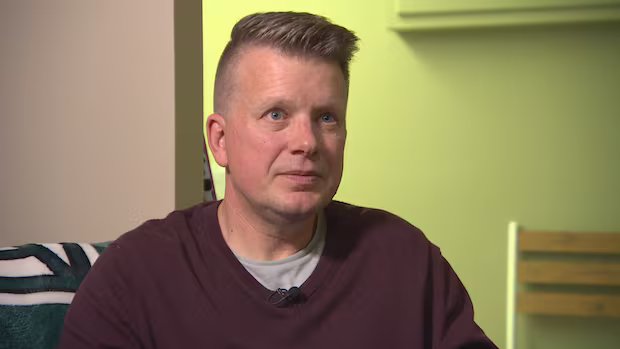
Teddy Wojtowicz says he feels triggered by the abundance of betting ads he sees while watching sports on TV.
“It’s triggering. I found myself almost downloading the apps on my phone,” said Wojtowicz, who’s in recovery from a gambling addiction.
While he hasn’t gambled for nearly three years, he can’t escape sports betting ads, he said.
Wojtowicz often gets up and moves around during commercial breaks to avoid being subjected to so many ads.
“It’s at every halftime, pre-game, intermission — they’re always talking about the best bets,” he said.
Wojtowicz shared his story with CBC to help shine a spotlight on others struggling with gambling addiction who are trying to navigate a reality inundated with online gambling advertisements.
The legalization of single-event sports betting and Ontario’s open market for private sports books have led to a “tsunami” of sports betting advertisements reaching Canadians across the country, even in places where they aren’t licensed to operate, said Bruce Kidd, chair of the Campaign to Ban Ads for Gambling, a not-for-profit volunteer-led organization.

“They [Canadian governments] created a wide open market and made no effort to limit the advertising,” Kidd said.
A CBC investigation showed placing bets with some of those companies that aren’t licensed to operate in Manitoba — but whose advertisements have travelled across provincial borders — was easy to do.
“The possibility of harm to bettors where they’re completely unregulated and unsupervised in Manitoba, that concerns me enormously,” Kidd said.
Several countries, including Italy, Norway, Australia and Spain, have taken measures to reduce or prohibit sports betting advertisements in their jurisdictions.
“There were other jurisdictions telling Canadian sports leaders for years about the harms of sports betting,” said Kidd, but policymakers failed to implement such mitigation.
The harms
Matthew Young, a senior research associate at the Canadian Centre on Substance Use and Addiction, says competition from the regulated market in Ontario has contributed to the proliferation of gambling ads across the country.
A Deloitte analysis of the direct, indirect and induced economic contributions from the 2023-24 fiscal year estimated Ontario’s regulated iGaming market sustained nearly 15,000 jobs and generated a combined $1.24 billion in federal, provincial and municipal government revenues.
However, this isn’t the whole story, Young said.
“What I would ask is, what’s the cost?” he said. “We’re not measuring the cost.”
Data from Shared Health says the number of calls to the Problem Gambling Helpline has gone down in recent years, but the rate of calls about online gaming specifically has risen from 10 per cent of calls in 2019-20 to 40 per cent in 2024-25.

Young co-authored a recent report that said those surveyed who reported gambling online in the past year were about 45 times more likely to meet the criteria for problem gambling than those who engage in lottery only.
Wojtowicz’s gambling addiction cost him time with his nieces and nephews, friends and family.
He stole upwards of $20,000 from two former employers to feed his gambling addiction, leading to him being on house arrest for 10 months, with two years of probation.
“I was living a life of lies,” Wojtowicz said.
When single-event sports betting was legalized in Canada, the temptation to gamble was constant, he said.
“With that ease of access, it became like a 24/7 type thing,” he said.
The proliferation of sports gambling ads contributes to the impression that “gambling is an inseparable part of the enjoyment of sport,” Young said.
He’s advocating for a “sober, thoughtful approach to gambling regulation in Canada,” balancing the desires of individuals to bet on sports with the need to limit the public health burden associated with unrestricted gambling advertising.
“As soon as it became widely available in the palm of your hand, 24 hours a day, seven days a week, and then marketed aggressively, it changed the nature of things,” Young said.
What’s being done about the ads?
Senator Marty Deacon brought forward a bill that has passed the Senate and is now before the House of Commons, which would require the Canadian heritage minister to develop a national framework for sports betting advertising.
Deacon also co-authored a letter along with 40 other senators, addressed to Prime Minister Mark Carney, calling for an outright ban on sports betting advertising in Canada.
She noticed advertising from Ontario before last year’s Grey Cup in Manitoba was all over.

Manitoba only has one legal sports betting platform, but a CBC investigation found that placing bets with some popular sports betting brands was easy to do.
“Canadians across the country are being exposed to ads for companies only Ontarians can legally bet in,” Deacon said.
It’s not fair for the provinces and territories that didn’t open their betting markets to private operators in an effort to limit the prevalence of gambling addictions, she said.
However, it’s unclear which provinces or territories put in restrictions specifically for that reason.
Part of the motivation behind Deacon’s bill is to fix the problems that came from legalizing single-event sports betting in Canada, she said — a bill she acknowledges she supported but felt was rushed due to an coming federal election.
“I supported that bill because I had seen the product of underground, unregulated betting and the amount of money going into pretty dark places, and I thought we needed a standard,” Deacon said.
“So for now, I still support the decision I made.”
What is the province doing?
Glen Simard, the provincial cabinet minister responsible for Manitoba Liquor & Lotteries, which oversees online gaming in the province, said he couldn’t make sure ads for unlicensed betting platforms wouldn’t be seen during the Grey Cup.
“I don’t know what type of, in terms of broadcasters, what type of strength the minister … has there,” Simard said.
He wouldn’t commit to making any legislative changes, but he hopes the province’s case against Bodog earlier this year serves to deter other offshore gambling sites from making themselves accessible to people in Manitoba.
“We were not satisfied [with existing provincial legislation], and that’s why the coalition through Manitoba Liquor & Lotteries launched a suit [injunction] against Bodog as an illegal operator here in Manitoba,” said Simard.
He’s referring to the Canadian Lottery Coalition, which was formed to try to combat offshore betting companies operating without oversight and eating into provincial revenues.
Together with the British Columbia Lottery Corporation, Manitoba Liquor and Lotteries launched an ad campaign warning the public about using unlicensed online gambling sites. It includes commercials featuring dramatizations of the CEOs of various fictionalized offshore gambling companies reaping the financial benefits of operating in jurisdictions without any oversight.
It’s their fourth joint ad campaign against illegal online sports betting and is running until March 2026.
Liquor and Lotteries wouldn’t say how much was spent on the campaign, nor exactly how much was spent in legal fees to combat illegal operators in the province — only that it is “significantly less than the millions of dollars of lost revenue” to illegal operators.

The Crown corporation estimates that last year, illegal operators earned approximately $95 million in gross gaming revenue from Manitobans — that is the amount wagered minus the amount won — which Liquor & Lotteries says contributed to approximately $50 million in net income lost.
In its annual report, Liquor and Lotteries reported an increase of nearly 25 per cent in operating costs. In a Liquor and Lotteries committee hearing early this year, CEO Gerry Sul attributed part of this increase to platform upgrades meant to ensure that they are able to offer a better and more appealing platform in PlayNow.
In the 2024-25 fiscal year, the Crown corporation said it generated $42.9 million in profits from online gaming, which was redirected to the province.
“All revenues generated by that platform [PlayNow] stay in Manitoba,” Simard said.
“They go to help build hospitals, they go to help build our communities — and when you’re choosing to advertise or bet on the illegal platforms, you’re investing in Malta, Gibraltar or somewhere in the Caribbean — nobody knows.”
Wojtowicz now shares his lived experience as an individual peer supporter with Peer Connections, which connects people struggling with addiction or substance abuse with those who have struggled in the past.
“Part of my job is to share my story … and hopefully just help somebody else find their own values again,” he said.
Wojtowicz now turns to jigsaw puzzles, the gym, golf and walks to help prevent him from feeling any temptation to gamble.
“Now, just living a life of not lying is so much easier,” he said.