dailynewsnblog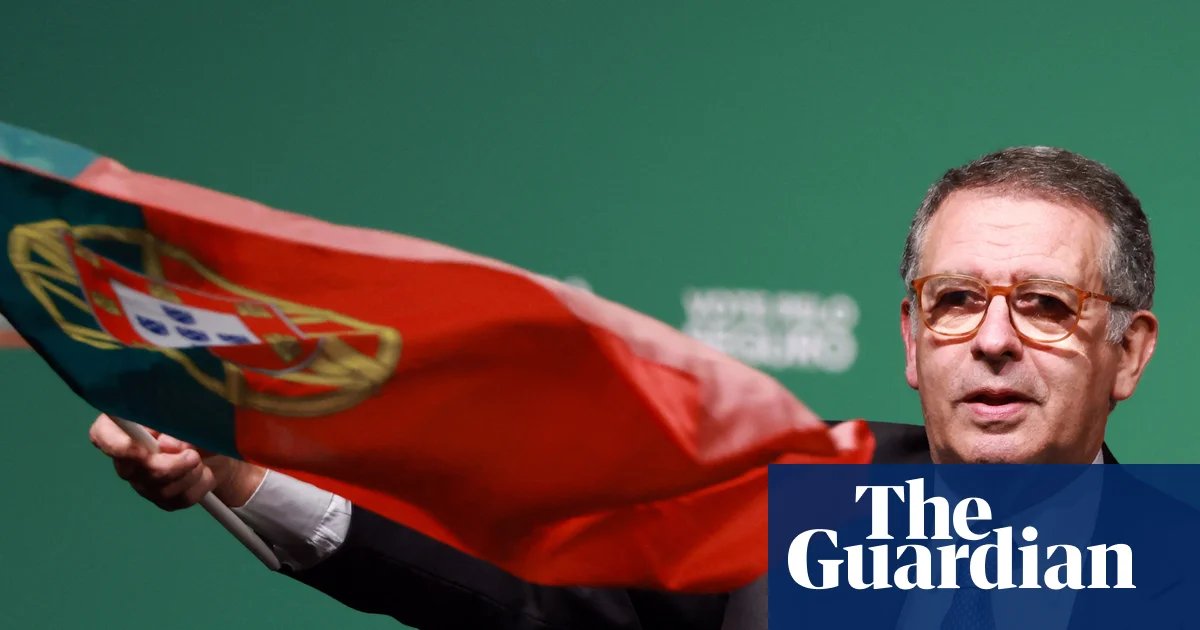
Portuguese voters will return to the polls on Sunday for the final round of a presidential election that has been marked by a push to keep the far-right candidate at bay and overshadowed by deadly storms that have lashed the country in recent days.
The moderate leftwing candidate António José Seguro won the first round of the election, which was held on 18 January, taking 31.1% of the vote.
André Ventura, the leader of the far-right party Chega – now the second-largest party in parliament – took 23.5% of the vote, while João Cotrim de Figueiredo, of the conservative pro-business Liberal Initiative party, came third among the 11 candidates, winning about 16% of the vote. Luis Marques Mendes, the candidate for Portugal’s ruling Social Democratic party (PSD), came fifth with 11.3% of the vote.
Before the campaign was all but officially interrupted by two deadly and destructive storms, some conservative figures in the country had staged a rare display of apparent unity by declaring their support for Seguro in an attempt to head off the possibility of a far-right presidency. Others, including Portugal’s centre-right prime minister, Luís Montenegro, have refused to throw their weight behind the socialist.
Opinion polls suggest that voters are also rallying around Seguro. According to a survey by Católica University pollsters released late on Tuesday, the socialist candidate is on 67% to Ventura’s 33%.
Should the polls prove accurate, Seguro will secure the highest result for a first-term presidential contestant in the five decades since Portugal overturned its authoritarian regime.
But if Ventura clinches more than 32% of the vote, Chega will have achieved a larger share of the vote than the governing PSD did in the last general election. Analysts say that in itself could herald another political watershed. “The ongoing problem is André Ventura’s percentage and his capacity to mobilise the rightwing electorate,” said António Costa Pinto, a political scientist at Lisbon University’s Institute of Social Sciences.
“What’s going to be important to watch on Sunday night is whether Chega’s leader manages to exceed Montenegro’s share of the vote. If so – and polls suggest as much – Ventura will reinforce his project to cannibalise the rightwing space in Portugal.”
Among the first to declare their support for Seguro were two centre-right politicians – the former president and prime minister Aníbal Cavaco Silva, and the former deputy prime minister Paulo Portas.
Politicians, former ministers, public intellectuals, and other figures identifying themselves as “non-socialists” are among more than 6,600 signatories of an open letter endorsing Seguro.
Other conservative figures to have expressed their support for Seguro have done so reluctantly. Carlos Moedas, the centre-right mayor of Lisbon, told the Portuguese publication Expresso he would cast his vote for Seguro because the socialist candidate “was capable of being non-divisive”. But he added that his support was “unenthusiastic”.
Mariana Leitão, the leader of the Liberal Initiative party, also said Seguro would get her vote albeit “unenthusiastically”.
Montenegro, who leads the PSD, said he would not endorse any of the candidates for the runoff, declaring his party to be out of the campaign.
Cotrim de Figueiredo, whose first-round performance exceeded expectations, has also refrained from explicitly backing the centre-left candidate, but has said he will not be voting for Ventura, abstaining, or casting a blank ballot.
Montenegro’s refusal to pick a side has been criticised by several political figures and commentators in Portugal. “The prime minister’s position is seen as cowardly by some social-democratic sectors in the face of the threat Ventura poses to the foundations of the regime,” said Miguel Carvalho, a journalist and author of the book Por Dentro do Chega (Inside Chega)
He said the prime minister’s neutrality, which is associated with his government’s legislative concessions to Chega, would come back to haunt him: “Montenegro’s decision will remain in the dark memory of the PSD, and opens the door for Ventura’s consolidation as the leader of the right in Portugal.”
But, as Carvalho also pointed out, Montenegro and Cotrim de Figueiredo may have positioned themselves as they have because they are mindful that the “apparent unity” of the conservatives around Seguro could actually benefit Ventura. “It reinforces Ventura’s claim that he’s the anti-establishment candidate,” he said.
For all the media attention that the conservatives’ support for Seguro has drawn, experts believe it may not prove to be hugely consequential. “The truth is that most of those conservative names are no longer that important,” said Costa Pinto. “The current elite of the Social Democratic and the Liberal Initiative parties know better, and they know reality has changed. Chega virtually decapitated those historically notable figures.”
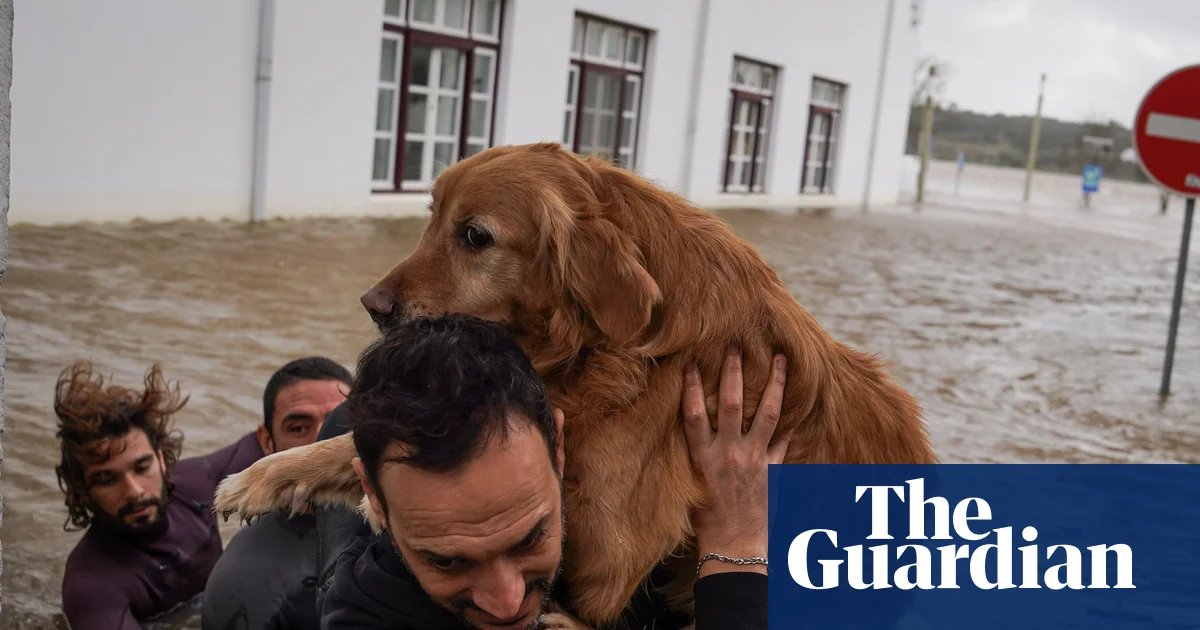
The campaign for the second round of the election was curtailed by two major storms that prompted the declaration of a state of calamity that has been extended to 15 February. Ventura called for the vote to be delayed by a week, calling it “a matter of equality among all Portuguese”.
The national electoral authority said the vote would go ahead as scheduled: “A state of calamity, weather alerts or overall unfavourable situations are not in themselves a sufficient reason to postpone voting in a town or region.”
Electoral law does, however, allow individual municipalities to postpone voting.
Montenegro said that while the storms had caused a “devastating crisis”, barriers to to voting could be overcome.