dailynewsnblog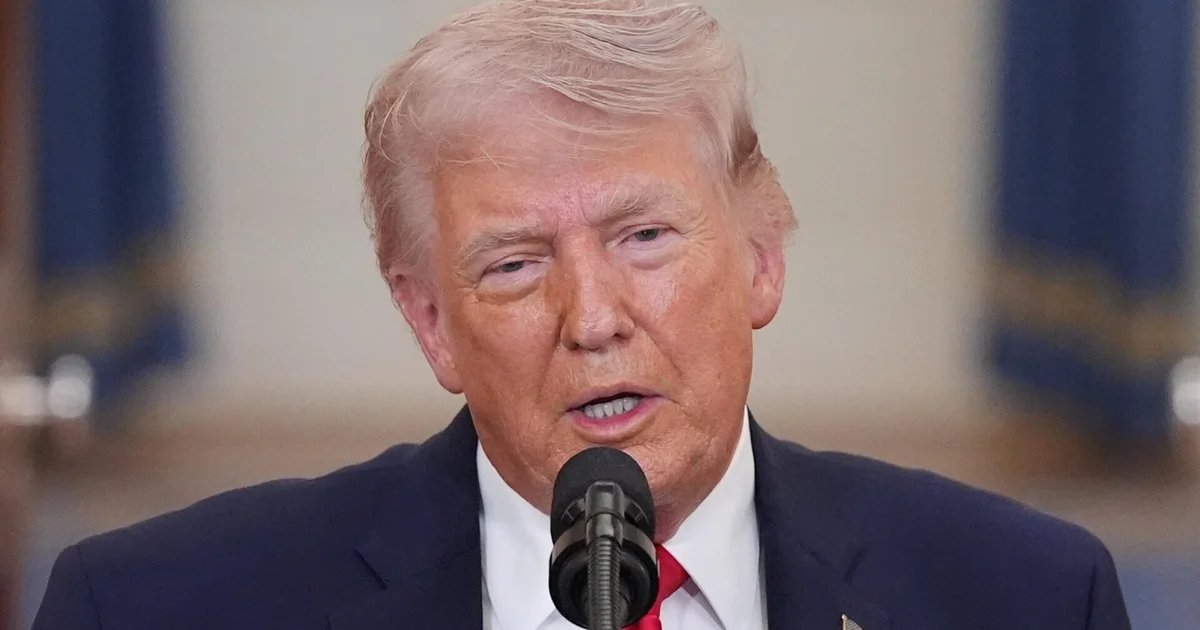
Stocks recovered from early losses as investors digested President Trump’s Wednesday bnight update on the Iran war and monitored potential developments for shipping in the strategically vital Strait of Hormuz.
The S&P 500 gained 7 points, or 0.1%, to close at 6,583. The tech-heavy Nasdaq also eked out a small gain, climbing 0.2%. The Dow Jones Industrial Average closed in the red, falling 61 points, or 0.1%.
Stocks fell sharply early in Thursday’s session, but steadily clawed their way back as investors appeared to take heart from news reports that Iran and Oman are hammering out a plan to oversee traffic in the Strait of Hormuz.
“It seemed to be enough to put a bid on equity prices, even if it didn’t do anything to soften the blow of the 10% increase in oil prices,” Mark Luschini, chief investment strategist with Janney Montgomery Scott.
The topsy-turvy day on Wall Street came after Mr. Trump delivered a primetime speech on Wednesday night to update Americans on the status of the conflict in the Middle East.
Mr. Trump repeated his previous assertions that U.S. objectives are nearly met and Iran’s offensive capabilities are “essentially decimated” after more than a month of fighting. At the same time, he offered no new information about those objectives or any plan to reopen the Strait of Hormuz to oil tankers, vowing only to continue U.S. strikes on Iran for two to three more weeks.
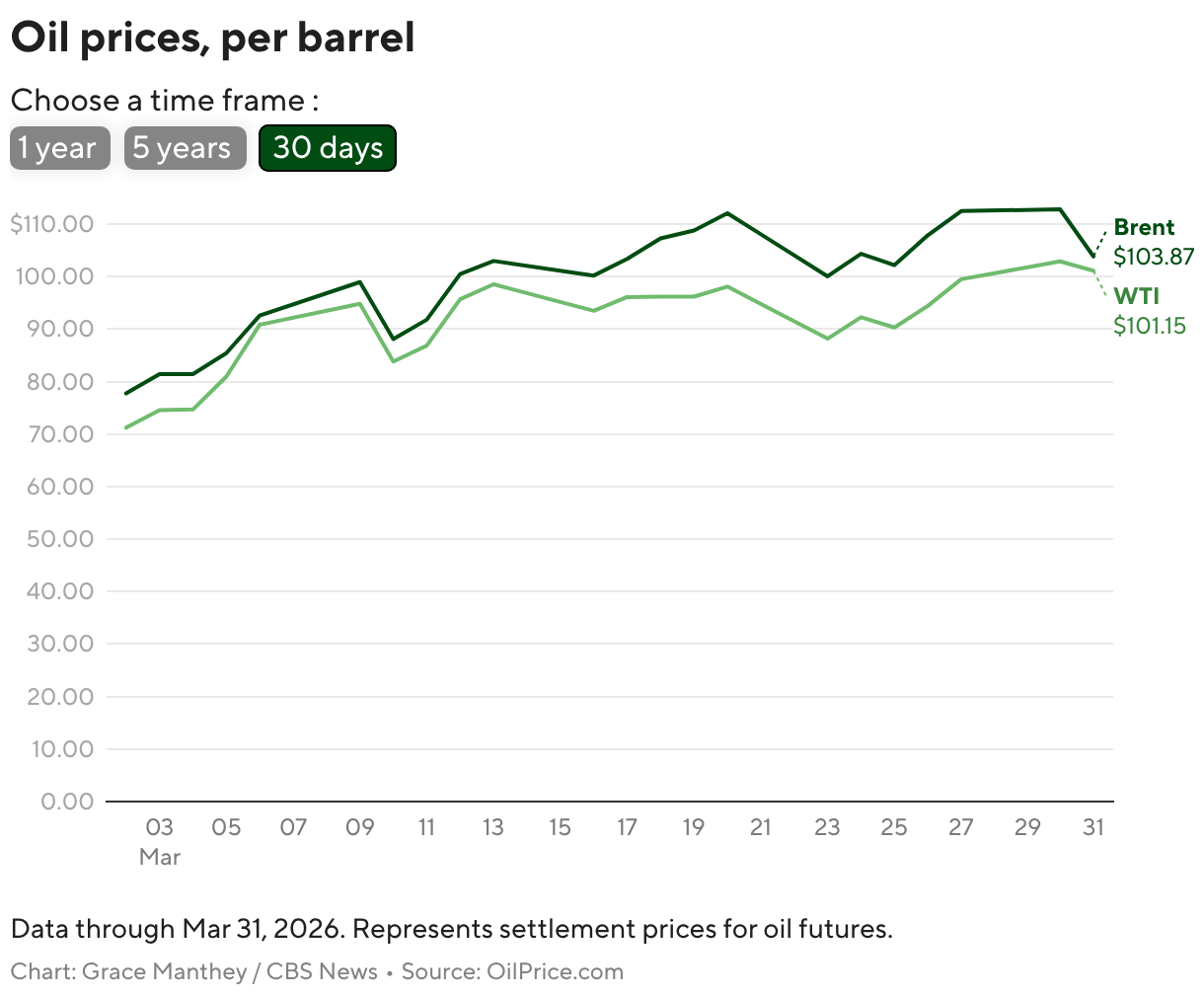
Oil prices jumped following Mr. Trump’s remarks. Brent crude, the international standard, rose 7.7% to $109 per barrel Thursday afternoon, while benchmark U.S. crude climbed 11.9% to $111.81.
Bret Kenwell, a U.S. investment analyst at eToro, said the markets appear to be taking news about the war in stride, bolstered by healthy corporate earnings despite rising energy prices.
“Earnings estimates, they continue to inch higher day by day, week by week,” Kenwell said. “Earnings are going to be the real story here.”
Markets will be closed on Friday in observance of the Good Friday holiday.
Oil and gas prices edge higher
The Strait of Hormuz, which normally accommodates roughly 20% of the world’s oil and liquified natural gas supply, remains effectively closed and could remain shut to oil tanker traffic through the end of April, Oxford Economics global chief economist Ryan Sweet said in an April 2 research note.
The longer the passageway remains shut, the greater the economic toll, he added.
While the Trump administration has released oil from the nation’s Strategic Petroleum Reserves to offset the reduction in oil supplies, that will become less effective the longer the Strait of Hormuz remains shut, putting upward pressure on oil prices, Sweet said.
“The scary scenarios are, unfortunately, extremely plausible. It’s not at all hard to tell a $150 [per barrel] story, and it’s not crazy to go to $200,” Nobel Prize-winning economist Paul Krugman told CBS News this week.
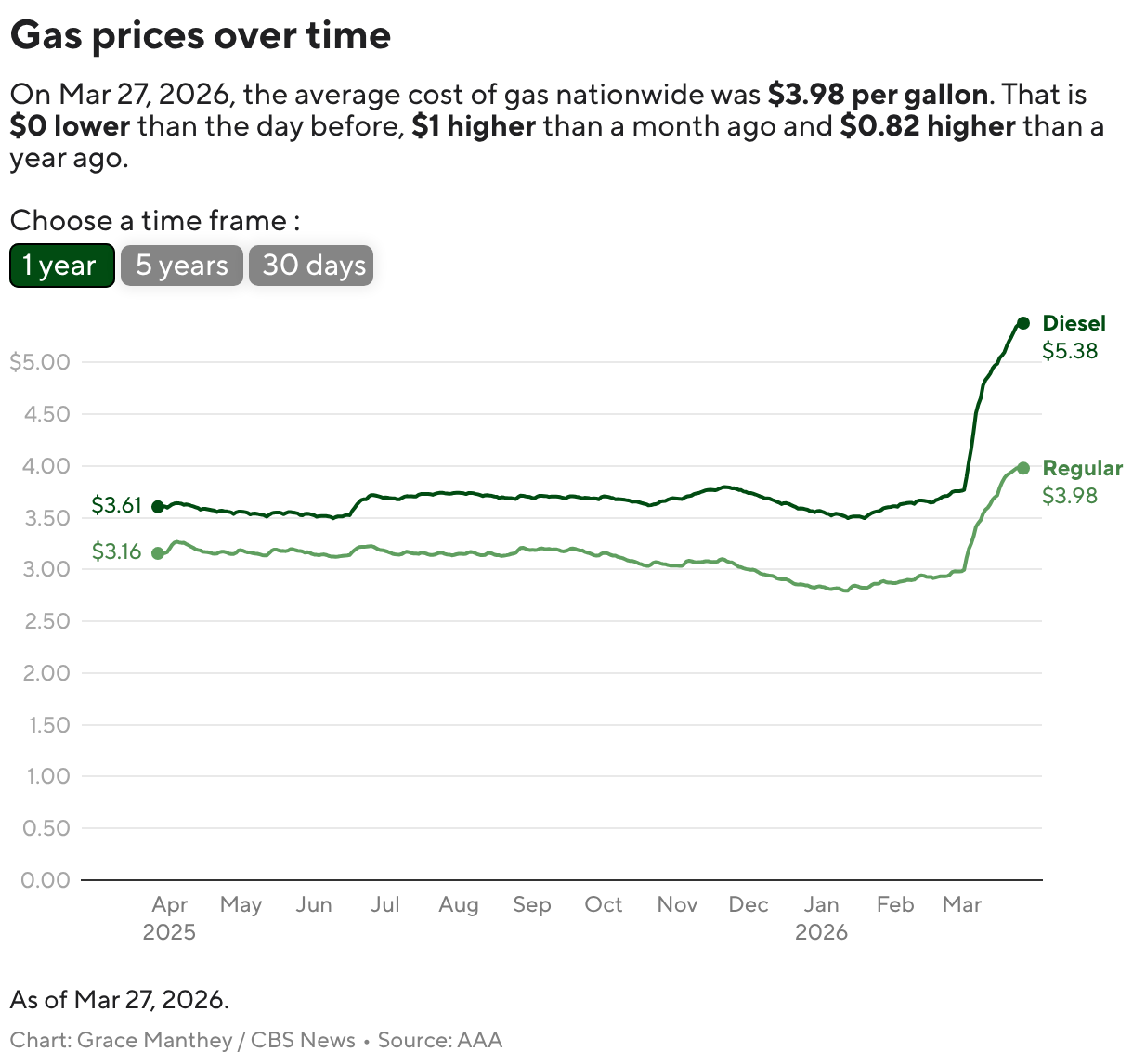
U.S. gasoline prices, which are tied to the global price of oil, would likely keep climbing above $4 if the strait remains closed, according to Bernard Yaros, lead U.S. economist at Oxford Economics.
The average price of a gallon of gasoline across the U.S. rose to $4.08 on Thursday, up from $4.06 the previous day, according to AAA data. American drivers have spent an additional $8.4 billion in gas costs since the Iran war started on Feb. 28, according to a new calculation from Democrats on the Joint Economic Committee.
Investor FOMO
A baseline estimate from Capital Economics has the war wrapping up by the end of April and energy prices retreating by year-end.
Wall Street also expects the war to end soon, Kenwell said, even though Mr. Trump has already shifted his goals for the length of the conflict several times.
“They know that there’s only so much pain that can be tolerated before things start to break, before consumers start to buckle up for gas over $4 a gallon, before businesses start to have a real issue with the input costs,” he said.
Investors are worried that the war could drag on longer than initially expected, but they also want to be prepared in the event of a market rally, according to Kenwell.
“I think there’s a consensus for investors that the market’s going to snap back rather quickly,” he said. “And I think there’s a fear of sort of missing that trade.”