dailynewsnblog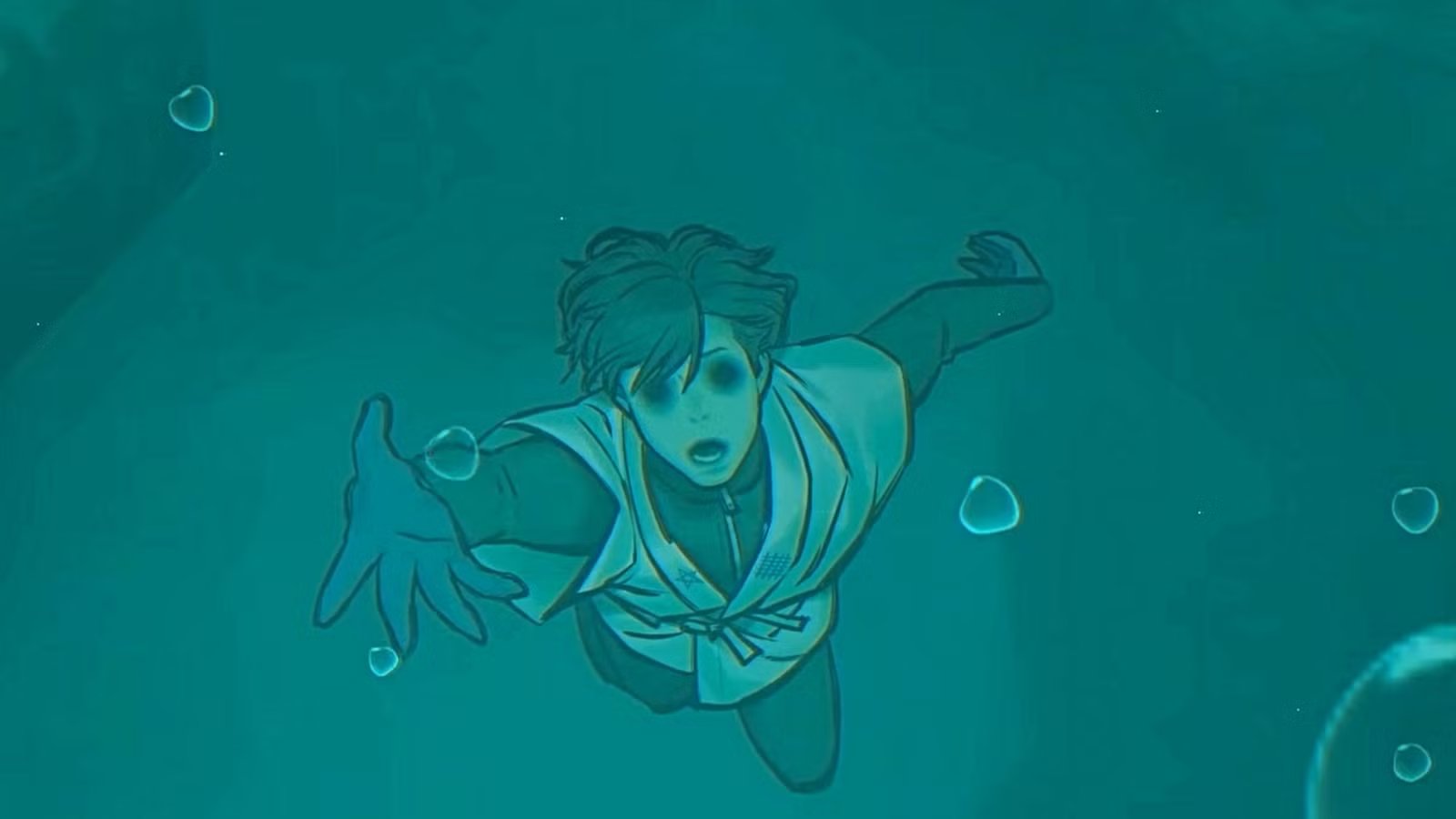
Roman philosopher Marcus Tullius Cicero thought a lot about history. “To be ignorant of what occurred before you were born is to remain always a child,” he said in a treatise about the art of storytelling. “For what is the worth of human life, unless it is woven into the life of our ancestors by the records of history.” It’s one of those quotes you hear dragged up occasionally or in colleges that aren’t afraid of the past, and I suspect it was often swimming around the mind of Paranormasight: The Mermaid’s Curse writer Takanari Ishiyara.
Mermaid’s Curse is a superb sequel to 2023’s The Seven Mysteries of Honjo. Like its predecessor, Mermaid’s Curse is a visual novel with some investigation elements/. There’s a lot of Japanese folklore woven into the story, alongside some exquisite visual design that sets hand-drawn characters against photographs of real-life locations. Unlike its predecessor, Mermaid’s Curse features a stronger cast, better deduction segments, and a more ambitious story. But it’s also an exercise in the power of storytelling and the necessity of understanding your life in the context of what came before.

Paranormasight: Mermaid’s Curse opens with a simple scene. Yuza Minakuchi, a young man just out of high school, and his friend are standing in a small boat in the middle of an ocean more vast and mysterious than either of them realize. One of them starts diving for fish, carrying on an ages-old tradition. Both are ignorant of the events that culminated in the two of them being here together, on this day, in this spot, for this reason.
Something shocking happens, and then you have a choice. You can progress with the story, or you can go back and see what happened before this day. Mermaid’s Curse wants you to think about the past. A lot. The concept is part of the opening tutorial, where you start using the chapter selection menu, and it’s built into the nature of the game. A signifcant number of new chapters are available only after you review past events and dig into the history of Kameshina Island and the people who live, and lived, there. These become available when you use the “recollection” option, a small prompt that pops up when you hear keywords relevant to someone else’s story in the game. Initially, this setup might seem like just a small way to change how you move forward compared to Seven Mysteries of Honjo. But Mermaid’s Curse has far loftier ambitions than that.
It’s a cold case investigation-slash-historical thesis. Each new discovery has some bearing on the lives of a cast member somehow, but the further you dig, the more you start to make broader connections to the distant past. The idea isn’t new to Mermaid’s Curse. Seven Mysteries of Honjo uses folk stories to illustrate the timelessness of power struggles between the fortunate and unfortunate, how a single instance of cruelty echoed through the centuries, but it’s all very unspecific by nature. Mermaid’s Curse is much more intentional. It roots its story to a single location and traces how the patterns of time — battles and wars, great people and terrible ones — shape even the most mundane parts of the present. Why local traditions matter. Why a village shunned an outsider and curses her name to this day. Why tales of a distant past still rouse people’s emotions and what happens when they’re twisted and used for less-than-noble purposes.

Mermaid’s Curse is an unusually prescient game in that way. People in power have always used stories to cement their position and influence the way people think. But in 2026, when past and present atrocities are obscured, denied, and rewritten, a game reminding everyone how essential true knowledge of the past is feels downright radical.
And perhaps naively optimistic at times. Mermaid’s Curse operates on the premise that past wrongs will rise to the surface one day, and the injured will have, if not justice, at least the peace of their stories being recognized. We know that isn’t always what happens. But, Mermaid’s Curse says, regardless of the consequences and disruption, regardless of how it might change your perception of the world, the truth isn’t just worth uncovering. It’s essential. No one can move forward without understanding the past.
Of course, themes only matter if they’re part of a story that’s actually good, and Mermaid’s Curse‘s story is. It starts throwing twists at you just a few recollection chapters in, and things only get knottier and more complex from there. Broadly speaking, it’s a stronger, more confident story compared to its predecessor. Seven Mysteries of Honjo opens with a Netflix-style shocker and starts piling the bodies up, making sure you have a reason to feel invested before the real story starts to take any kind of shape. Mermaid’s Curse throws that caution out the window and (correctly) assumes its premise and characters are interesting enough to catch your interest from the start.

There’s still a surprise early on, and plenty of bodies too, but this is a game that’s confident enough to unfold slowly. It wants to make you spend an hour interrogating nasty old rich men, or trawling through lengthy encyclopedia entries covering 15th-century wars and folk stories about waves from the celestial realm crashing on the shores of a very earthly island, before anything “exciting” happens. Seven Mysteries of Honjo is a “who” story, where the Big Thing that matters is finding out a culprit’s identity. Mermaid’s Curse is a “why” story. New revelations are important as much for the cases as they are for explaining why things are the way they are in Ise Bay. The two are inseparable, and it makes every detail “exciting” in its own way.
Like its predecessor, Mermaid’s Curse draws on familiar archetypes for most of its characters, but adds some excellent wrinkles to make them feel unique. There’s an amnesiac girl whose bubbly personality and obsession with TV hides a dark depression that only occasionally peeks out. A weirdly aggressive student from England who happens to have psychic powers. And then there’s Yumeko Shiki, one of the cast’s strongest characters. She’s a housewife detective (that’s a housewife who’s also a detective) who’s brilliant at her job, but really can’t be arsed to do it most of the time unless she has to. It’s a refreshing twist on a character type usually reserved for men, and Yumeko uses her gender and the expectations that come with it to undermine her opponents in highly satisfying exchanges of wits that she always wins.
But one of Mermaid’s Curse‘s biggest strengths is that the main cast is only part of the show. The supporting characters, even those in seemingly minor roles, contribute just as much to the story and its mood as anyone else, even those who just appear for a short time. It all contributes to a surprisingly accurate emotional impression of what it’s like to live in a small town — the physical and social claustrophobia, the inevitable interconnectedness of everyone. And the added benefit of this setup is that when important events do occur, they matter for more than just a handful of people.
For all its talk about curses and professional psychics, Paranormasight: The Mermaid’s Curse is one of the most grounded, and well-written, visual novels out there. It turns the eccentricities of its predecessor into carefully crafted storytelling devices, and it isn’t afraid to expect you, the reader, to put in a bit of work making connections and figuring out why what it has to say matters. The story is strong and the characters well-realized. But it’s that bold self-confidence that makes Mermaid’s Curse so memorable and one of 2026’s early great games.
Paranormasight: The Mermaid’s Curse will be released Feb. 19 on Nintendo Switch and Windows PC. The game was reviewed on Nintendo Switch using a prerelease download code provided by Square Enix. You can find additional information about Polygon’s ethics policy here.