dailynewsnblog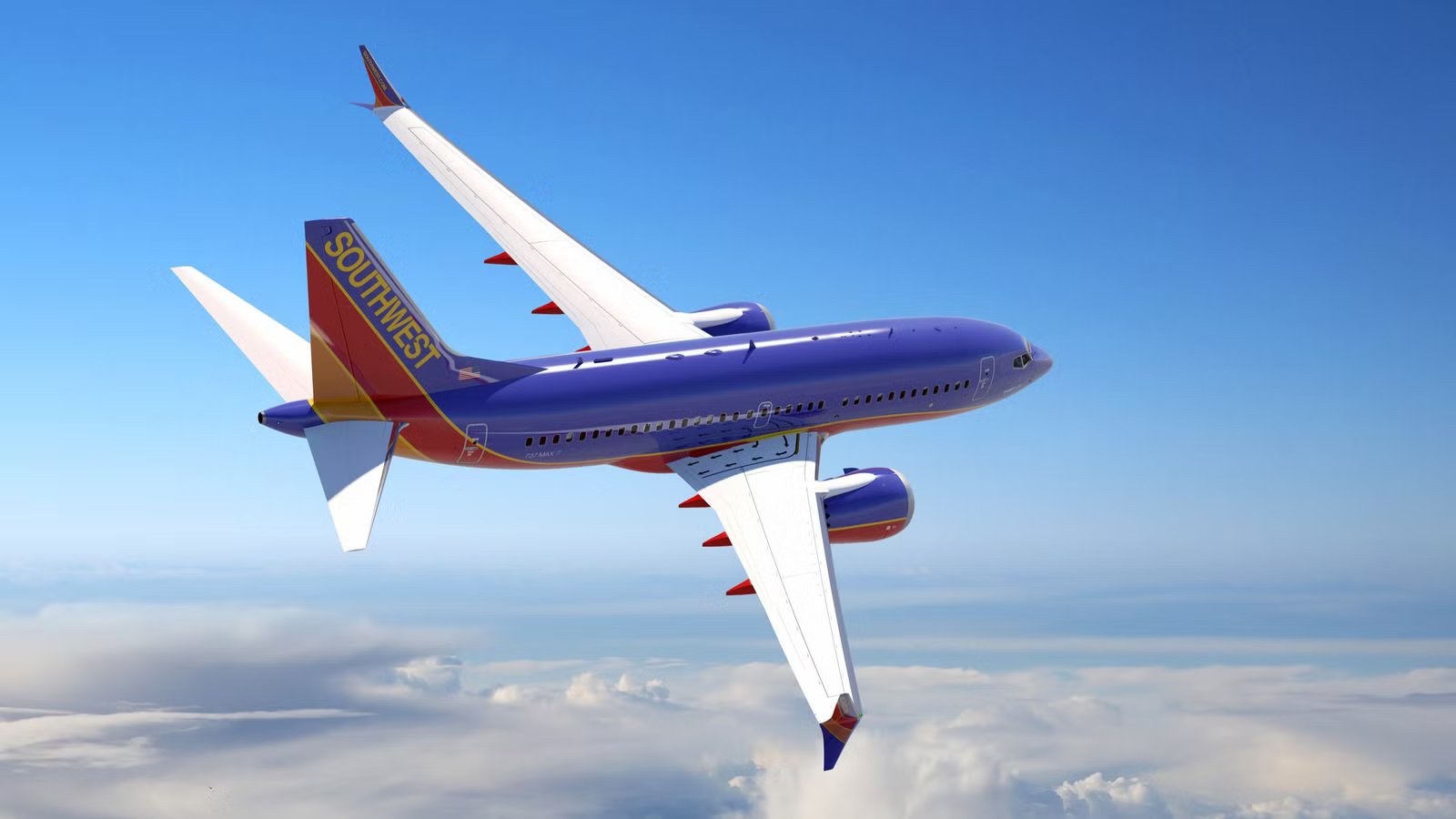
 Southwest Airlines has patiently waited for seven years for the Boeing 737 MAX 7, the shortest variant of the new iteration of the company’s iconic narrowbody, but the end may finally be in sight. America’s biggest affordable carrier is still firm in its hopes that the first MAX 7s will enter service in early 2027, according to Aviation Week. The delay has forced the world’s largest Boeing 737 operator, Southwest, to keep its older planes in service longer than planned.
Southwest needs the MAX 7 to replace its aging 737-700 fleet, many of which are nearing 20 years of service and are steadily growing more expensive to maintain. The MAX 7 will allow Southwest to refresh its fleet in terms of the customer experience, along with improved fuel economy to protect the bottom line as the carrier is transitioning to a new business model.
Boeing’s Best Customer

Southwest Airlines was the launch customer of the MAX 7 and currently holds 90% of the total order book for the type. The airline now has 269 firm orders as part of a larger, flexible backlog of 672 aircraft that includes both the MAX 7 and MAX 8 variants. To mitigate the lack of MAX 7s, Southwest accelerated its intake of MAX 8s to continue its fleet modernization program. The carrier exercises its contractual right to convert the order, which has reduced the total number of MAX 7s expected to join its fleet.
Boeing first anticipated the 737 MAX 7 would be available to customers in 2019, and the timeline slid out to 2022 soon after the MAX 8 and MAX 9 debuted. In addition to the tragic fatalities caused by the autopilot software issues, issues with engine performance, and icy conditions, and related systems have continued to delay certification.
Boeing Commercial Airplanes President and CEO Ray Conner remarked on the announcement of the MAX 7 variant in 2013, saying:
“We have worked together to launch several models of the 737 including the 737 MAX family in 2011. We are excited to bring the 737 MAX 7 to market with Southwest.”
Southwest’s Fleet Advantage

Flying only one type of aircraft, the Boeing 737, is the cornerstone of the low-cost carrier model at Southwest. Southwest can save an enormous amount of money on training for pilots and ground crew as well as spare parts, maintenance, and infrastructure by flying only one type of jet. They also gain significant leverage in negotiation by procuring airframes in bulk orders, but this symbiotic relationship with Boeing has also left both companies vulnerable.
Southwest’s strategy to save on training for both aircrew and ground crew led Boeing to rely heavily on software to compensate for the new powerplants on the 737 MAX, despite the rest of the airframe largely remaining unchanged. The software that caused the crash of the Lion Air and Ethiopian Airlines flights, killing nearly 350 people, was created to overcome design changes in the 737 MAX and make it fly like preceding models, which would prevent the need for retraining.
The most significant technical hurdle to the certification of the short MAX 7 and stretched MAX 10 is a redesign of the engine anti-ice system. The Federal Aviation Administration (FAA) and the European Aviation Safety Agency (EASA) identified a risk where the system could overheat if left on in dry air for too long. It is a unique problem for the MAX because its engine inlets are made from carbon composite materials.
Potential damage if the engine inlet cowling fails in-flight could include broken windows, cabin decompression, damage to the wing or flight control surfaces, and even a total loss of aircraft control. The MAX 8 and MAX 9 were given waivers to continue operating given a change to the pilot operational procedures to reduce risk until implementation of the permanent engineering solution. Boeing completed the redesign in late 2025 and is currently working through the FAA’s rigorous testing and certification process.

Why Southwest Airlines’ Newest Aircraft Will Be Several Years Old When They Get Delivered
What’s behind the hold-up, and how does it impact the airline’s future?
The Future of the 737

Boeing has been slowly ramping up its production as it anticipates certification of its last two variants having been approved by the FAA to increase 42 deliveries of MAX type 737s last year. The company also cleared its last backlog of older models from the Moses Lake storage facility, or Shadow Factory. The legendary plane maker aims to deliver 500 MAX jets this year and increase production year over year going forward.
The MAX 10 is Boeing’s primary tool to challenge the A321neo, which currently dominates the lucrative high-capacity narrow-body market. The company has more than 1,200 orders in the backlog for the stretched variant of the 737 MAX. Fulfilling this enormous backlog will be key to reclaiming its title as the best-selling airliner in history, which the Airbus A320 series snatched in the fall of 2025.