dailynewsnblog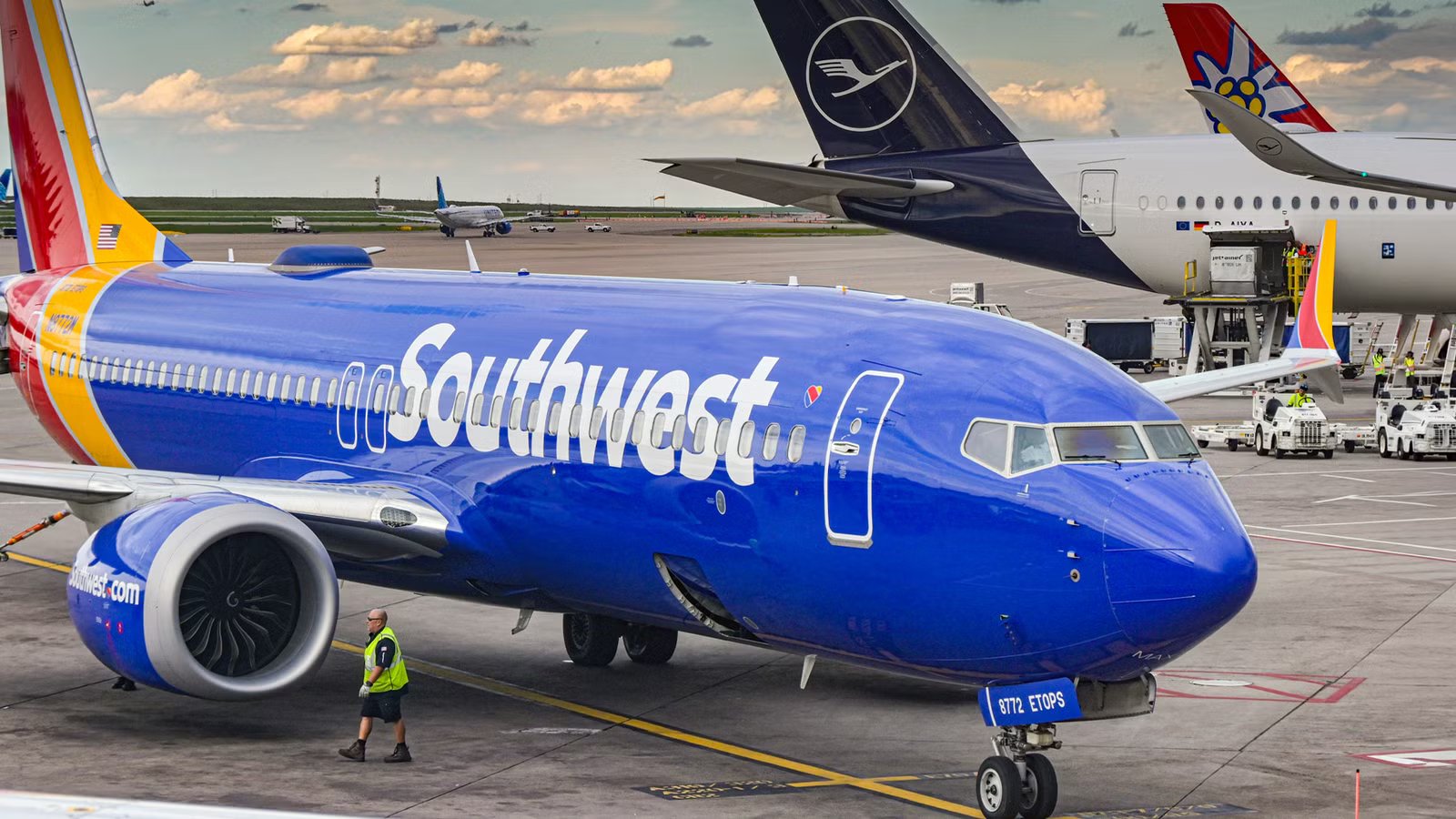
 Southwest Airlines is operating some of the longest narrowbody flights in the United States in 2026, with several routes exceeding 2,600 miles (4,185 km) using the Boeing 737 MAX 8. The airline’s longest sector connects Phoenix Sky Harbor International Airport (PHX) and Daniel K. Inouye International Airport (HNL) in Honolulu, covering roughly 2,918 miles (4,696 km). Across these long-haul routes, Southwest schedules hundreds of annual flights using its 175-seat MAX 8 configuration, demonstrating how the aircraft’s range and fuel efficiency allow the airline to operate transoceanic missions with a single-aisle fleet. The routes are particularly relevant for US travelers because they provide direct access to Hawaii from major inland cities such as Phoenix and Las Vegas without requiring connections on the West Coast.
The network data behind these routes comes from 2026 schedule information compiled by Cirium, which shows that Southwest operates several high-frequency sectors generating more than 130 million available seat miles (ASMs) annually per direction. The busiest long-distance route in this group, Las Vegas to Honolulu, accounts for more than 338 million ASMs thanks to over 700 scheduled flights per direction. This analysis examines six of Southwest’s longest Boeing 737 MAX routes above 2,600 miles, highlighting their distances, frequencies, and the strategic role they play in connecting mainland US markets with Hawaii.
Phoenix–Honolulu: Southwest’s Longest 737 MAX Mission

The longest Boeing 737 MAX route in Southwest’s 2026 network connects  Phoenix Sky Harbor International Airport (PHX) with Daniel K. Inouye International Airport (HNL) in Honolulu. The sector covers approximately 2,918 miles (4,696 km), making it the airline’s most distance-intensive operation with the MAX fleet. Southwest plans 273 flights annually in each direction, producing roughly 139.4 million ASMs per direction.
Phoenix has emerged as one of Southwest’s most important mainland gateways for Hawaii service. The city’s strong population growth and central geographic location allow the airline to capture both local passengers and connecting traffic from across the western United States.
Operating such a long sector with a narrowbody aircraft illustrates how the Boeing 737 MAX has expanded Southwest’s operational reach. Improved fuel efficiency and extended range allow the airline to serve Hawaii from inland cities while maintaining its long-standing strategy of operating a single aircraft family.
Phoenix–Kahului: A Major Mainland–Maui Link

Southwest’s Phoenix–Kahului route is another key long-haul sector in the airline’s MAX network. Linking Phoenix Sky Harbor International Airport (PHX) with Kahului Airport (OGG) on Maui, the flight covers approximately 2,845 miles (4,578 km), placing it among the airline’s longest narrowbody routes scheduled for 2026. Data indicates Southwest operates 273 flights in each direction per year, which translates to 546 total flights annually on the city pair. With the airline’s 175-seat configuration on the Boeing 737 MAX 8, the route produces approximately 47,775 seats each way and about 135.9 million available seat miles (ASMs) per direction.
Maui remains one of the most popular destinations for mainland travelers, particularly those departing from the western and southwestern United States. Phoenix’s large metropolitan population, combined with Southwest’s extensive domestic network, makes the route a strong performer for both origin-and-destination passengers and connecting travelers. Direct service from Phoenix allows passengers to bypass congested coastal hubs such as Los Angeles International Airport or San Francisco International Airport, reducing travel times and simplifying itineraries for travelers heading to Hawaii.
From a network perspective, Phoenix functions as a strategic inland hub for Southwest. The airline has steadily expanded long-haul service from the airport, allowing passengers from cities across the Southwest and Mountain West to connect to Hawaii through a single stop. By linking Maui directly with Phoenix rather than relying solely on West Coast gateways, Southwest can tap into a wider catchment area while maintaining high aircraft utilization on routes approaching the operational range of the Boeing 737 MAX.

Over 7 Hours: Southwest Airlines’ Record-Long Nonstop Flights Revealed
A record-breaking flight duration that will leave you on the edge of your seat…
Las Vegas–Lihue: Kauai From The Desert Hub

Another standout route connects  Harry Reid International Airport (LAS) in Las Vegas with Lihue Airport (LIH) on the Hawaiian island of Kauai. The flight spans roughly 2,818 miles (2,535 km), placing it among the longest scheduled operations in Southwest’s Boeing 737 MAX 8 network. According to schedule data, the airline operates 546 total flights per year on this route, providing 47,775 seats and approximately 134.6 million available seat miles (ASMs) in each direction.
Las Vegas has evolved into one of Southwest’s largest operational bases and one of the airline’s most important connecting hubs in the western United States. The airport handles millions of passengers annually and sits at the center of Southwest’s domestic network, allowing travelers from dozens of mainland cities to connect through the Nevada hub. This high passenger throughput enables the airline to sustain long-haul leisure routes, particularly to Hawaii, that might not generate enough demand if launched from smaller cities.
For travelers, this route provides direct access to Kauai, one of Hawaii’s smaller but highly sought-after tourist destinations, without requiring a connection through Daniel K. Inouye International Airport in Honolulu. It also highlights how Southwest has gradually expanded service to multiple Hawaiian islands rather than concentrating flights solely on the state’s largest gateway. By linking Las Vegas directly with Kauai, the airline spreads tourism traffic across the islands while giving mainland travelers a faster, more convenient option for reaching the Garden Isle.
Las Vegas–Honolulu: A High-Capacity Hawaii Route

Among the busiest long-distance services in Southwest’s MAX network is the route between Harry Reid International Airport (LAS) in Las Vegas and Daniel K. Inouye International Airport (HNL) in Honolulu. Covering approximately 2,762 miles (4,445 km), the sector represents one of the airline’s largest mainland–Hawaii markets and one of the longest routes regularly operated by the Boeing 737 MAX 8. The route connects one of Southwest’s biggest mainland bases with Hawaii’s busiest airport, creating a high-capacity corridor between Nevada and the islands.
Southwest currently operates 701 flights annually in each direction, or more than 1,400 total flights per year on the route. This equates to approximately 122,675 seats each way annually. The route also generates around 338.8 million available seat miles (ASMs) in each direction, making it by far the largest long-haul MAX route in Southwest’s Hawaii network and more than double the capacity of several other long-distance sectors.
The strong schedule reflects Las Vegas’s dual role as both a major tourism destination and one of Southwest’s largest connecting hubs in the western United States. Travelers from dozens of cities, including secondary markets across California, Arizona, Colorado, and Texas, often connect through Las Vegas before continuing to Hawaii. This steady flow of connecting passengers, combined with strong origin demand from the Las Vegas metropolitan area, helps sustain one of the airline’s highest-capacity long-distance routes in the Boeing 737 MAX network.

What Are The Largest Boeing 737 MAX Fleets In The World?
US carriers make up a large share of the global 737 MAX fleet.
Las Vegas–Kona: Expanding Access To Hawaii Island

Southwest also operates a long-distance route linking Harry Reid International Airport (LAS) in Las Vegas with Ellison Onizuka Kona International Airport (KOA) on Hawai’i Island. The flight covers approximately 2,717 miles (4,373 km), ranking it among the airline’s longest scheduled services operated by the Boeing 737 MAX 8. The sector connects one of Southwest’s busiest mainland hubs with the west coast of Hawaii Island, a destination known for its beach resorts, volcanic terrain, and outdoor tourism.
Southwest will operate 546 flights a year on this route. The airline offers an annual capacity of 47,775 seats each way. The long-distance sector generates roughly 129.8 million available seat miles (ASMs) per direction, placing it among the airline’s larger Hawaii markets outside of Honolulu.
While Kona serves a smaller local population than Honolulu, it remains one of Hawaii’s most important tourist destinations due to its resort developments along the Kohala Coast, proximity to Hawaii Volcanoes National Park, and year-round warm weather. By linking Kona directly with Las Vegas, Southwest allows travelers from dozens of mainland cities to reach Hawaii Island with a single connection through Nevada. The route also helps distribute visitor traffic across the Hawaiian Islands rather than concentrating flights solely at Honolulu’s main international gateway.
Las Vegas–Kahului: Another Long-Haul Maui Connection

The final route among Southwest’s longest Boeing 737 MAX services connects Harry Reid International Airport (LAS) in Las Vegas and Kahului Airport (OGG) on the Hawaiian island of Maui. Covering approximately 2,695 miles (4,336 km), the sector is slightly shorter than several of Southwest’s other Hawaii routes but still ranks among the airline’s longest regularly scheduled flights operated by the Boeing 737 MAX 8. The service links one of Southwest’s largest mainland bases with one of Hawaii’s most popular tourist destinations.
Schedule data from Cirium indicates Southwest plans 278 flights annually in each direction, totaling 556 flights per year between LAS and OGG. With the airline’s 175-seat MAX 8 configuration, the route offers roughly 48,650 seats each way annually. The service generates approximately 131.1 million available seat miles (ASMs) per direction, reflecting strong demand for nonstop travel between Las Vegas and Maui.
Together with Southwest’s Phoenix–Kahului service, the LAS–OGG route highlights the airline’s growing commitment to Maui as a core leisure destination within its Hawaii network. The ability to operate multiple routes approaching 2,700 miles (4,300 km) also underscores how the Boeing 737 MAX enables Southwest to sustain long overwater sectors while maintaining high seat density and competitive operating costs within its single-type fleet strategy.

![Surprising? British Airways Adds 5 Major New Long-Haul Routes [Full List]](https://dailynewsnblog.com/wp-content/uploads/2026/03/111-british-airways-boeing-787-10-robin-guess-_-shutterstock.jpg)