dailynewsnblog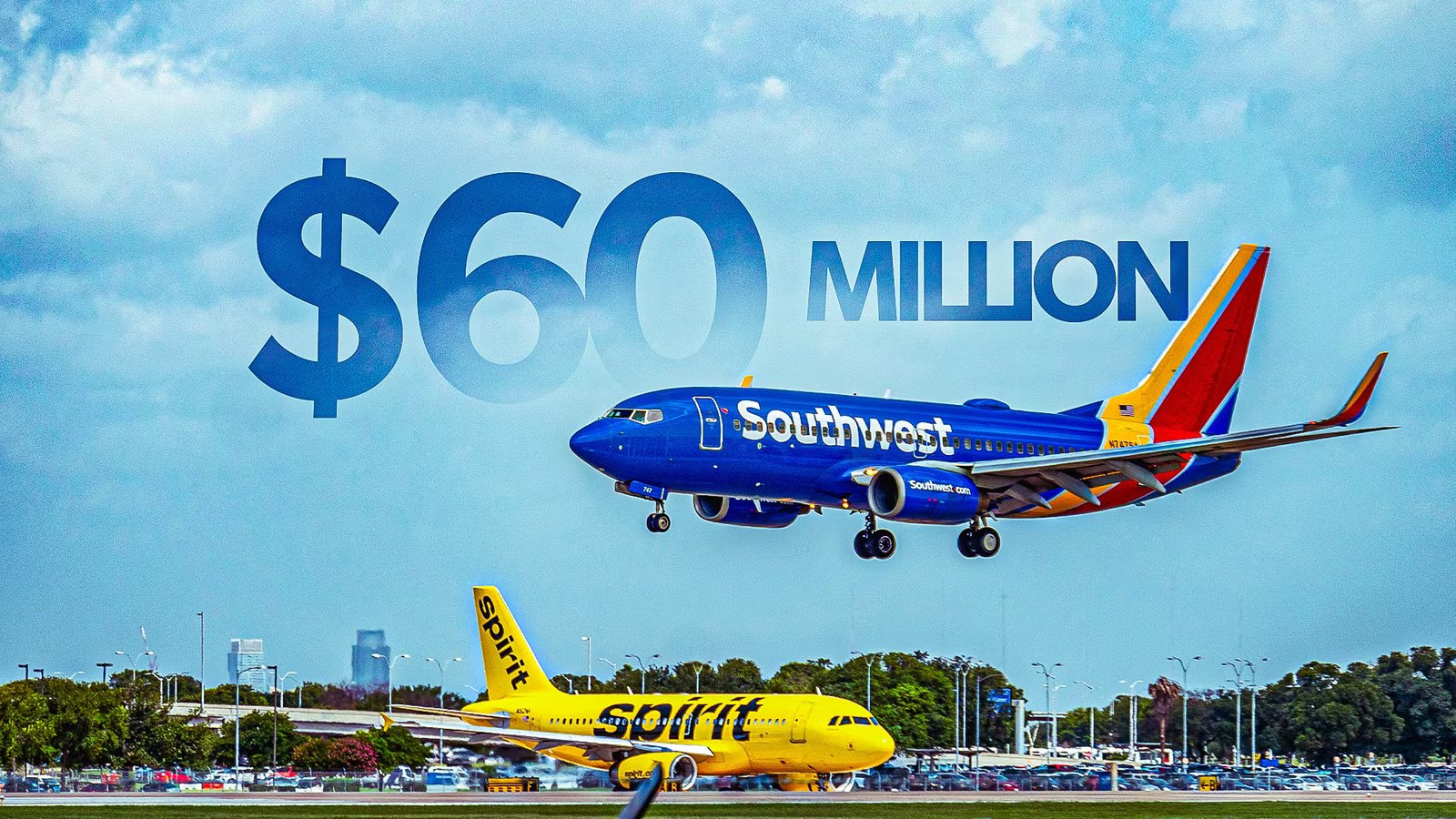
14 years ago,  Southwest Airlines made a $60 million decision that, at the time, looked like a textbook example of low-cost airline efficiency. The Dallas-based airline reconfigured its entire fleet of Boeing 737-700 aircraft with an additional row. Expected to increase revenue by millions each year, Southwest was able to generate more revenue without acquiring additional aircraft for over a decade.
More than a decade later, however, Southwest found itself undoing that very choice. Faced with shifting passenger expectations and competitive pressure, the airline reversed course. After announcing the end of its open seating policy and the introduction of extra-legroom seating options, Southwest’s new strategy aims to boost profits by charging more rather than relying on sheer passenger numbers.

In 2012, Southwest Airlines, long admired for its low fares, two free checked bags, and open-seating policy, announced its decision to increase the seating capacity of its most common aircraft type. Dubbed the “Evolve” cabin interior, the move would see Southwest add another row of seats to its Boeing 737-700 aircraft. Although the airline also operated older variants at the time, such as the Boeing 737-300, the retrofit was focused mainly on Southwest’s 250+ 737-700 aircraft, along with just 78 737-300s.
By redesigning seats with slimmer profiles and lighter materials, Southwest increased the 737-700’s capacity from 137 to 143 passengers. The additional six seats were achieved through subtle but meaningful adjustments to the cabin layout. Seat pitch was reduced from 32 inches to 31 inches, and the seat recline was trimmed from three inches to two. The new seats also provide greater space under the seat for carry-on luggage and offer improved ergonomics. While modest on paper, these changes allowed the Southwest to fit an entire extra row without dramatically altering the overall passenger experience.
From start to finish, the cabin refresh project took less than two years, concluding in 2013 at a cost of approximately $60 million, about $85 million when adjusted for inflation to 2026 dollars. Despite adding six extra seats per aircraft, the lighter materials used in the redesign actually reduced the overall weight of each 737-700 by about 635 pounds, contributing to lower fuel burn and improved efficiency. Additionally, the project was expected to generate an additional $10 million in annual revenue. At the time, then Executive Vice President Bob Jordan, now CEO of Southwest, remarked that “the cabin upgrade allows us to create significant revenue opportunities without adding unwanted fees,” reinforcing the airline’s strategy of boosting profitability while maintaining its customer-friendly branding.
The Rise And Fall Of Southwest’s Open Seating Model

Even with the changes onboard, Southwest continued to promote its unique operating model. For decades, Southwest’s open seating policy was one of the most distinctive features of any US airline. Instead of assigning passengers seats during booking or check-in, Southwest passengers were given a boarding position and once onboard, were free to choose any available seat. The innovative system helped speed up Southwest’s boarding times, decreasing turnaround times between flights and thus maximizing revenue and increasing flexibility amongst passengers.
Additionally, unlike other US competitors like  Delta Air Lines,
  United Airlines, and
  American Airlines, Southwest avoided cabin segmentation altogether. The carrier did not offer any first class product, premium economy, or extra-legroom seats, aside from those required in exit rows or bulkheads. This simplicity made the airline’s 2012 six-seat expansion on its 737-700s simple because there were no premium cabins to reconfigure. Southwest could simply add another row, sell the additional seats, and increase revenue.
However, over time, as the economics of the airline industry evolved toward premium products, Southwest’s open-seating model became outdated. Ultra-low-cost carriers like Spirit and Frontier monetized their seat assignments aggressively while the legacy US carriers introduced even more bundled fares for passengers to choose from. As a result, Southwest’s single-class, open-seating structure increasingly limited its ability to generate additional revenue from customers.

Customer Uproar Forces Southwest To Rethink Assigned Seating Policy: Here’s What’s Changing
Southwest tweaks its policy after a rough rollout.
Southwest’s New Cabin Interiors For 2026 And Beyond

In 2024, Southwest announced the largest change to its business model in decades. Starting in April 2025, Southwest began retrofitting its entire fleet of over 800 737 aircraft with a new cabin layout, including a dedicated extra legroom section at the front of the aircraft. Additionally, Southwest announced the end of its open seating policy, new checked-bag fees, and extra charges for pre-selecting seats on all flights.
On its 737-800 aircraft, both the 737-800NG and the Boeing 737 MAX 8, Southwest added five rows of extra-legroom seats at the front of the aircraft, each with 36 inches of pitch. In the rest of the cabin, excluding the exit rows, all seats now feature 31 inches of pitch, a decrease of one inch from previous configurations on those aircraft types. Additionally, the 737-700 would see capacity decrease to 137 seats from 143, with the addition of extra legroom seats in rows one through five.
While Southwest’s newest 737 MAX 8 aircraft have a brand-new interior, consisting of slimline seats with a new dark blue and white color scheme, Southwest’s existing aircraft only saw the spacing changed, not the actual seat design. Charges for extra-legroom seats went into effect earlier this year on January 27, with the carrier’s assigned seating model and all other changes now live.
One Month To Reverse A $60 Million Decision

By the end of 2025, Southwest had successfully reconfigured its entire 737-800 and 737 MAX 8 fleets, leaving only the 737-700s needing the new seating configuration. In just one month, by the end of January 2026, all the airline’s 300 737-700 aircraft had returned to a 137-seat configuration. The month-long race to reconfigure the airline’s smallest 737 variant saw Southwest eliminate the very row it had spent $60 million installing over a decade earlier.
Originally, Southwest planned to begin reconfiguration work before the 2025 holiday season. However, as explained by Tom Doxey, Chief Financial Officer at Southwest, that decision would have forced the airline to remove six seats from its entire 737-700 schedule over the holiday period, leading to a lower seat count across the entire 737-700 fleet. Instead, Southwest opted for an accelerated January reconfiguration schedule, with technicians working overnight at maintenance bases in Atlanta, Denver, Houston, and Phoenix to complete all modifications in a matter of weeks, ahead of its January 27 deadline.
The decision to convert Southwest’s 737-700s back to 137 seats further underscores the benefits of new revenue-optimization models over seat-count maximization. The six extra seats that once generated additional revenue through volume were now costing Southwest in terms of lost opportunities for more premium seat offerings. In the end, while Southwest’s $60 million investment in 2012 didn’t last forever, the reversal of that decision is simply a result of the changing industry landscape.

Southwest Airlines Completes Boeing 737-700 Seat Reconfigurations Ahead Of Schedule
What passengers can expect from Southwest’s 737-700s going forward.
Southwest’s Evolving Fleet Strategy

Southwest’s cabin overhaul coincides with a broader fleet modernization effort. According to fleet data from planespotters.net, Southwest remains the largest operator of the Boeing 737 family globally. In total, the carrier operates 300 737-700s, 197 737-800s, and 304 737 MAX 8s. Southwest’s 801 aircraft average 11.3 years old, with the 737-700 remaining as the oldest aircraft type in the airline’s fleet.
However, by 2031, Southwest plans to retire both the 737-700 and 737-800, replacing them with newer-generation 737 MAX 7 and 737 MAX 8 aircraft. This includes expected deliveries of over 250 737 MAX 7 aircraft and nearly 200 additional 737 MAX 8s. In fact, with 737 MAX 7 deliveries hopefully beginning later this year, Southwest has already begun retiring some of its oldest aircraft, with 23 737-700s and 5 737-800s already retired since April 2025.
Will These New Changes At Southwest Last?

The final question is whether Southwest’s latest transformation will last. Early reactions to the end of Southwest’s open seating policy and transition to assigned seating have been mixed. Many travelers have reported longer boarding times and increased frustration among passengers. Additionally, because of Southwest’s previous policy of two free checked bags, the airline hadn’t equipped its aircraft with the largest available overhead bins, since many passengers would check their bags instead. Now, however, with a $35 charge for a checked bag, many passengers are reporting difficulty finding overhead bin space onboard, leading to more delays and frustration.
Southwest is reportedly reviewing customer complaints, with spokesperson Chris Perry stating that the carrier is “closely monitoring input and real-world behaviors” to “identify where we can refine the experience.” At the end of the day, Southwest isn’t attempting to upend the industry but rather follow in the footsteps of its major competitors. Given the rise in demand for premium travel after the pandemic, the switch to assigned seating and extra-legroom options was intended to boost ancillary revenue and, ultimately, Southwest’s profits.
While many have called for Southwest to revert to its open seating, all-economy model, that is very unlikely to happen. Perhaps in the future, the airline could assign seats for extra legroom and keep all standard economy seats open seating, but only the future will tell. In the meantime, flying on Southwest in 2026 and beyond will be a much different experience compared to years past, with Southwest attempting to align its operations with the rest of the industry.