dailynewsnblog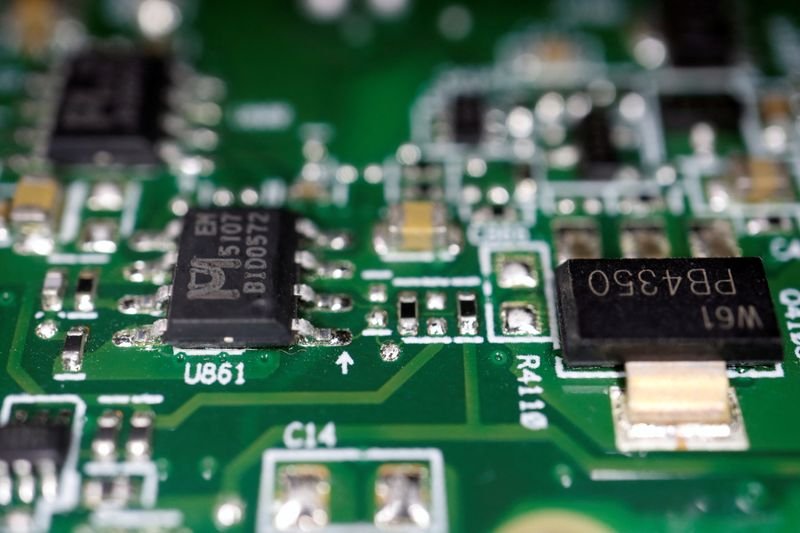
By Heejin Kim and Hyunjoo Jin
SEOUL, March 5 (Reuters) – South Korea’s chip industry is concerned that a prolonged Iranian crisis will disrupt supplies of key materials from the Middle East and increase chip prices due to a spike in energy costs, a ruling party lawmaker said on Thursday.
The chip industry also warned the crisis could deal a setback to plans by big tech firms to build AI data centres in the Middle East for the longer term, thus weighing on strong chip demand, Kim Young-bae said.
Kim made the comment after meeting with executives from companies such as Samsung Electronics, the world’s top memory chipmaker, and business and trade groups.
“We say the semiconductor supercycle has arrived, but data centre plans are highly likely to be disrupted, potentially creating problems with chip demand,” he said at a briefing with reporters.
“Officials raised a possibility that semiconductor production could be disrupted if some of these key materials cannot be sourced from the Middle East,” he said.
The chip industry is worried that the Iran crisis could disrupt supplies of some key chip-making materials like helium from the Middle East, Kim said.
Helium is essential for heat management during semiconductor production and it has no viable alternatives currently.
South Korean chipmaker SK Hynix said in a statement that it had sufficient helium inventory and did not expect disruption to its procurement.
Samsung Electronics declined to comment.
Industry officials said chipmakers have diversified their material sourcing as geopolitical tensions in the Middle East have persisted for years, and many have secured supplies in advance as a precaution.
DATA CENTRES
Samsung Electronics and SK Hynix have benefited from surging prices of memory chips, driven by a global race among tech firms to build AI data centres.
Amazon said on Monday some of its data centres in the United Arab Emirates and Bahrain were damaged by drone strikes in the Middle East conflict, sparking questions around Big Tech’s pace of expansion in the region.
U.S. tech giants like Microsoft and Nvidia have been positioning the UAE as a regional hub for artificial intelligence computing needed to power services such as ChatGPT.
Iran fired a barrage of drones and missiles at Gulf states in retaliation for U.S. and Israeli strikes that killed Supreme Leader Ayatollah Ali Khamenei on Saturday.
(Reporting by Heejin Kim, Hyunjoo Jin and Joyce Lee; Additional reporting by Heekyong Yang; Editing by Ed Davies and Christian Schmollinger)