dailynewsnblog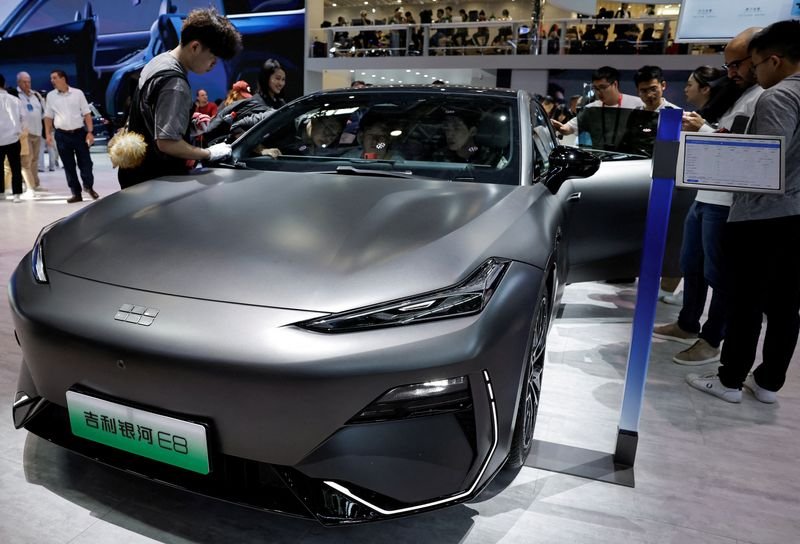
DETROIT, March 23 (Reuters) – Sooren Moosavy wants to buy an affordable electric car in the U.S., motivated by environmental concerns and a preference for the EV’s smoother ride. But the 28-year-old Baltimore resident’s search has brought him to a trio of vehicles that are essentially unavailable – because they’re from Chinese automakers.
“I would love the opportunity to be able to get one in or even test-drive one,” said Moosavy, who has narrowed his wish list to three models from BYD, Geely and Zeekr, attracted to their compactness, plush interiors, and above all, the price.
Moosavy isn’t alone. As the average price of a new car in the U.S. approaches $50,000, more of the car-buying public is open to buying cheaper Chinese cars, despite resistance from the industry and both major U.S. political parties. While Chinese autos hit the highways of Europe, Latin America and even Canada, the U.S. government has effectively banned the cars with tariffs exceeding 100%, out of concerns over data security and protecting American jobs.
In places like Europe, a number of Chinese EVs sell at prices under $30,000. Some of those cars include amenities like advanced driving assistance software, a built-in mini fridge, and the option to sing karaoke with your fellow passengers.
“The technology they offer for those lower price tags was astounding,” said Clint Simone, senior features editor for car-shopping website Edmunds, who drove several Chinese vehicles while at the CES trade show earlier this year.
CHINA’S EXPORT SURGE
China has surged past Japan in recent years to become the world’s top vehicle exporter. Canada became the latest country to open its doors to the cars, agreeing to cut tariffs to 6.1% on an initial allowance of 49,000 Chinese EVs annually. The cars are already being exported en masse to Mexico, where Chinese automakers are eyeing factory space.
U.S. President Donald Trump reiterated during an appearance in Detroit in January that he’s receptive to Chinese automakers opening stateside, as long as they employ U.S. workers.
But earlier this month, major auto trade groups submitted a letter urging the U.S. government to keep Chinese carmakers out of the country, citing competitiveness concerns. Republican Senator Bernie Moreno of Ohio said in January at an event at a Ford Motor plant that “as long as I have air in my body, there will not be Chinese vehicles sold in the United States of America.”
China’s embassy in Washington has rejected the automakers’ criticism, saying Chinese-made cars are popular because of their quality and technological innovation.