dailynewsnblog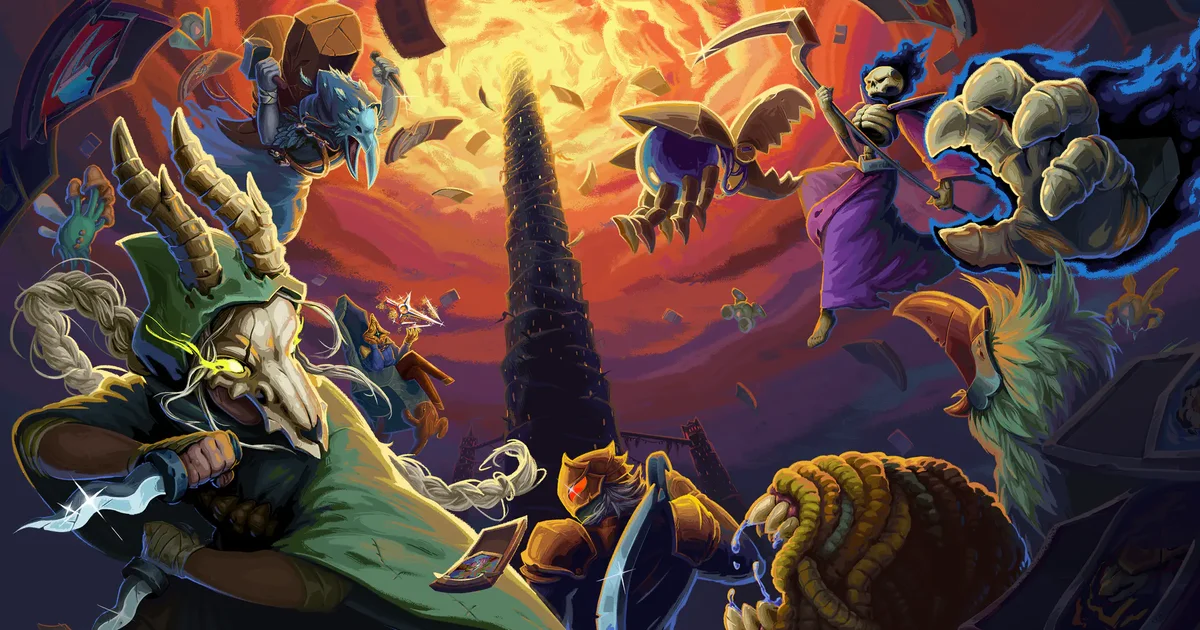
Years of careful study underpin a deceptively familiar sequel. The new additions make a difference but it’s the confidence in what this eccentric card game is that shines through. Cruelty has never been so enjoyable.
I worried about Slay the Spire 2 before its early access release because everything I saw reminded me of the original. I understood there were differences, but they didn’t seem big enough or pronounced enough to warrant a new game. In the back of my head a sly voice wondered: had Mega Crit, creator of the game, run out of ideas? No; I was wrong, and I’ve never been more pleased to admit it.
The layers of newness I’d considered pastry-thin were thicker in reality. Consider the game’s presentational uplift: it doesn’t seem drastically different in still images, but in motion it is. Slay the Spire 2 feels more alive than its predecessor. Fish enemies wriggle as if swimming in mid-air. Smoky darkness flits around creatures as it clings to them. Magic radiates from glowing eyes. Everywhere, there’s movement, it breathes, it heaves, and all while retaining the endearingly homemade look of the original.
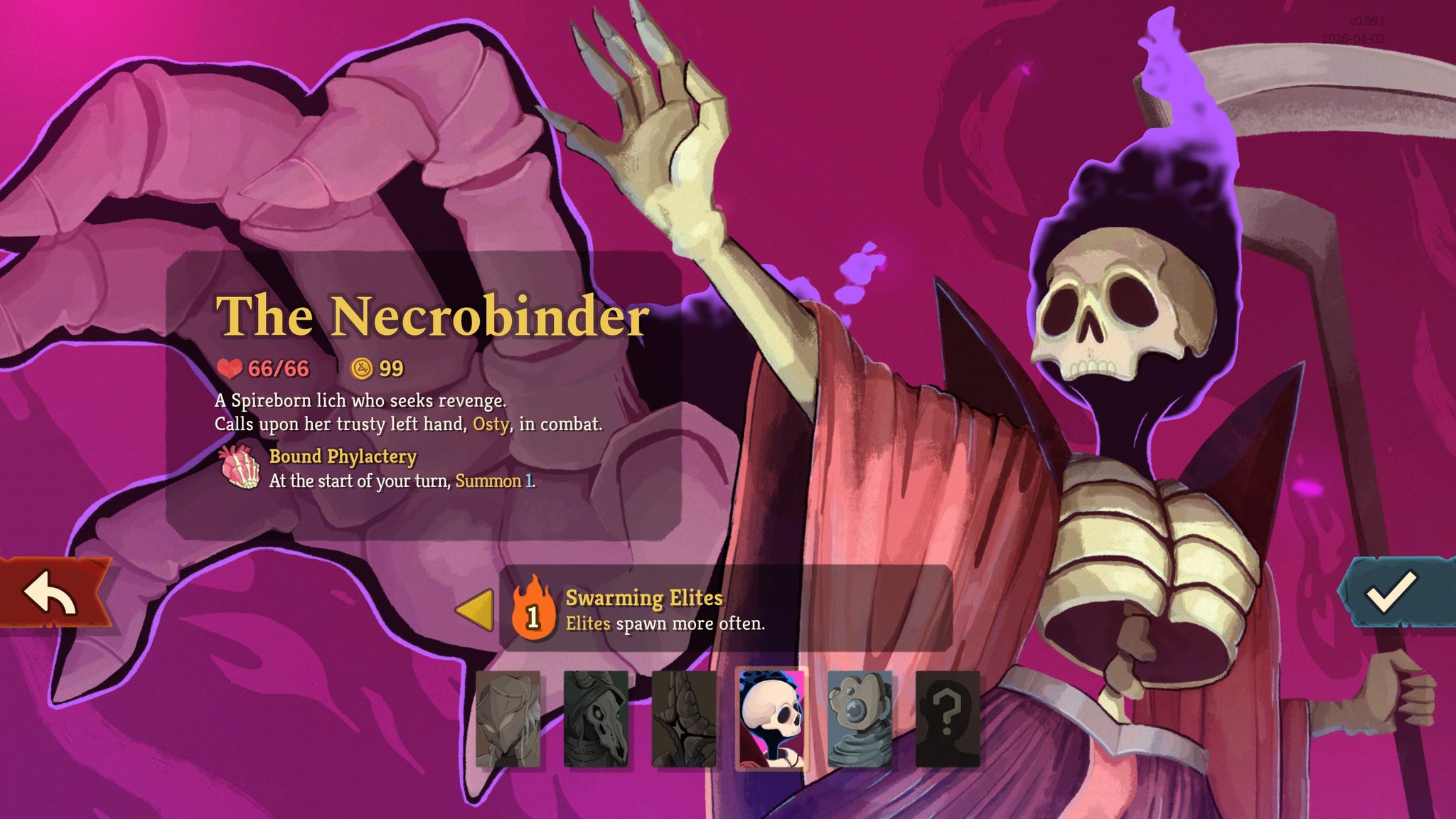
Consider the characters added to the game, The Regent and the Necrobinder. They are not remarkable because Slay the Spire has added new characters before (RIP The Watcher, who doesn’t return here). But these new characters bring fresh ideas as well as different decks to explore. They introduce summonable helpers in the form of a large skeletal hand or a floating sword. There’s also a new reverse kind of damage called Doom, which works up from zero, killing enemies when their health drops below the threshold. There’s a new resource in stars, meaning you effectively have two pools for playing cards, which can be incredibly powerful if handled correctly.
The Regent and the Necrobinder are also perhaps the most expressive characters the Slay the Spire series has had, the Necrobinder hovering in mid air alongside her adorable Thing-like hand pet, Osty, and the Regent sitting cross-legged on a heavy throne, held by two buckling servants while leaning on his fist as if bored by the whole endeavour. The nonchalance of it. It’s perfect. They exude charm.
And multiplayer? It’s transformative, as I’ve already written. Co-operatively slaying the spire with someone else (four people can play together) introduces a new facet to the game, not only in how you can support each other by building decks in complimentary ways, or by using multiplayer cards to buff each other. But also because you no longer need go it alone. And it feels basic to say this but it works silkily; the entire game does. Crisp, snappy, responsive, and flush with fabulous flourishes, such as being able to see your character’s pointing hand while trying to work out who gets which chest relic, or scribbling notes to each other on the game’s map. Multiplayer must be the reason Slay the Spire is consistently in Steam’s Most Played list.
But among these new additions, or lurking beneath them, is something more subtle that I admire even more. It’s a sense of hard-earned expertise underpinning the whole experience. Because although this is retreading of the Slay the Spire idea, in that nothing has fundamentally changed, in redoing it Mega Crit has been able to bring everything it’s learnt over the years to bear. It’s as though Mega Crit has watched us for years and perfected precisely which pressure points to press.
Let’s back up for a second. What is a Slay the Spire experience? You might genuinely not know. It’s also helpful to reexamine why this blend of card gaming is so captivating. Slay the Spire is a roguelike deck-building game – the rogue-like deckbuilding game, really; it started the subgenre. The very brief idea is you have one life to climb a spire, overcoming a succession of combat encounters by playing cards. The cards are themed around your character and after each battle, you get a choice of a new card to add to your deck. Fail in an encounter and you’re returned to the main menu, but you always unlock cards and other things that will potentially help you next time.
The allure comes from a mixture of eccentricity, exacting challenge, and the never-ending pursuit of striking it lucky in such a way you break the game in your favour. What you want is maths gone wild: that giddying moment where everything that used to floor you is suddenly floored by you. So it is that Slay the Spire forever dangles a carrot of power-gain temptingly in front of you. Do you attempt a difficult encounter for a powerful relic (passive buff) reward? You might not survive it. Do you forego healing at a Rest Site in order to upgrade a card? Always, you teeter on the edge.
The guts of the Slay the Spire 2 remains the same, then, but there are differences. There’s a new divination mini-game you’ll encounter to earn rewards from, and there are of course new cards and relics to discover. Even the carry-over character classes – the Ironclad, Assassin, and Defect – have been refreshed in a way that it tempts rediscovery, though they aren’t completely new.
One big addition I really like is interactions with godlike beings at the beginning of each Act. These resemble the interaction with Slay the Spire mascot Neow the many-eyed whale. You encounter her at the beginning of the game and she offers you a choice of powerful boons, and now she’s not the only one. An equally odd assortment of beings awaits you at the beginning of each subsequent act: a scarecrow, a melting dragon, a living rainbow, and more. It’s as though Mega Crit decided these interactions were a much more interesting way to reward a boss encounter immediately beforehand than with a static pile of loot; and it was right. The art for each encounter is elaborate and wild with colour and imagination, and the mechanical choices you’re offered are genuinely eyebrow raising. Reroll each card reward once; gain 999 gold; Cook at Rest Sites – an entirely new option. These aren’t normal rewards.
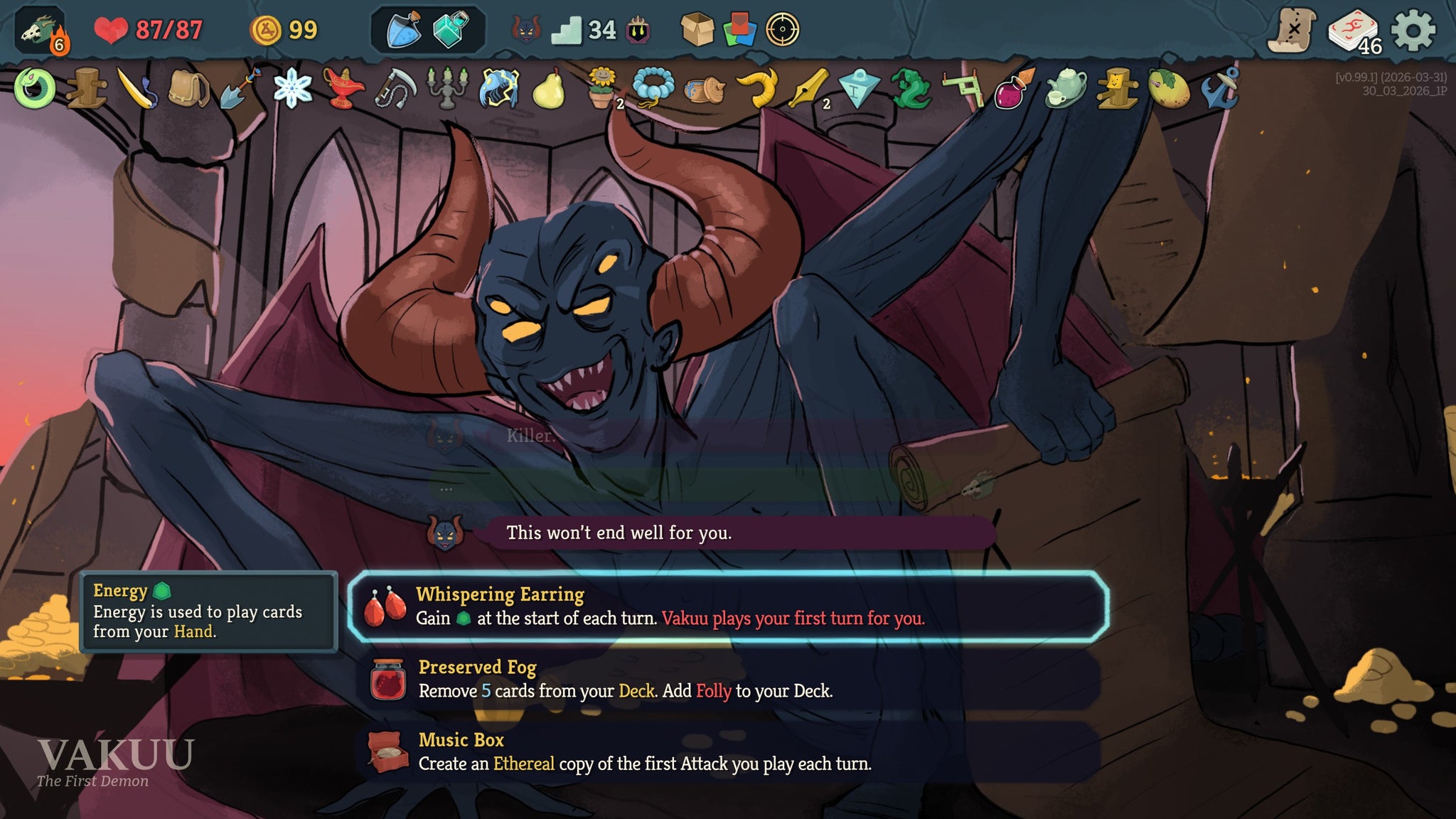
These godlike interactions are new. Here are a few of them; I know there are more.
The godlike interaction destined to become legend, or at least a meme, is Vakuu, a demon who looks like a grinning emaciated corpse. He stands out because he demands a heavy price for his rewards. In my most recent run he offered one extra energy per turn, which is vastly powerful when considering you only have three energy each turn as standard. But there’s a drawback. If I agree, Vakuu has to play the first round of cards for me in every battle after this. I have never seen anything like this in a card game before, and in a game as precariously balanced as Slay the Spire 2 is, it’s an enormous risk to take (a risk I did take, by the way…). It’s this bold and slightly unhinged way of thinking about a card game that sets Slay the Spire 2 apart.
It’s as though Mega Crit has watched us for years and perfected precisely which pressure points to press
Dodgy deals can be experienced throughout the game, in mystery encounters dotted around your path, and it’s here you’ll uncover some of the game’s new card modifiers as well. There’s an option to craft a card yourself, which we’ve never had before, and you can add things like Replay to cards (so that they trigger more than once) as well as remove restraining keywords like Exhaust, which makes cards disappear after use. There are more tools now to shape a deck your way. These possibilities make mystery events enticing, but as with everything in Slay the Spire 2, danger lurks. You might as soon stumble on an event that will randomly remove a card from a deck and you will need to sacrifice health to exert some semblance of control over which one. And how much health in a one-life game can you spare?
The game’s new fleet of combat encounters have evolved as well, refitted with new enemies, which I think present shrewder challenges. It’s as though Mega Crit has been watching us play and noting what we favour and how best to counteract it. Are you trying to keep your deck small (a long-standing tactic for controlling chance)? You won’t like how Mega Crit has pushed enemies that populate your decks with ‘bad’ cards then. Are you using zero-cost cards and card-draw to string out never-ending turns? You won’t like the emphasis on enemies that limit how many cards you can play. Have you spent a lot of time upgrading your deck? Here’s an enemy that temporarily downgrades it. Just as we try to build decks that survive all aspects of the spire, so Mega Crit has built Slay the Spire 2 in a way to undo them.
I think it’s harder to impress people a second time around because repeated ideas aren’t, by their very nature, fresh and exciting any more. But I feel confident now in saying that Slay the Spire 2, um, Slays better. It’s prettier, the roster of characters is broader and more exciting, and there’s multiplayer. But it’s in how much more wily and wicked Slay the Spire 2 is that I’m finding the most delight. This series has always been about proving our intelligence: that’s the real drive. It’s a battle of wits between us and the game, and a battle of wits is only really fun if you’ve a witty opponent, which here, you have. I have laughed out loud so many times simply at the audaciousness of a newly discovered encounter. There’s a simple delight in merely discovering what’s next.
It would be remiss to continue without underlining that Slay the Spire 2 is in early access, though. Really, it’s a testament to the craft of the game, and the overall robustness and exquisite detail of it, that Slay the Spire 2 feels finished enough to nearly overlook this; such is the high bar of early access these days. However, there are still considerable things to come. There are Act variations, mod support, more cards, events, artwork (there’s a lot of placeholder art in the Timeline; I’m becoming rather fond of it). Plus of course there are the vital tweaks and fiddles that represent the never-ending challenge of tuning and balancing a game such as this. Eventually it’ll also be on console, like Slay the Spire 1 was, but that’s a down-the-line consideration.
Suffice to say, I should not have worried. In Slay the Spire 2, Mega Crit demonstrates that it absolutely understands what makes this eccentric card game crackle and fizz, and why so many people enjoy playing it. The ideas haven’t dried up. The formula might not have evolved much, yes, but Mega Crit has.