dailynewsnblog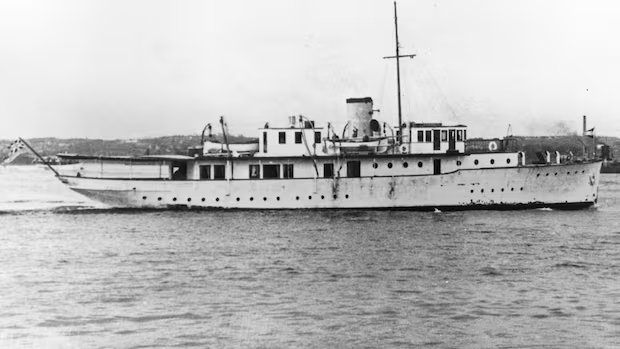
When HMCS Otter patrolled the waters outside Halifax harbour on March 26, 1941, the Allied war effort was not going well.
It was a full three years before D-Day, the Allied invasion of western Europe.
For convoys heading overseas, German U-boats regularly picked off vessels carrying troops and much-needed supplies for the war effort.
For geographic reasons, Halifax was one of the most important ports in the world. It served as a gathering place for troops coming and going from Europe, as well as a departure point for convoys.
Eighty-five years ago this week, the Otter searched for German subs and sea mines just beyond the nets designed to keep enemy submarines from getting inside the harbour.

“They didn’t find a one at this point … none to be found,” said journalist Stephen Kimber, who wrote the book Sailors, Slackers, and Blind Pigs: Halifax at War. “But if they weren’t there, there could have been, so it was important that they were doing it.”
A fire on board meant the ship started sinking, leading to “a dramatic tale of tension and heroics,” said Kimber.
Forty-one Canadians and Brits were on board, but only 22 survived.

The incident served as a reminder of the deadly consequences of war, even if the local media couldn’t report all the facts due to wartime censorship regulations.
“Because of the fact that it happened so close to Halifax and involved local men meant that it was something that the newspapers feasted on,” said Kimber.
When the fire broke out in the engine room, crew members tried unsuccessfully to put it out and were forced to abandon the ship.
They were placed in two lifeboats and an inflatable life-raft (known as a Carley float) in gale-force winds, meaning winds between 62 and 74 km/h. It was March, meaning the water was frigid, with waves nearing five metres in height.
Press accounts of the day offer conflicting information about how many people survived from each lifeboat and life-raft.
Lifeboat No. 1
Luckily, a Polish vessel — whose country of origin was not referenced in the media coverage — was sailing past, spotted the crew and approached to help rescue them. The crew lowered a rope to the people in the first lifeboat, but a rogue wave overturned it, leading to many people drowning.
The Polish vessel’s captain said some survivors were able to get back in the lifeboat, while others clung to it, according to an account of the rescue in the March 28 Halifax Mail.
The Polish crew then lowered two lifeboats into the water, but the strong winds and waves smashed them against the side of the freighter, destroying them.

“My crew knew the only alternative,” the captain said in the March 28 Halifax Mail. “The men down there in the water were too weak to help themselves up the ropes or even fasten them about their bodies. We could easily see that.”
A Polish seaman tied a rope around himself, lowered himself down the side of the ship and tied up sailors one by one, living and dead, who were hauled aboard. Some later died on the ship.
“Every man aboard took their turns applying artificial respiration and rubbing the bodies of the men with alcohol,” said the captain.
Lifeboat No. 2
The Polish ship then turned its attention to a second lifeboat, which had about 15 people in it, according to the Halifax Herald. They were in much better shape and the crew was able to climb aboard with little help.
Life-raft
The crew members on the inflatable life-raft huddled together as they fought to keep from being washed overboard, according to a March 31 Halifax Herald article.
Standing in water up to their waist, they sang and shouted in a vain effort to stay warm.
“When the men, one by one, started to give in from exhaustion others tried to keep their heads above the water,” a survivor told the Halifax Herald.

“Then the odds became too great for us. They were going fast. Our arms were becoming weak and those we thought had died, we had to let go of. They dropped to the bottom of the raft.”
The survivors were brought to safety by a British submarine — referred to as simply “another war vessel” in some media coverage of the day.
A third ship helped with the rescues by acting as a buffer against the strong winds.
Wartime censorship
The details of what could be published had to be approved by journalist-turned-censor H.B. Jefferson, who was responsible for 16 daily newspapers, 68 weekly newspapers and 10 radio stations in the Maritimes, according to the Nova Scotia Archives, which has a digitized exhibit on Jefferson.
“Editors were advised to go to these regional censors with their stories and ask for advice,” said Kimber. “And the censors would come back with information about the kind of harms that might come from publishing certain information.”

Some publications were shut down during the wartime years because of what they published, said Kimber.
He wrote about the incident involving the Otter for his book Sailors, Slackers, and Blind Pigs: Halifax at War, but it didn’t survive the editing process.
Censorship and the Otter
Kimber wrote about the interaction between Eric Dennis of the Halifax Herald and Jefferson for a story he filed on the sinking.
Dennis figured Jefferson would not allow naming the British sub’s first lieutenant. The reason? “The theory was that the Germans could figure out which vessels were involved because they knew which senior officers served on which ships,” Kimber wrote.
Some of the things Jefferson suggested changing any submarine reference to warship or naval vessel.
“And don’t use ‘decks awash’ either; the Germans will know you’re referring to a submarine,” Kimber quoted Jefferson as saying. “And you’d be wise to delete the name of the rescue freighter as well as her nationality and the names of her captain and first officer.”
Why Otter reporting allowed for plenty of detail
Kimber said reporters were able to include a lot of detail in their stories because the incident didn’t actually involve the Germans.
Rather, it was a story of the people who died, the survivors and the people who fought to save them.
“There weren’t many red flags in that, except what was the ship doing out there?” said Kimber.
The reporting does not detail what work the Otter was carrying out.
Kimber said in the case of convoys being sunk while heading overseas, censors would urge the media to cover it once the remaining convoy vessels arrived safely overseas.
During the war, Maritime port cities were often referred to as an East Coast port so as not to give away precise information to the enemy. A lot of times the so-called East Coast port would have actually been Halifax, said Kimber.

For the duration of the war, Jefferson lived with his wife at the Nova Scotian Hotel, which is where the modern-day Westin hotel on Hollis Street is located.
He kept meticulous detail of his life in a typewritten journal, “recording in minute detail the world around him — from convoy departures listed by time and sequence of vessels, to which local hotel served better dinner rolls,” says the Nova Scotia Archives’ website.
“He was an acute and witty observer of the passing parade, and not a thing missed his attention regarding life in wartime Halifax.”
Jefferson’s office was in the Dominion Public Building on Bedford Row, which was the tallest building in the city, said Kimber. From his office, Jefferson could see everything in the harbour, often taking photos. The Nova Scotia Archives has digitized the photos.
“He probably violated the censorship rules on a daily basis, but it was only for him,” said Kimber.
MORE TOP STORIES