dailynewsnblog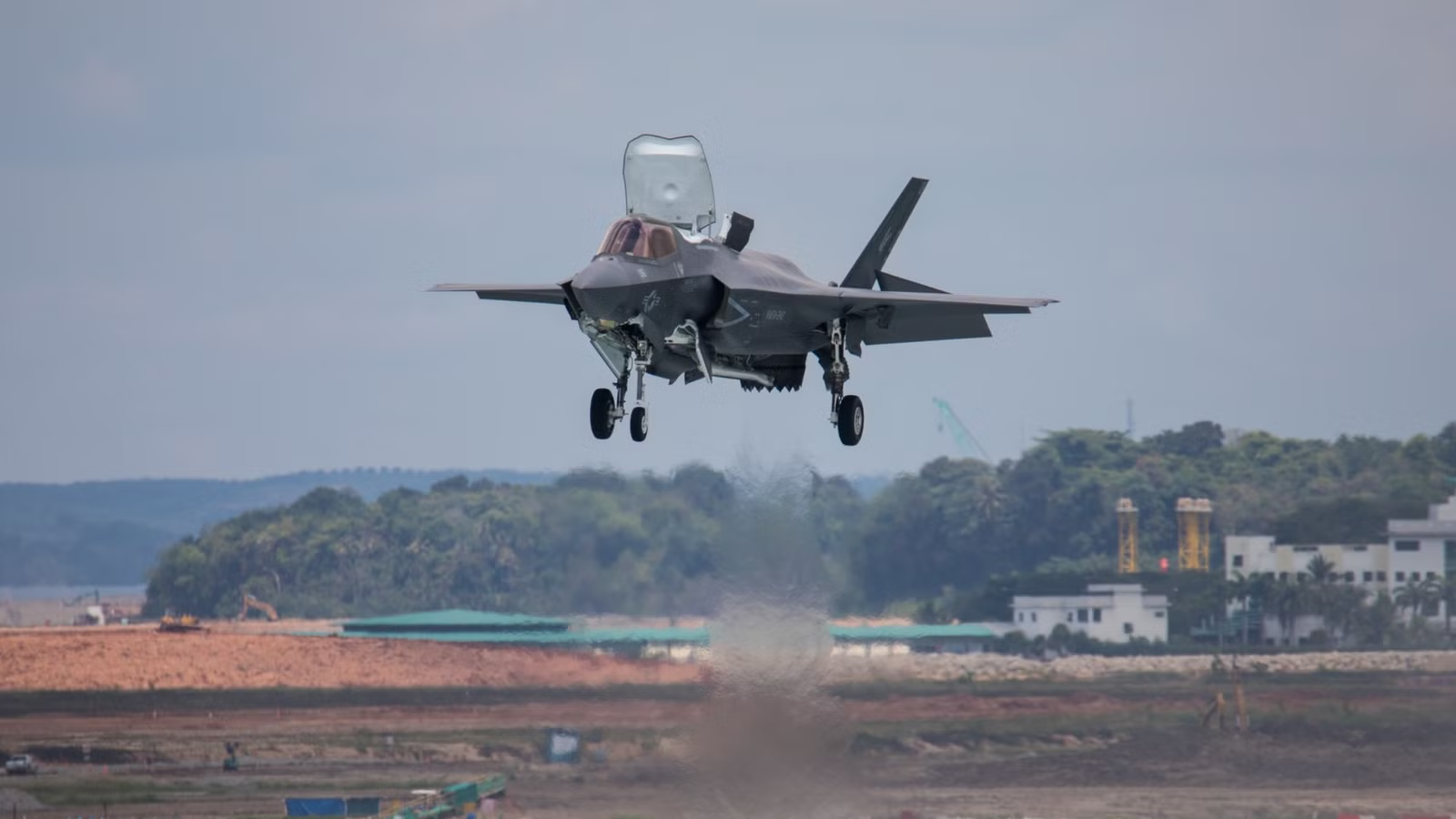
The 2026 installment of the Singapore Airshow has just wrapped up, and one of the most exciting aircraft in attendance was the Lockheed Martin F-35 Lightning II. The Royal Australian Air Force (RAAF) flew in to showcase the fifth-generation fighter’s capabilities as the Republic of Singapore Air Force (RSAF) awaits delivery of its first F-35B stealth ‘jump jets’ at the end of this year.
Australia is currently the largest operator of F-35s in the Pacific region, and number two behind the US, but Japan will overtake it once its full order backlog is fulfilled. The combined forces of Australia, Japan, and Singapore, in complement to the US Armed Forces in the region, will allow for unprecedented interoperability and a powerful counter to China’s growing stealth fighter fleet.
A Tactical Revolution

Singapore joined the F-35 Joint Strike Fighter (JSF) program as a member in 2003, and the RSAF is slated to receive 12 F-35Bs alongside eight F-35As, which it added to the total order in 2024. The decision to acquire the F-35 was made as a fleet modernization program to replace the aging General Dynamics F-16 Fighting Falcon. Not only does RSAF gain its first stealth aircraft, but the F-35s will be the first Platforms in its Fleet with 5th-Gen avionics and weapon systems as well.
The data-networked, drone-interfacing, and cooperative weapons system capabilities with allied aircraft allow the F-35 to see every target the battlefield before it is detected. The ‘first-strike’ advantage is multiplied by the tactical versatility of the vertical takeoff or landing (VTOL) F-35B. This variant offers a unique opportunity to dramatically increase strategic flexibility by using public roads on the limited land mass of Singapore for emergency sorties or recoveries.
Singapore is considered an increasingly important security member of the ‘First Island Chain’ defense posture against aggression from the People’s Republic of China (PRC), partnering with other nations like South Korea, Japan, and Australia to counter the growing threat from the People’s Liberation Army Air Force (PLAAF) stealth fighters and the People’s Liberation Army Navy (PLAN) aircraft carriers.
Singaporean Minister for Defence, Chan Chun Sing, visited the F-35 production facility in Fort Worth, Texas, in September 2025 to witness progress on the fighter batch under construction for RSAF. During his visit, he made these remarks to the LM team and other visitors:
“This is not just a milestone, but one step in a long journey that we will take together with LM, [the USG, USAF], and the community… because every one of us needs to come together in order for this capability to be realised.”
One Airframe, One Team

The RAAF has a total of 72 in its inventory, and the Japan Air Self-Defense Force (JASDF) has ordered 105 F-35As alongside 42 F-35Bs, meaning that the RSAF will be able to operate in joint operations with both the second and third largest operators outside the United States. The Republic of Korea Air Force (ROKAF) also has a total order of 60 F-35A conventional variants, bringing the eventual total in the region to 299 across all US-allied operators of both variants.
The United States Air Force (USAF) maintains a permanent presence in Japan and South Korea through rotating f-35a squadrons, while the US Marines have a similar deployment strategy with expeditionary squadrons in Japan. The US Navy maintains a permanent carrier strike group present in the region with a Home Port in Japan that supports multiple squadrons of F-35C naval variants.

The World’s Most Superior Carrier-Based Aircraft
Engineering excellence and modern technology meld in the world’s best fighters found on the decks of aircraft carriers around the world.
Containing China’s Aggression

The cause for the buildup of stealth aircraft by the US and its allies in the Pacific region is the steadily growing fleet of PLAAF Chengdu J-20 Mighty Dragon stealth fighters, which is estimated to be over 300 strong this year. At the same time, it is projected that the PLAN will soon receive the Shenyang J-35 stealth fighter capable of deploying from its rapidly expanding ‘blue water’ fleet of aircraft carriers.
The J-20 is designed as a long-range air patrol and interceptor to target high-value assets like aerial tankers and airborne command assets that would cripple the strategic capabilities of allies in the region. The J-35 is the next step in China’s aggressive naval activity in disputed waters around the Pacific, where its ships have repeatedly taken hostile action against international navies and maritime traffic as a form of ‘soft power projection’ while denying responsibility.
The total number of F-35 aircraft that will be produced is expected to be around 3,000 airframes. This enormous fleet of stealth aircraft spread across the service branches of the US Armed Forces, as well as a growing list of 19 allies around the world, is a crucial form of strategic containment to deter aggression by actors like China.
As a near-peer adversary, the PRC has grown steadily bolder and developed more permanent bases and islands in the Pacific and undertaken more aggressive and provocative military maneuvers in and around the waters of allies like Taiwan and Japan. Clearly showing that without effective deterrence through superior military power and willingness to respond, the PRC will continue to push until it finds the ‘red line’ at which America and its allies are willing to stop it.