dailynewsnblog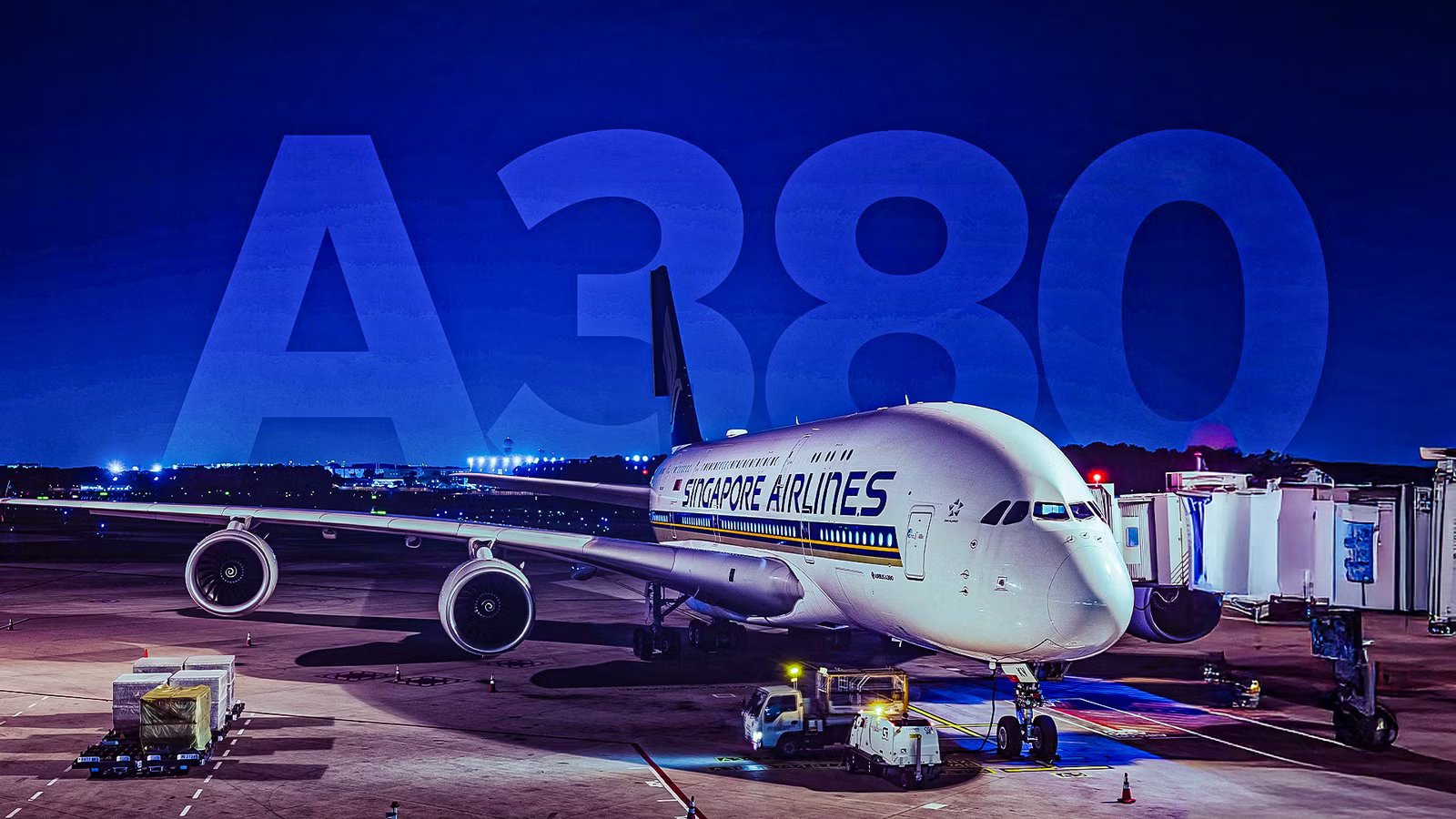
The war in Iran continues to have many consequences, with widespread impacts on aviation. As Aeroroutes identified, one of the latest developments is that  Singapore Airlines has temporarily closed bookings on flights between Singapore and Dubai. Flightradar24 shows that services haven’t operated recently anyway.
This development might not be overly notable in itself, as many carriers have done similarly. Given the ongoing circumstances, they have relatively little choice. But it is notable because Singapore Airlines’ Airbus A380 was due to replace the Boeing 777-300ER on March 29, which is day one of the northern aviation summer based on IATA slot seasons.
Singapore Airlines Suspends Dubai Flights

The  Star Alliance member, which has not had passenger service to Dubai recently, has officially closed bookings on the route. No flights will operate between March 29 and May 1, with an extension to the plan likely depending on how the war progresses. The situation is changing quickly.
The current plan is for flights to resume on May 2. And if they do return then (or later), they’ll be on the A380. However, it is possible that the decision to significantly upguage capacity—from 528 daily round-trip seats with the 777-300ER to 942 with the superjumbo—could be reversed. After all, given everything that is going on, forward bookings are likely to have dropped.
The New Plan For The Double-Decker

As of March 19, and subject to change, the new plan sees the A380 serving Dubai from May 2. The original schedule was for the type to only operate until October 24, which is the final day of the northern aviation summer season. However, the double-decker quadjet is scheduled for the rest of 2026 and into 2027. There is no indication that the much lower-capacity 777-300ER will return, or any other equipment will be deployed instead.
Singapore Airlines has 12 A380s, each with 471 seats. They include six fully enclosed suites with a double bed (1-1), although this is arguably not a ‘true’ double bed, as there’s a partition of sorts between two beds that form the double offering. Then there are 78 seats in business (1-2-1), 44 seats in premium economy (2-4-2; 38″ pitch), and 343 seats in economy (3-4-3; 32″ pitch).
The carrier has served Dubai for a long time. According to Cirium Diio data, some flights continued to other places, including Cairo, Istanbul, Jeddah, and Moscow Domodedovo. In the past two decades, Singapore Airlines has used many aircraft types/variants on its passenger flights to Dubai: the A330-300, A350-900, A380 (briefly in 2024), 747-400 (briefly in 2005/2007), 777-200ER, 777-300, and 777-300ER.
|
Singapore Airlines’ Offering In June 2026 |
Singapore To Dubai; Local Times |
Dubai To Singapore; Local Times |
|---|---|---|
|
Daily A380 |
2:40 pm-6:00 pm |
7:45 pm-7:30 am+1 |

New Flights: 18 Of The Most Exciting Airline Routes Launching This Week
See which notable examples made the list this week…
Where Do Singapore Airlines’ Dubai Passengers Go?

According to booking data, the local Singapore-Dubai market had 375,000 round-trip passengers in 2025. Passengers only flew between the two places; they did not go elsewhere. It was, of course, overwhelmingly Singapore’s most-trafficked Middle Eastern market.
Given Singapore Airlines’ daily offering and Emirates’ four daily flights, around 95% of passengers flew nonstop. Due to Singapore Airlines’ much lower frequency, it obviously had a much smaller share of the local market—less than a quarter. Nonetheless, the bulk of its Dubai passengers were point-to-point rather than transiting.
While significantly fewer passengers connected to another flight in Changi than were local, transfer traffic was critical in increasing the airline’s seat load factor. The route would not be viable but for the additional passenger volume, at least with the same yields.
Given the large number of Filipinos in the UAE, Dubai-Singapore-Manila was by far the most popular segment. Bali was second, followed by Jakarta, Bandar Seri Begawan, Surabaya, Kuala Lumpur, Penang, Sydney, Melbourne, and Osaka. Around one in two passengers connected to/from Indonesia and the Philippines.