dailynewsnblog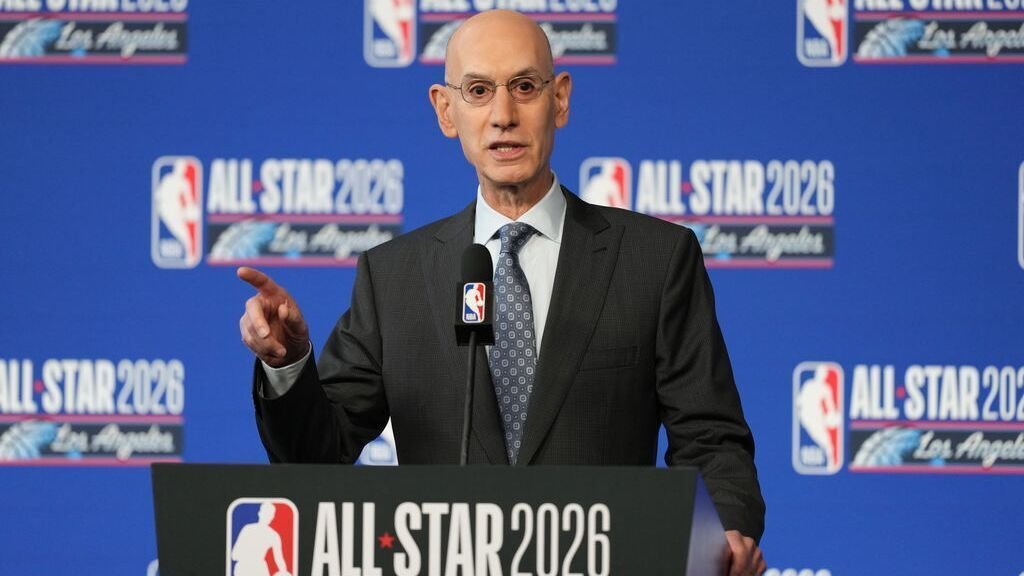
-

Ramona Shelburne
Multiple Authors
INGLEWOOD, Calif. — NBA commissioner Adam Silver said Saturday that tanking has been “worse this year than we’ve seen in recent memory” and he’s considering “every possible remedy” — including taking away draft picks — to stop the type of overt behaviors he fined the Utah Jazz and Indiana Pacers for this week.
“In the old days, it was just sort of an understanding among partners in terms of behavior,” Silver said before Saturday’s All-Star Saturday events. “I think what we’re seeing is modern analytics where it’s so clear that the incentives are misaligned. … Are we seeing behavior that is worse this year than we’ve seen in recent memory? Yes, is my view. Which was what led to those fines, and not just those fines but to my statement that we’re going to be looking more closely at the totality of all the circumstances this season in terms of teams’ behavior, and very intentionally wanted teams to be on notice.”
Silver began his news conference by saying he had recently talked to 97-year-old Bob Cousy about the first All-Star Game in 1950, and they had both remarked at how far the game had come since then. That framed Silver’s line of thinking that after 75 years, it might be time to rethink how the league runs its draft, just as the league continues to experiment with its All-Star Game format.
Silver noted that in conversations with general managers and other members of the league’s competition committee, the incentive structure of the lottery has made it unclear that the worst teams are actually the teams with the worst records.
“If teams are manipulating their performance in order to get higher draft picks even in a lottery, then the question becomes … are they really the worst-performing teams?” Silver said. “It’s not clear to me, for example, that the 30th-performing team is that much measurably worse than the 22nd-performing team, particularly if you have incentive to perform poorly to get a better draft pick.
“It’s a bit of a conundrum. As I’ve said, the All-Star [Game] is 75 years old. The league is 80 years old. It’s time to take a fresh look at this to see to whether that’s an antiquated way of going about doing it.”
On several occasions Saturday, Silver reflected on the conundrum between the short-term incentives teams might have to lose games to improve their draft position and the long-term best interests of the league.
“It’s the whole community coming together and deciding what’s in the best interest,” Silver said. “It’s part of my job to remind everybody. … I understand what your short-term interests may be, but we’d better not lose sight of our fans here. We’d better not lose sight of the people who support this league day in and day out.”
Silver noted that last point as part of an answer to a question about the ongoing investigation into whether the LA Clippers circumvented the NBA’s salary cap in an endorsement deal between then-team sponsor Aspiration and star forward Kawhi Leonard.
Silver said he had no updates on the investigation, which is being conducted by Wachtell Lipton in New York.
“It’s enormously complex. You have a company in bankruptcy. You have thousands of documents, multiple witnesses that have been needed to be interviewed,” Silver said.
“I will say, just in case anyone is wondering, the fact that All-Star [Weekend] is here this weekend has had no impact on the timeline of the investigation. Our charge to the Wachtell law firm is to do the work and then come back and make recommendations to the league office, and that’s where things now stand.”
Silver said he had no timeline on when that investigation might conclude.
He did, however, provide an update on the NBA’s plans for expansion, noting that he expected the board of governors to discuss the issue at its next meeting in March and then start reaching out to potential expansion cities and owners to gauge interest. He noted that the league was not considering a relocation of any of its current franchises.
“I think the logical next move would be to say, ‘All right, we’ve had those discussions internally, we’ve made decisions about cities to focus on and what the opportunity is, and now, we’ve got to go out into the marketplace,'” Silver said. “I think that’s probably the most important step, to find out who is potentially interested in owning a franchise in particular cities, what’s the value of that franchise. There’s some work to do in terms of potential conference realignment. That’s the next step there.”