dailynewsnblog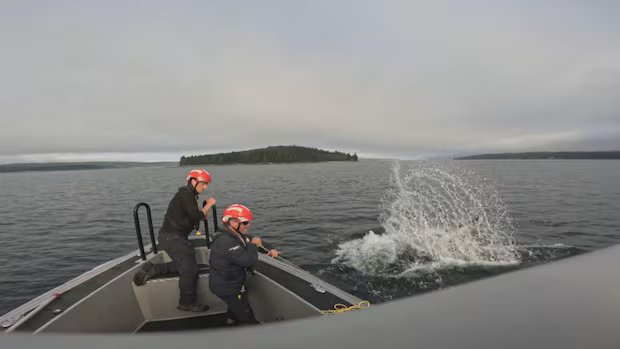

Listen to this article
Estimated 3 minutes
The audio version of this article is generated by AI-based technology. Mispronunciations can occur. We are working with our partners to continually review and improve the results.
Humpback whales are more likely to get entangled in fishing gear in years when rising ocean temperatures make cold-water habitat harder to find, according to new research published Wednesday.
The findings, based on research conducted off the U.S. West Coast by the National Oceanic and Atmospheric Administration and published in the peer-reviewed journal PLOS Climate, show shrinking cold-water habitat is a bigger driver of entanglement risk than increasing numbers of humpbacks, the researchers said.
Cold water habitat is important for species like humpbacks because it creates “explosions of life” where species like krill and small fish that whales feed on thrive, explains Geoff Shester, a senior scientist at ocean conservation society Oceana, who was not involved in the research.
This beneficial cold water comes up from the depths of the ocean, but it can get pushed down or compressed by marine heat waves linked to climate change, leaving limited areas available for feeding, Shester explained. This is known as habitat compression.
When those areas overlap with areas that are open to fisheries, “that’s basically creating this perfect storm of much higher interaction between the whales and where this fishing gear is,” Shester said.

This can be particularly harmful to humpbacks, according to Andrew Trites, director of the Marine Mammal Research Unit at the University of British Columbia.
“Humpbacks, unfortunately, when they get caught in something, they have a tendency to roll in it and they can wrap themselves up so tight and they have an inability to get out of it. All they can do is drag that along until either it slices through a flipper to free them or humans come in to intervene,” he said.
“When we do find them — and we don’t find them all — many do die a horrible, tragic death.”
The U.S. researchers found that before 2014, there were typically 10 or less reported humpback entanglements off the West Coast. That tripled to 31 in 2024, and reached a high of more than 40 during a major marine heatwave known as “the blob” in 2015 and 2016.
NOAA scientist Jarrod Santora and colleagues analyzed the associations between reported humpback entanglements, population size and changes in cold water habitat off the West Coast over 25 years.
They found more humpback entanglements occurred during years with lower cold-water habitat areas and that population growth alone wasn’t enough to statistically explain the increases.
The U.S. researchers created a tool called the Habitat Compression Index which they say can predict ocean conditions six to 12 months in advance.
The index is an important tool because it identifies times and places when there’s a higher risk of entanglements happening and allows decision makers to close fisheries at those times in those areas, Shester explained. The index is already in use in California, he added.
There have also been technological advances such as ropeless fishing gear which could help going forward, Shester said.
“Fishermen are now going back into these areas that are closed with fishing gear that does not pose the entanglement risk.”