dailynewsnblog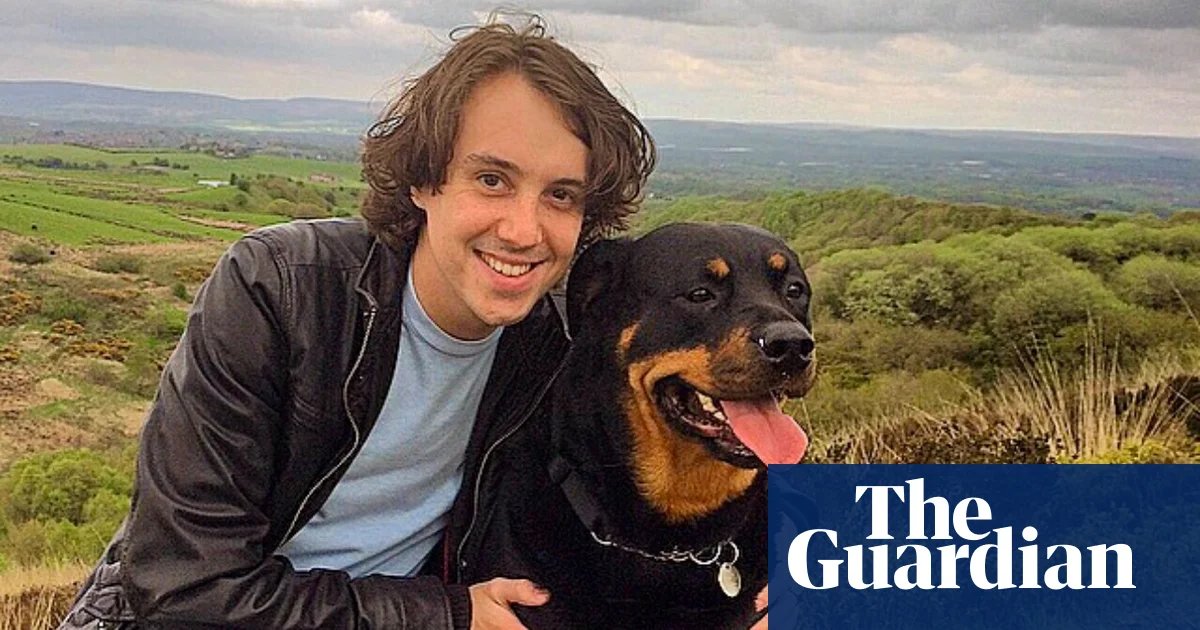
Oliver Robinson felt he had exhausted conventional therapies when he left the Priory, a private mental health facility where he was treated for depression and addiction between 2019 and 2022. Initially he found relief from a new kind of prescription elsewhere. But by the time he took his own life in November 2023, aged 34, his medicine was making him worse.
In January, an inquest concluded that Robinson’s prescription for medicinal cannabis had “probably contributed to his death”. Catherine McKenna, the coroner for Manchester North, also ruled that his continued use of the prescription, first issued to him in May 2022 by Curaleaf Clinic, a private cannabis provider, “acted as an obstacle” to him receiving appropriate psychiatric and addiction care. His family understand this to be the first ruling of its kind.
Now, Oliver’s brother, Alexander Robinson, is launching a campaign for tighter controls on UK private cannabis clinics, including a ban on prescribing to patients with serious mental illness, and greater oversight of a rapidly expanding industry.
Alexander worries that others in Oliver’s position could be harmed by accessing medicinal cannabis. “If things do not change he is not going to be the last,” he said.
Medicinal cannabis was legalised in 2018 after the mother of a young boy from Northern Ireland with severe epilepsy had cannabis oil she had brought from Canada seized at airport customs. The law was changed so that cannabis-based medicinal products (CBMPs) could be prescribed by doctors on the General Medical Council’s (GMC) specialist register.
Today, the NHS typically prescribes only a small number of licensed CBMPs – those approved by the medicines regulator – for conditions such as severe epilepsy, multiple sclerosis and chemotherapy-related pain. Legally, specialist doctors can prescribe cannabis-based medicines, including unlicensed products, in NHS and private settings where they judge it clinically appropriate.
According to the Care Quality Commission (CQC), the healthcare regulator that oversees private cannabis clinics, most products prescribed privately are unlicensed, meaning they have not been approved by the medicines regulator. The government reported about 5,000 NHS prescriptions for licensed CBMPs in 2023.
Freedom of information data from NHS Business Services Authority showed there were 659,293 unlicensed cannabis products privately prescribed in 2024, more than double the 282,920 issued in 2023.
About 80,000 people in the UK are thought to be in receipt of a private prescription. But there is limited evidence that cannabis is a suitable treatment for depression.
“Under current British National Formulary guidance, medicinal cannabis should not be prescribed to someone with a history of severe psychiatric disorder,” Dr Pavan Chahl, an expert psychiatrist, told Oliver’s inquest. “There is a lack of evidence for efficacy in depression and evidence it can cause or worsen depression. On this evidence, Oliver Robinson should never have been prescribed medicinal cannabis.”
Alexander argues the safeguards are not strong enough for vulnerable psychiatric patients. “Oliver’s law” calls for a ban on prescriptions for people with serious mental illness, mandatory consultation with NHS mental health teams, face-to-face assessments for complex cases rather than video consultations, tougher CQC oversight (including routine audits and publication of prescribing data), mandatory reporting of serious harms and clearer General Medical Council sanctions for unsafe prescribing.
Oliver had long struggled with his mental health. Once a successful property developer in his home town of Bury, he was treated for depression and low mood by the NHS and the Priory, including two inpatient admissions, after the breakdown of his business and a relationship.
At the Priory he was diagnosed with recurrent depressive disorder. He had been a cannabis smoker since the age of 13, and addictive behaviours were identified as a significant factor affecting his mood.
After leaving the Priory for the second time, he returned to using cannabis after finding an old stash in a drawer at home. “He wasn’t feeling happy, he tried some and found that it gave him some relief from his depressive symptoms,” Alexander recalled. Oliver told his brother that because of the antidepressant medication he was taking, smoking helped him access his emotions in therapy.
Oliver signed up to Curaleaf Clinic shortly afterwards. In May 2022 he underwent a video consultation with Dr Urmila Bhoskar, a child and adolescent psychiatrist, providing a GP summary that was nine months old .
After reviewing his case, Curaleaf’s multidisciplinary team of clinicians agreed that “proceeding with a trial of medical cannabis would be appropriate”. Oliver received prescriptions for medicinal cannabis.
Doses of medicinal cannabis products can be especially potent, containing up to 27% tetrahydrocannabinol (THC), the psychoactive compound in cannabis. Street cannabis is thought to contain between 15% and 20% THC.
That summer, Alexander said, he began receiving calls from his mother about Oliver, who was behaving violently. “She was panicked,” he recalled. “I’ve never heard her that scared before.”
Oliver would have blazing rows with his mother, raging against her disapproval of his use of medicinal cannabis. “There were times she’d lock herself in the bedroom,” Alexander said. “At one point he threatened to firebomb the home.”
Police were regularly called to the house. As Oliver’s behaviour became more threatening and destructive, his mother was classified as a victim of domestic abuse. Police recommended she take out a restraining order against her son. For the final year of his life, she did not see him.
Now unable to live with his mother, Oliver tried renting an Airbnb but was evicted because of his cannabis use. He began living in a tent. He had lost his job and taken out a payday loan to fund his prescription, which was now costing up to £1,000 a month. He was also accessing street cannabis when he could not afford the clinic.
Communication with family was fragmented. With Oliver now unable to contact his mother, Alexander and his father made sure to keep channels open. But they were receiving abuse, too. Oliver had become fixated on his prescription and aggressively dismissed anyone who challenged his belief that it was helping him.
“I have 11 months of emails and WhatsApp messages that are not my brother,” Alexander said. “They are the angriest and most vitriol-filled messages I have ever read.
“The next 11 months were the most traumatic and hellish of my life. I knew he was in the utter doldrums, and in constant pain, and I knew he was struggling with the depression.”
Oliver had told his family that his Priory therapist, Dr Justin Haslam, supported his cannabis use. After the firebomb threat, Oliver’s family wrote to Haslam to confirm what they were being told. He replied that he was “gravely concerned” and that he believed Oliver needed more acute care than the Priory could offer, and referred him to NHS psychiatry.
That summer, Oliver began seeing an NHS psychiatrist in Bury, who diagnosed bipolar disorder, depression and cannabis dependency. Oliver was referred to addiction services and warned that cannabis was contributing to his deterioration. He rejected the diagnosis and refused to engage.
By November 2023, Oliver’s condition had worsened significantly. “He starts sending me videos of him attempting to cut his wrists with a blunt penknife,” Alexander said.
On 24 November, a family friend called to say Oliver had been in touch, telling them he was going to kill himself. It was not the first warning. “We’d had several that week,” Alexander recalled.
But this time felt different. “He wasn’t showing online at all, which was unusual for him,” Alexander said. At 6pm, he received the call to say his brother was dead.
After the inquest into Oliver’s death, the coroner’s report set out a series of failings in his care: prescribing decisions had been based on “an out-of-date GP summary care record” and “incomplete information”; the consultant psychiatrist “had no consultant level experience in treating adult patients with Oliver’s complex presentation”; Curaleaf “did not communicate directly” with Oliver’s NHS or private psychiatrists once they found out he was receiving care.
A prevention of future deaths report has been issued by the coroner to Curaleaf, which must respond by 23 April. It was also sent to the Care Quality Commission, which rated the clinic “good” last year.
A CQC spokesperson said: “While the coroner did not make CQC a named recipient of this report, we are reviewing the report to consider if any regulatory action is needed.”
Curaleaf said in a statement: “We note the specific proposals set out by the campaign. Questions of regulatory policy are a matter for the relevant bodies, including the CQC, MHRA [Medicines and Healthcare products Regulatory Agency] and GMC. Curaleaf Clinic will engage constructively with any review or consultation that aims to strengthen patient safety across the sector.”