dailynewsnblog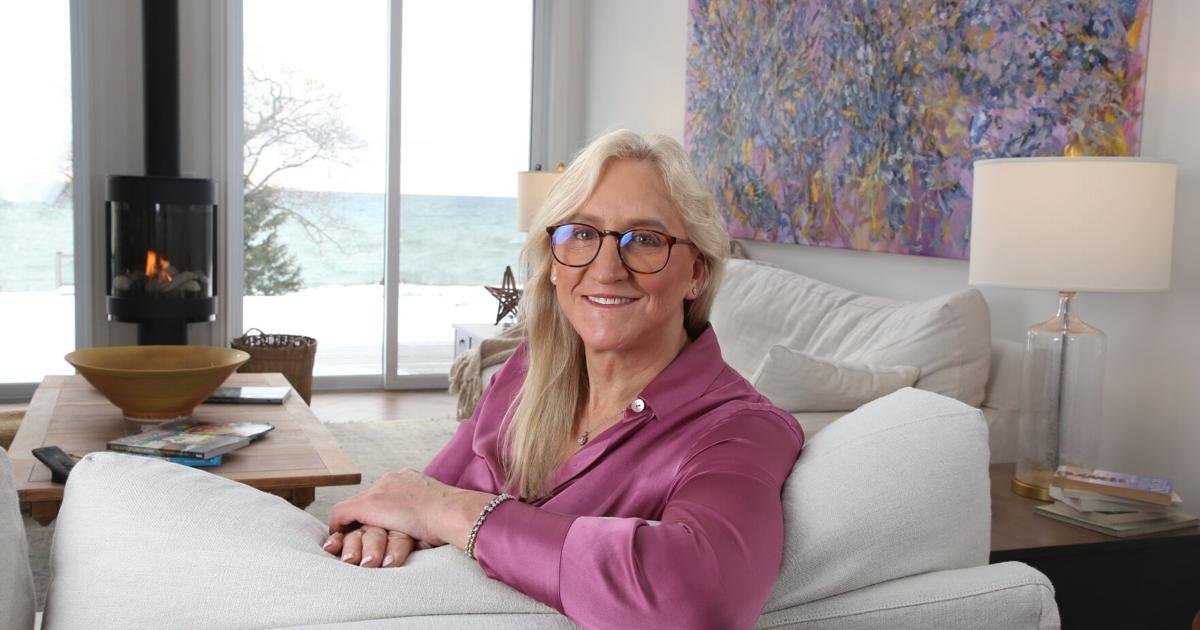
Katie Dudtschak was standing at a podium in front of hundreds of her employees on the verge of tears.
“I’m probably going to cry,” she told the crowd at the company-wide town hall last July, then sighed into the microphone, her face suddenly turning serious.
The room was silent. A few people moved closer to the edge of their seats.
“This is the largest technology project HomeEquity Bank has ever undertaken,” Dudtschak announced.
She was referring to the successful implementation of new HR software at the Toronto-based bank, which had been expanding at an extraordinary rate. More than 100 employees had joined the company over the last seven months. The bank now had the modern infrastructure it needed to continue growing sustainably, according to Dudtschak.
It was another milestone in her career as CEO of HomeEquity Bank.
A year before the town hall, Dudtschak had been hand-picked by the company’s board of directors to succeed Steven Ranson, who led the bank for 27 years.
Prior to her CEO role, she had amassed more than a decade of senior leadership experience at RBC. There, she rose to the level of executive vice president, heading up eight personal and commercial banking regions across Canada and overseeing 25,000 employees.

“I’m probably going to cry,” former HomeEquity Bank CEO tells a company town hall last July before tearing up while announcing “the largest technology project HomeEquity Bank has ever undertaken.”
Nick Lachance/Toronto Star
Assigned male at birth, Dudtschak was making history at HomeEquity: she was the first CEO of a Canadian chartered bank to affirm her gender as a woman. (Dudtschak prefers to say she affirmed her gender, rather than saying she transitioned.)
By all accounts, she was a compassionate, competent leader. She was praised by industry peers for her ability to solve problems and manage risks.
That’s what made her abrupt departure from HomeEquity so shocking. Last October, just three months after that town hall, she announced her retirement in a short LinkedIn post, following “a brief sabbatical.”
Daniel Jauernig, chair of HomeEquity’s board of directors, would replace her, effective immediately, until the bank found a new CEO.
There was no press release from the company announcing the leadership change. No immediate successor. The departure was so sudden, there wasn’t even time for the bank to plan a goodbye celebration, Jauernig said.
Was it the anti-diversity rhetoric coming from the U.S. that made her want to leave corporate life? Or, maybe, she was quietly sidelined by the board after HomeEquity was accused of being connected to a fraud scheme that harmed seniors.
Or could it have been something else entirely?
Dudtschak’s life changed forever when she decided to come out in a video that was sent to more than 80,000 bankers at RBC in June, 2019.
In the video, which she describes in her upcoming book, “Sincerely, Katherine: Life, Gender, Inclusivity, and Leadership for the Future,” Dudtschak told coworkers that she would be making changes to her appearance that better aligned with her identity. She announced she would be taking some time off, and when she returned to work in the fall, she would like to be addressed as Katherine, or Katie.
In some ways, her entire life until that point had been setting her up for that moment.
When Dudtschak was born to German immigrant parents in 1966, she was assigned the male gender. Growing up on a mink farm in St. Marys, a small town nestled between Stratford and London, Ont., she presented as — and was treated as — a boy.
Her father worked as a grinder and welder, while her mother took care of the mink.
She had a difficult childhood. Her parents struggled financially and carried a lot of trauma from the Second World War — her mom had been a refugee, her dad, a prisoner of war in a Russian camp.
Dudtschak wasn’t good at school and sometimes misbehaved. On top of it all, she was keeping a secret: when no one was looking, she often liked to go into her mother’s closet and try on “pretty things.”
As a teenager, she worked on a neighbouring pig farm, driving John Deere tractors and spreading manure. She graduated high school in 1984 and enrolled in a business program at Conestoga College’s Stratford campus.
“I’m going to prove to the teachers, or to bullies, or to my parents that I can build a better life,” she recalled in an interview at her office last May.
After graduating from college, Dudtschak landed her first job as a trainee at a bank.

Katie Dudtschak, then CEO of HomeEquity Bank, at her office last May. “There’s the banker life, the CEO life. And then there’s the creative life,” she said after leaving the bank in October. “I tried to reconcile doing my day job and doing the book and the podcast and (public) speaking. The truth of the matter became I wouldn’t be able to do justice to either if I tried to do both.”
Andrew Francis Wallace/Toronto Star
Still presenting as a man, she married a woman and eventually had four children. She rose quickly through the ranks, becoming the head of RBC’s Caribbean banking division and managing operations in 19 countries.
Then, she joined the bank’s personal and commercial banking department, where she oversaw a team that served 15 million clients and managed more than a trillion dollars.
She was on top of the corporate world. But something was missing.
In 2016, while dropping her eldest daughter off at Queen’s University, she came across a poster on a wall of the dormitory. It talked about embracing gender diversity.
“Could the world become so open that I could be me?” Dudtschak remembered thinking at the time. She was 50 years old then.
That moment catalyzed Dudtschak’s journey of self-discovery.
With the help of a therapist and 2SLGBTQ+ books, she realized she had been struggling with severe anxiety and gender dysphoria — when someone’s gender identity differs from their sex assigned at birth, causing great levels of stress and discomfort.
She decided it was time to reveal her identity to the world, seeking an endocrinologist for hormone treatment in the summer of 2018.
“It was pretty logical to expect that I’d be rejected by friends or hurt my family or that I might lose my job,” she said. “Banking is conservative. So, you know, I feared the worst, yet I wanted to be home. I wanted to find inner peace.”
Dudtschak’s sudden exit from HomeEquity last October came during a difficult time for many transgender people, who saw a rise in political persecution and transphobia after U.S. President Donald Trump was elected to office.

HomeEquity said the alleged fraud that ensnared Darlene Early and others involved a third-party broker. The bank ‘prioritizes’ customer security.
HomeEquity said the alleged fraud that ensnared Darlene Early and others involved a third-party broker. The bank ‘prioritizes’ customer security.
Several countries, including the U.S., imposed restrictions on gender-affirming health care last year. Trump also banned trans people from joining the military and signed executive orders seeking to end diversity, equity and inclusion (DEI) programs.
Fearing retaliation from the American government, some Canadian companies doing business with the U.S. started rolling back DEI initiatives. In October, a report by law firm Osler linked the current political climate to waning progress on enhancing diversity among Canadian executives and board members.
It’s hard not to wonder whether the stress of dealing with that growing anti-diversity sentiment became too much for Dudtschak. After years of handling relentless pressure to perform, plus the challenges of embracing her authentic self in a world that seemed to be turning away from trans people, no one would blame her for wanting — maybe needing — a break from the spotlight.
But Dudtschak said she’s been happier than ever since affirming her gender.
Last April, during a speech at a conference in Europe, she described her experience coming out at work as a gift, saying she felt embraced and supported by her colleagues, hundreds of whom started confiding in her their own stories of hardship and grief.
During the pandemic, she created an initiative called InclusionDialogues, where she profiled her co-workers’ stories in a series of virtual conversations at RBC. She joined the board of directors of the Canadian Museum for Human Rights and started a foundation that invests in promoting social inclusivity.
“Today, I get to live in my truth,” Dudtschak said at the April conference, pacing confidently around the stage wearing a white blazer and shoulder-length blond hair.
“I have never experienced a level of love, joy and peace that I get to experience in my life today.”
Dudtschak took another leap of faith when she left RBC in 2022 after a 30-year career.
“I wanted another professional chapter,” Dudtschak told the Star in May, “another chapter of my career where I can be chosen as my authentic self — as Katherine — and bring all of my life, leadership and business experience to be of service.”
Enter HomeEquity Bank, Canada’s leading provider of CHIP reverse mortgages.
At first, Dudtschak wasn’t sure if HomeEquity was for her, but eventually saw in the bank a chance to help Canadian retirees achieve financial freedom.
“I had many questions, like most people do, about reverse mortgages and are they good or are they bad?” she said. “What I immediately tuned into was the enormous opportunity to use our service to help convert savings or equity that people have in their homes to retirement-type income.”

“I moved on,” Katie Dudtschak said after her departure from the bank. “It’s not my place to say anything. There’s really competent people that work at HomeEquity Bank.”
Ian MacAlpine
A reverse mortgage allows a borrower to receive tax-free money from their home’s equity without having to sell it. The principal plus interest are to be repaid when the homeowner decides to sell the property, moves out or dies.
Demand for the loans has been surging, driven by rising home values as well as baby boomers wanting to age in place while struggling to make ends meet amid the cost of living crisis.
So much so that one of the largest pension funds in the country, the Ontario Teachers’ Pension Plan, saw a business opportunity and decided to buy HomeEquity in 2022.
As of March last year, the regulated reverse mortgage market was valued at more than $9 billion, according to the Office of the Superintendent of Financial Institutions, Canada’s banking watchdog.
But reverse mortgages are controversial, with some independent financial advisers labelling them as predatory products. Their interest rates are higher than most other types of loans, meaning they can quickly deplete someone’s equity in their home.
As Dudtschak took the reins in 2024, a crisis had been brewing at HomeEquity.
The third-party broker had been accused of bringing at least 25 seniors to HomeEquity in transactions that are considered suspicious, according to court filings. Following an internal probe, HomeEquity fired mortgage specialist Jaina Tailor.
In a wrongful termination suit, Tailor alleged the broker’s behaviour had been enabled by “systemic flaws” in the bank’s funding and vetting process.
HomeEquity’s interim CEO, Daniel Jauernig, said during an interview in October that the company only deals, “with the largest and most reputable brokers.” He added that, “if there’s any issues, we absolutely want to resolve it with the customer.”
He said there was nothing “untoward” happening at the bank that prompted Dudtschak’s exit. The bank didn’t announce her retirement publicly because it is a private organization, Jauernig added, saying it did notify relevant stakeholders.
“We didn’t expect her to retire, but we respect her decision and, like most companies, we have an orderly transition plan ready to go and which we activated.”
Dudtschak declined to comment on the scandal.
“I moved on,” she said in an interview after her departure from the bank. “It’s not my place to say anything. There’s really competent people that work at HomeEquity Bank.”
On a cold December morning two months after her exit, Dudtschak was in a spacious room adorned with wood panels at the Toronto Club, a stately three-storey brick building hidden among Bay Street’s office towers on Wellington St. West.
In the past, the club has hosted glittering affairs attended by some of the most powerful people in the country. But that morning, it was completely empty — except for the blond woman sitting by a fireplace, sipping water from a crystal glass.
Dudtschak understood there were many questions about her abrupt departure from HomeEquity, so she had granted a sit-down with the Star to clear the air.

Katie Dudtschak has returned to farm life at her home in Prince Edward County where she harvests lavender, keeps bees and meditates daily. “I’m alive and I’m free.”
Ian MacAlpine
In the interview, she said she had been gearing up for the release on March 31 of her autobiography in which she discusses her gender-affirmation journey and her outlook on Canada’s business world. She was also producing a podcast and, in a way, fulfilling an old dream of having a talk show like Oprah Winfrey’s.
The book includes details she didn’t get to talk about at HomeEquity’s headquarters, where conversations were monitored by public relations professionals and often interrupted by the next appointment in her calendar.
She confessed that up until her retirement, she felt her life had been on two tracks.
“There’s the banker life, the CEO life. And then there’s the creative life or the expressive life,” she said. “I tried to reconcile doing my day job and doing the book and the podcast and (public) speaking. The truth of the matter became I wouldn’t be able to do justice to either if I tried to do both.”
It was true that the discourse around gender identity was rapidly changing, and HomeEquity did have some internal challenges — but Dudtschak said she herself was also at an inflection point.
She was about to turn 60. Her kids were grown up and, since affirming her gender, she had been focused on living with intention. It was time for another chapter, she said. So she left.
She went back to farm life, spending more time at her Prince Edward County home where she harvests lavender in purple rubber boots and keeps bees. She meditates at least twice a day and journals — and still drives a tractor.
Choosing to leave HomeEquity was hard, she said. While her exit might have seemed abrupt, behind the scenes there was careful consideration. To work a corporate job means having structure and the comfort of a paycheque.
But structure was no longer the priority.
“I’m a woman that affirmed her gender and came to truth,” she said. “I’m alive and I’m free.”