dailynewsnblog

Listen to this article
Estimated 4 minutes
The audio version of this article is generated by AI-based technology. Mispronunciations can occur. We are working with our partners to continually review and improve the results.
Senators on the social affairs committee want to see immigration-related sections in the government’s border bill, C-12, removed or significantly modified by the Senate national security committee.
The national security committee is responsible for tabling amendments, while the social affairs committee has conducted an in-depth study of the bill’s immigration measures.
That study, obtained by The Canadian Press, says the social affairs committee heard from witnesses who warned the legislation could violate human rights and lacks procedural fairness.
Bill C-12 has sections focused on immigration that deal with information-sharing and managing the asylum system. It also proposes giving the government new powers to modify or cancel existing immigration documents and applications.
The committee’s report says if the national security committee opts not to remove the sections on immigration, it should introduce more robust parliamentary oversight to the legislation and include a sunset clause to require a parliamentary review.
The report was broadly welcomed by civil society groups who testified before the Senate social affairs committee.
“When senators actually listened to the people who would be impacted by Bill C-12 — after we were blocked from testifying in the House — they heard how dangerous it is and called for deletion of the immigration sections,” Karen Cocq, Migrant Rights Network spokesperson, said in a media statement.
Witnesses argue bill would create 2-tier system
The Senate committee report contains nine other recommendations aimed at addressing questions raised by witness testimony.
They include a change to the section in the legislation that would bar people who first came to Canada more than a year prior to filing refugee claims. That section would be retroactive to June 24, 2020.
Immigration Minister Lena Diab told the committee earlier this month that 37 per cent of asylum claims filed between June 3 and Oct. 31, 2025, would be disallowed under this ineligibility measure — about 19,000 of 50,000 applications.

Witnesses warned the Senate social affairs committee that the current wording might prevent someone who came to Canada as a baby on a family vacation from making a conventional asylum claim. The committee wants to see that one-year period increased to five years.
The government defended this timeline during committee hearings, saying people could still apply for a pre-removal risk assessment if they sought asylum under these conditions.
Witnesses, including the Canadian Bar Association and Amnesty International, argued the legislation would set up a two-tier asylum system that wouldn’t guarantee in-person hearings for vulnerable people, such as members of the LGBTQ+ community and survivors of domestic violence.
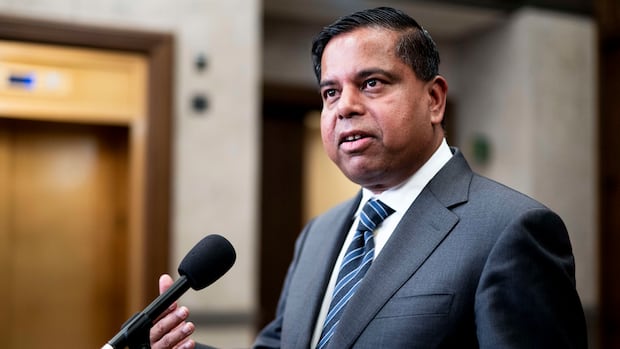
Public Safety Minister Gary Anandasangaree said Wednesday the Liberal government has introduced a second border security bill that contains several measures from Bill C-2 tabled in June. The government will still pursue passage of the first bill, which contains controversial new powers to search mail and access personal information.
The senators also reject making that section retroactive to June 24, 2020, and want it made active once the bill receives royal assent.
The bill proposes giving the government powers to cancel or modify a host of immigration documents — including permanent residency cards — that have been issued already or are in the government’s application inventory if cabinet decides it’s in the public interest.
Government witnesses told the committee this power would be used to address administrative errors, fraud and threats to public health, public safety or national security.
Other witnesses said the broad “public interest” wording could be used to justify discriminatory mass cancellations and cited how sweeping government orders were used to turn away Jewish refugees fleeing Nazi Germany.
The committee recommends adding an amendment to require “robust parliamentary oversight” to monitor the use of these proposed powers.
National security committee reviewing Monday
The social affairs committee also recommends that the government give the Immigration and Refugee Board extra resources to help it review refugee claims. The IRB currently has a backlog of about 300,000 claims waiting to be processed.
The bill proposes giving the government power to share the personal information of migrants, permanent residents and naturalized citizens with other federal departments, provinces, territories and foreign governments.
The government told the committee these powers are intended to ease the administrative burden of information-sharing and ensure applicants get access to services.
The Senate committee wants the wording changed to exempt permanent residents and naturalized citizens from information-sharing and to introduce a mandatory privacy commissioner review.
The Senate national security committee is expected to conduct a clause-by-clause study of the bill Monday; amendments can be introduced during this stage.
The bill has a second reading vote deadline of Feb. 26.