dailynewsnblog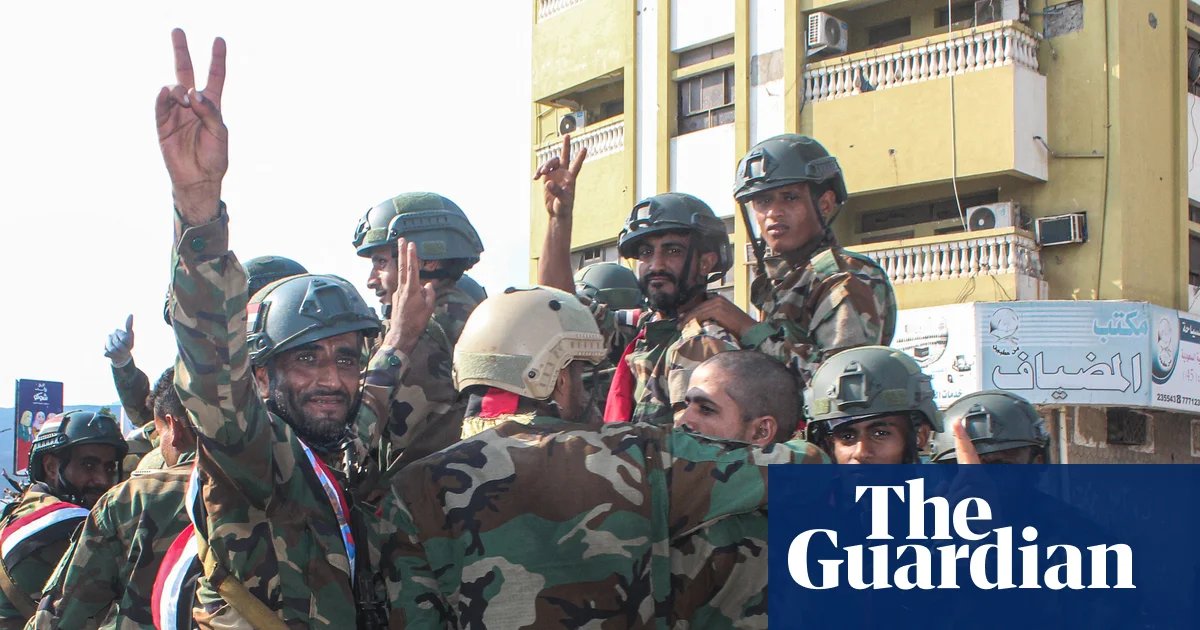
The United Arab Emirates-backed military leadership in South Yemen has seized power across the whole of the south of the country, a move that opens up the possibility that the South will declare independence and revert Yemen to being two states for the first time since 1960.
As many as 10,000 troops from the Southern Transitional Council (STC) poured into the oil-rich Hadramaut governorate last week and later into Marah, the less-populated governorate bordering Oman, which had not previously been under its control.
The victories mean the STC now controls all eight governorates that previously made up South Yemen, the first time it has achieved this. Oman initially closed the border with Yemen demanding the flag of the South be taken down but has had to back off.
In a stunning reverse for Saudi Arabia, which was previously the lead external actor in Yemen, Riyadh has also withdrawn its troops from the presidential palace in the southern capital, Aden, as well as from the airport, an evacuation that suggests the forces that the Saudis had backed inside the UN-recognised government have for now at least been routed.
A full and immediate declaration of statehood by the STC would, however, be a risky political move given the experience of other countries that have chosen this path, including Western Sahara, a country that thought it had diplomatic backing to split from Morocco, but then found support evaporating.
The STC is more likely to argue that it will, in the medium term, stage some kind of referendum on independence from the North. Ultimately its future will depend on decisions taken by its key sponsor, the UAE.
Ever since the northern-based Houthis captured control of the Yemeni capital, Sana’a, in 2015, an uneasy political alliance had governed the South, consisting of the Saudi-backed Islah party led by Yemen’s president, Rashad al-Alimi, and the UAE-backed STC led by President Aidarous al-Zubaidi.
The two sides had been working together uneasily inside a presidential leadership council, but Zubaidi has always had superior military forces. Alimi has decamped to Riyadh where on Sunday he met French, British and American diplomats.
Alimi called on the STC to return to barracks, adding: “We reject any unilateral measures that undermine the legal status of the state and create a parallel reality.”
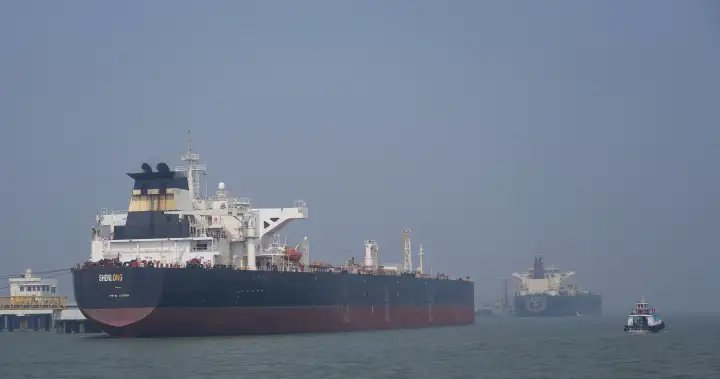
After a tacit or explicit signal of consent, Zubaidi’s forces last week seized control of PetroMasila, Yemen’s largest oil company, which is based in Hadramaut, and he now seems in a strong position to determine the future of the country.
Western diplomats and the UN have always opposed the break-up of Yemen into two, focusing instead on a Saudi roadmap that was supposed to bring a federal government involving the Houthis and the forces in the South.
Western diplomats last week were in phone contact with Zubaidi gauging his intentions, including his relations with Russia and the implications for the battle to defeat the Iranian-backed Houthis. So far no western country has commented in public and there has been no statement from the US.
Two governorates outside the South’s traditional boundaries – Taiz and Marib – are not under Houthi control, and the STC may offer them protectorate status to ensure they do not fall into the hands of the Houthis.
Maysaa Shujaa al-Deen, a senior analyst at the Sana’a Centre for Strategic Studies, said: “This is probably the biggest turning point for Yemen since the fall of the capital, Sana’a, to the Houthis in 2015. It has the potential to upend regional and local alliances, including bringing the Emirates into conflict with Saudi Arabia. The STC if they negotiate will be in a strong position to demand some kind of self-government for the South. For Saudi Arabia there will be concern about the future policing of its borders given past Houthi attacks into Saudi Arabia.”
There has been speculation that the UAE gave the go-ahead to the STC to move after being angered by the Saudi request to Donald Trump to intervene to end the civil war in Sudan, a prolonged crisis that has caused the UAE a huge amount of negative publicity due to claims that it has armed the Rapid Support Forces, a militia accused of committing war crimes in Darfur.
A Saudi delegation is still in Hadramout and is under intense pressure from Riyadh to salvage something from the chaos.