dailynewsnblog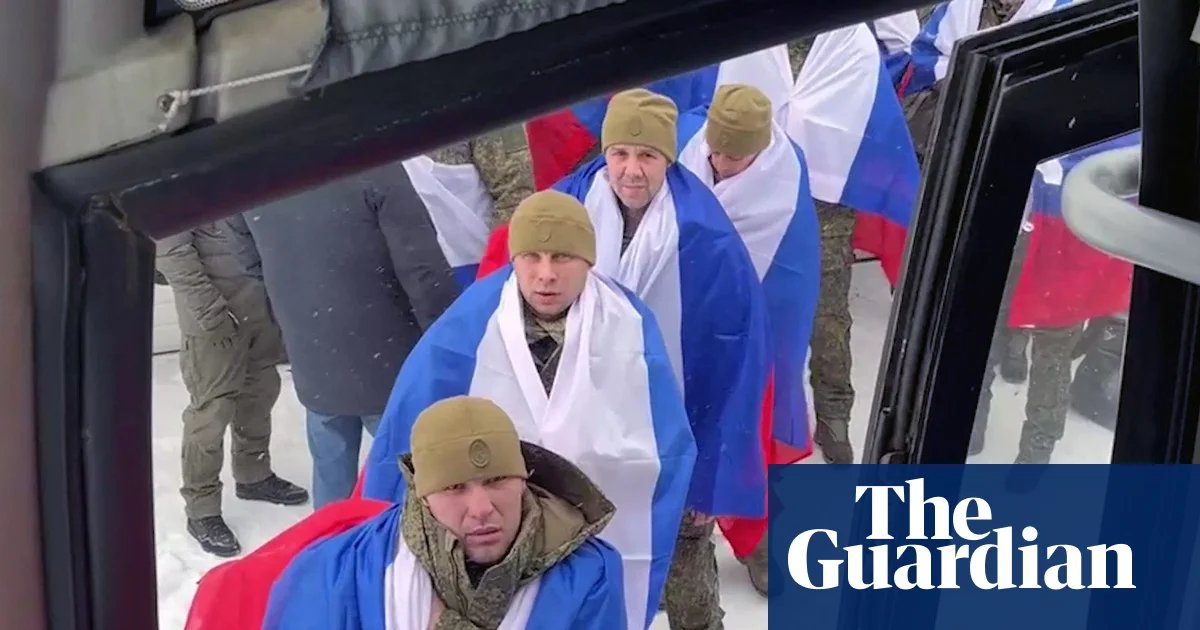
Ukraine and Russia concluded a second day of US-led talks in Abu Dhabi on Thursday without a breakthrough towards ending Europe’s most deadly conflict since the second world war.
The two sides agreed to a reciprocal exchange of 157 prisoners of war each, offering a rare concrete outcome from the discussions.
But Steve Witkoff, Donald Trump’s special envoy involved in the talks, cautioned that “significant work remains” in the weeks ahead, dampening expectations of any swift move towards peace.
Even so, the meetings marked the most substantive engagement between senior delegations from Kyiv and Moscow in months, pointing to a tentative, if uncertain, revival of diplomatic efforts nearly four years into the war.
Thursday’s meeting, which lasted three hours, followed a round of trilateral negotiations on Wednesday that ran for about five and a half hours.
Kyrylo Budanov, the head of Ukraine’s presidential office, said the trilateral negotiations had been “genuinely constructive”, thanking the US and the United Arab Emirates for their role in mediating the talks. Russia’s representative, Kirill Dmitriev, similarly struck a positive note, saying there had been progress and “forward movement” in discussions on ending the war.
Ukraine’s president, Volodymyr Zelenskyy, later said the peace talks would continue in the near future.
Both sides sent senior military and intelligence officials to Abu Dhabi, the capital of the UAE, signalling a more serious approach than during previous rounds when Moscow dispatched lower-level delegations.
“For the first time in a very long time, technical military teams from Ukraine and Russia are meeting in a format in which we are also participating,” the US secretary of state, Marco Rubio, said on Wednesday.
“Progress is unlikely to become clear, even with information leaks, until a genuine breakthrough is achieved. Our objective is to remain committed to this process,” Rubio added.
Despite the more positive tone, the prospects for a viable peace settlement remain uncertain, with Moscow continuing to push maximalist territorial demands. The Kremlin has repeatedly insisted that any agreement must include Ukraine first ceding the entire eastern Donbas region, including areas still under Ukrainian control.
Ukrainian officials have rejected those terms, arguing instead for a ceasefire along the current frontline and ruling out any unilateral withdrawal of their forces from eastern Ukraine, where a chain of heavily fortified cities forms one of Kyiv’s strongest defensive lines.
A central question remains whether Vladimir Putin is willing to compromise. The Russian president has repeatedly claimed Russia is winning the war and signalled he was prepared to prolong the fighting unless Ukraine accepted Moscow’s draconian terms, which have also included a cap on Ukraine’s military and a ban on western troops on its territory.
Hampered by freezing temperatures and stiff Ukrainian resistance, Moscow’s advances on the battlefield this year have slowed markedly compared with the end of last year.
Russian forces have nonetheless continued a campaign of sustained strikes on Ukraine’s energy infrastructure, plunging large parts of the country into prolonged blackouts and deepening the humanitarian toll, in what Kyiv and its allies describe as an attempt to sap civilian morale.