dailynewsnblog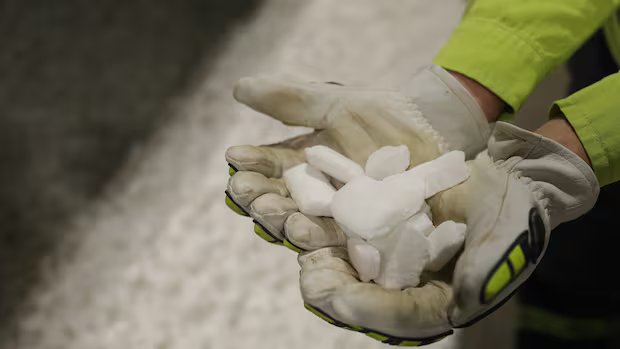

Listen to this article
Estimated 4 minutes
The audio version of this article is generated by AI-based technology. Mispronunciations can occur. We are working with our partners to continually review and improve the results.
Chris Procyk admits farming has never been an easy life, but he says it’s become increasingly challenging in a globalized world.
Procyk, who farms near Fillmore, Sask., says farmers are used to planning and dealing with uncertainty. They do it every year with the weather.
“I think what’s happening now in the last several years is the geopolitical risks that have really impacted the farm gate, that we have zero input on, and even even less control over,” said Procyk, who is also a vice president with the Agricultural Producers Association of Saskatchewan.
The recent tariffs on canola, peas and lentils are one example. The latest challenge is the rapidly increasing price of fertilizer and gasoline, he said.
Both are being driven up by the conflict in the Middle East and Iran’s decision to effectively close the Strait of Hormuz in response to the United States-Israel bombing campaign.
Although a fifth of the world’s oil typically sails through the strait, oil and gas are not the only commodities affected by the closure.
It’s important to understand that fertilizer is a catch-all term for dozens of different materials, said Corey Rosenbusch, president of The Fertilizer Institute.
One of the nutrients used in fertilizer is potash, he said.
In 2024, nearly a third of global potash production came from Canada, according to Natural Resources Canada.
All of the country’s 10 active mines potash mines are located in Saskatchewan.
“Generally speaking, the potash market has been a bit insulated from some of the issues of the Strait of Hormuz,” Rosenbusch said.

Conflict in the Middle East is rapidly driving up costs for farmers in Canada, just as spring planting begins. Fertilizer prices are spiking, as disruptions squeeze global supply.
It’s a different story for nitrogen and phosphate fertilizers, whose inputs include phosphate and urea.
Roughly 40 per cent of the global urea trade and close to 50 per cent of the global sulfur trade pass through the Strait of Hormuz, he said.
“Any time you restrict that supply, it’s going to have an impact on the markets and ultimately on nutrients that the farmers need for the spring.”
Planting season begins in spring; farmers across the country have started planting their crops, or soon will be in the coming weeks.
Procyk said most farmers — if they have the storage capacity — purchase the fertilizer they’ll need in the winter.
That gives them the ability to avoid potential price increases, shortages or even poor weather in the spring.
Some farmers aren’t able to store fertilizer in the quantities they need for the planting season, while others top up their orders in the spring, Procyk said.
That means even if a farmer did plan ahead, the rapidly increasing price of fertilizer could be a problem.
“When margins are tight at the farm gate to begin with, with sagging commodity prices, any increase to input costs has a dramatic effect and a ripple effect throughout the industry.”
Industry monitoring situation
Two of the companies that operate mines in Saskatchewan say they continue to monitor the situation in the Middle East.
In a statement, Nutrien said it’s staying engaged with customers as instability in the region remains “a fluid situation”
The Mosaic Company said it’s continuing to assess developments and will adjust as needed to ensure “reliable service to our customers.”
“While the situation is contributing to near-term volatility in global sulfur and ammonia markets, we do not currently anticipate any material disruption to our operations,” Mosaic wrote in a statement.