dailynewsnblog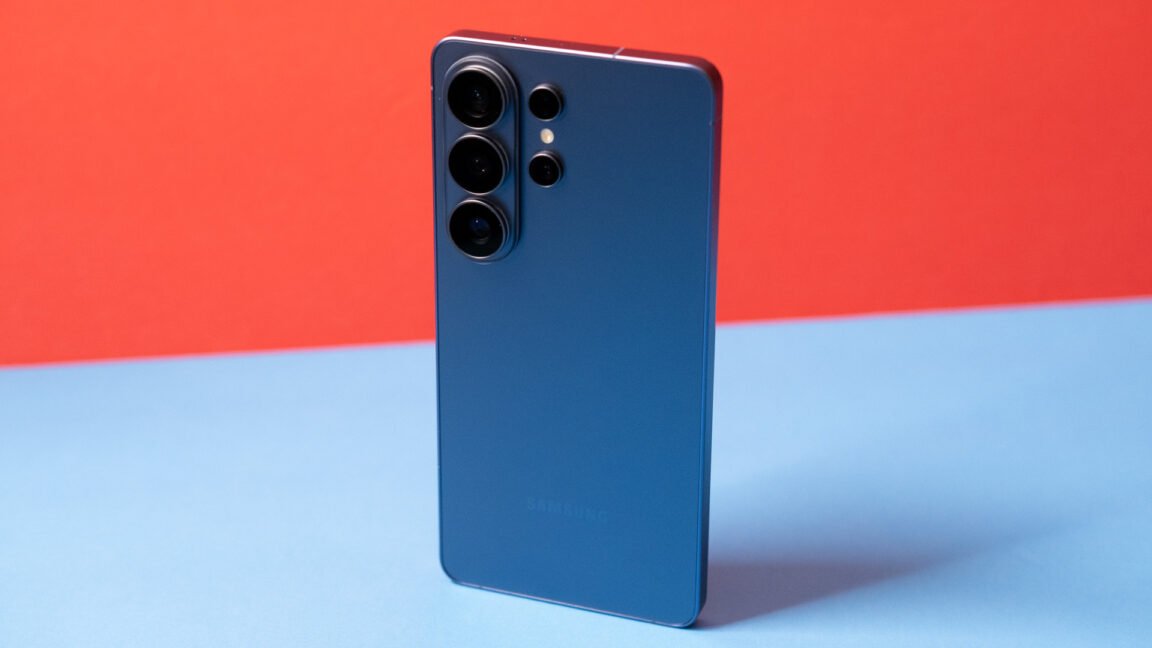
The power and volume buttons are on the right edge, just like last year’s phone. Both buttons are sturdy and tactile, too. Samsung manages to hide its mmWave antennas pretty well these days, so the only other disruption in the metal frame is on the bottom, where you’ll find the USB-C port, S Pen, and SIM tray. Thankfully, Samsung has retained support for physical SIM cards, which Google dumped in 2025, much to my personal chagrin.
| Specs at a glance: Samsung Galaxy S26 series | |||
|---|---|---|---|
| Galaxy S26 ($900) | Galaxy S26+ ($1,100) | Galaxy S26 Ultra ($1,300) | |
| SoC | Snapdragon 8 Elite Gen 5 (3 nm) | Snapdragon 8 Elite Gen 5 (3 nm) | Snapdragon 8 Elite Gen 5 (3 nm) |
| Memory | 12GB | 12GB | 12GB, 16GB |
| Storage | 256GB, 512GB | 256GB, 512GB | 256GB, 512GB, 1TB |
| Display | 6.3-inch OLED, 2340×1080, 1-120 Hz | 6.7-inch OLED, 3120×1440, 1-120 Hz | 6.9-inch OLED, 3120×1440, 1-120 Hz, S Pen support |
| Cameras | 50 MP primary, f/1.8, 1.0 μm; 12 MP ultrawide, f/2.2, 1.4 μm, 10 MP 3x telephoto, f/2.4, 1.0 μm; 12 MP selfie, f/2.2, 1.12 μm | 50 MP primary, f/1.8, 1.0 μm; 12 MP ultrawide, f/2.2, 1.4 μm, 10 MP 3x telephoto, f/2.4, 1.0 μm; 12 MP selfie, f/2.2, 1.12 μm | 200 MP primary, f/1.4, 0.6 μm; 50 MP ultrawide, f/1.9, 0.7 μm; 10 MP 3x telephoto, f/2.4, 1.12 μm; 50 MP 5x telephoto, f/2.9, 0.7 μm; 12 MP selfie, f/2.2, 1.12 μm |
| Software | Android 16 | Android 16 | Android 16 |
| Battery | 4,300 mAh | 4,900 mAh | 5,000 mAh |
| Connectivity | Wi-Fi 7, Bluetooth 5.4, USB-C 3.2, Sub6 5G | Wi-Fi 7, Bluetooth 5.4, USB-C 3.2, Sub6 and mmWave 5G | Wi-Fi 7, Bluetooth 5.4, USB-C 3.2, Sub6 and mmWave 5G |
| Measurements | 71.7×149.6×7.2 mm, 167 g | 75.8×158.4×7.3 mm, 190 g | 78.1×163.6×7.9 mm, 214 g |
The S Pen doesn’t have all the cool tricks of years past, but it’s still a capable input tool for writing and drawing. The silo is right near the corner of the phone, so the pen’s cap is asymmetrical to blend in with the curve. As a result, it only fits in one way instead of being fully reversible. Still, the click-click mechanism makes the stylus quick to remove, and it offers unrivaled precision and responsiveness on the screen. If you want a stylus for your phone, the S Pen is the best around. It would be nice if it still had Bluetooth so you could use it as a camera remote, though.
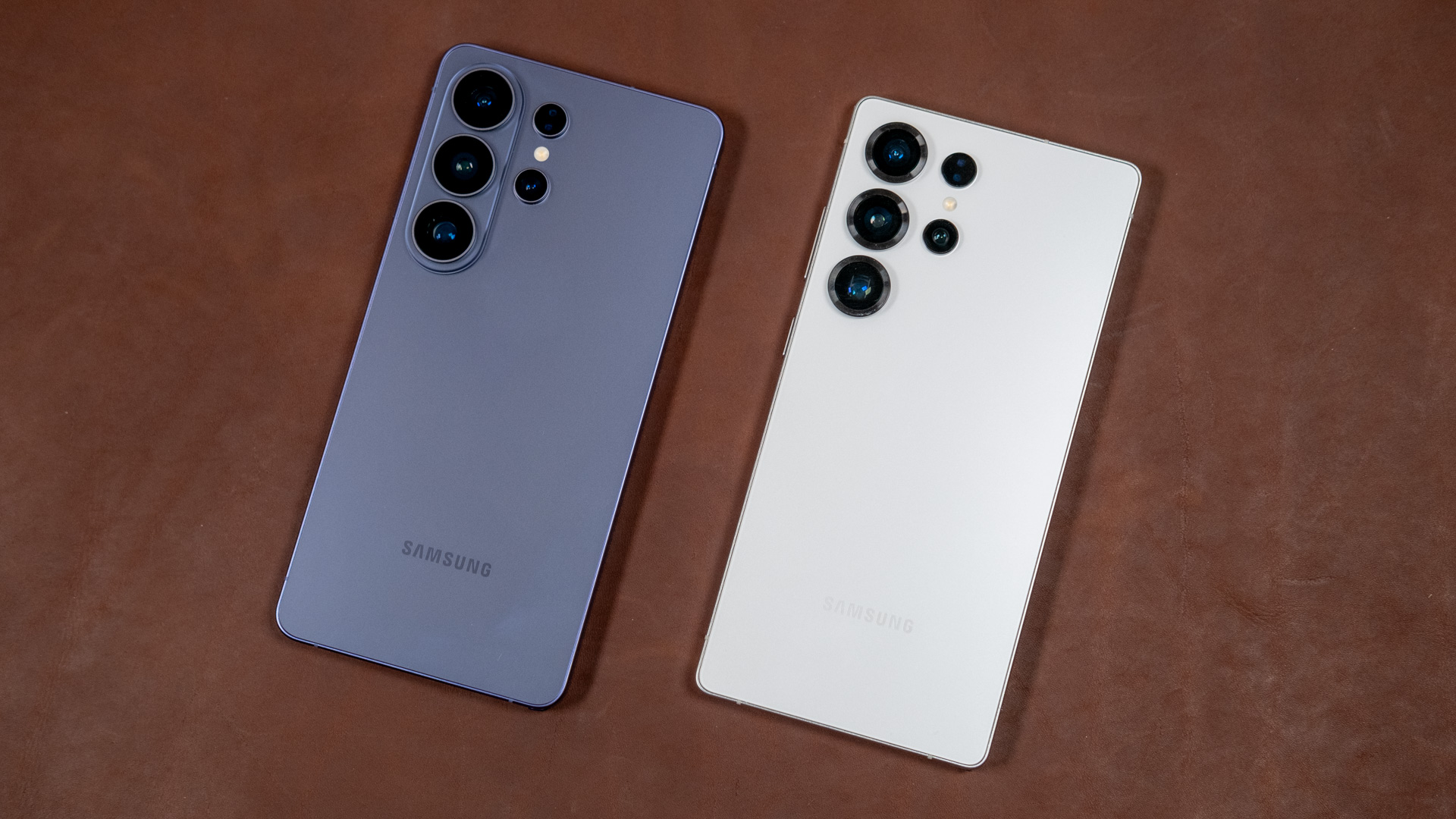
Let’s also acknowledge the metallic elephant in the room—this phone has an aluminum frame rather than titanium. The S25 Ultra and S24 Ultra were titanium, as were the last few Pro iPhones. Samsung says it went back to aluminum to keep the weight down, but we all know the truth: Apple returned to aluminum with the iPhone 17 Pro, so Samsung knew it could do it, too. Aluminum is cheaper (and lighter) than titanium, so it’s a win for Samsung.
Credit:
Ryan Whitwam
The S26 Ultra (left) frame is slightly more rounded than the S25 Ultra’s (right).
Credit:
Ryan Whitwam
The material shift is not exactly a loss for Galaxy fans, either. The Galaxy S26 Ultra uses Samsung’s latest Armor Aluminum alloy, which the company claims is stronger than ever. The new phone is also a bit slimmer and lighter, without compromising on battery capacity. Titanium is tough to anodize, so both Apple and Samsung used PVD coating on their titanium phones. Going back to aluminum, Samsung is again able to offer more vibrant anodized case colors, like this year’s “hero” color, cobalt violet.