dailynewsnblog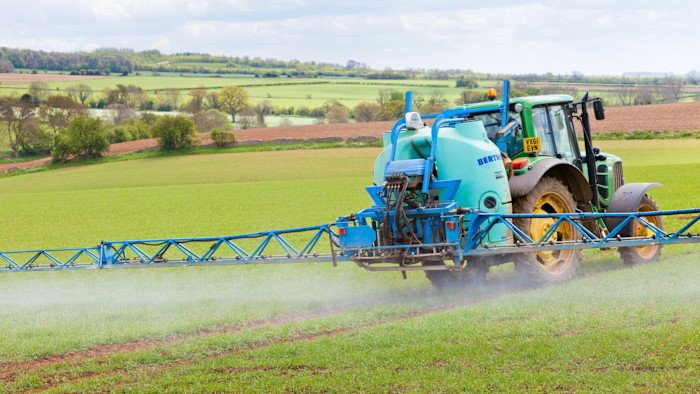
The UK government must not rush into a veterinary agreement with Brussels or it risks imposing punitive costs on British farmers and food producers, the farming and food industry has warned.
Sir Keir Starmer’s government has promised to deliver a deal to remove border checks on British food and drink exports to the EU by the middle of 2027 as a critical plank of its “reset” of post-Brexit trade relations.
However, striking a deal with Brussels that is too hasty risked depriving the UK farming and food manufacturing industry of advantages, including advanced pesticides and gene-edited crops, industry told a leading committee of MPs in a report published on Thursday.
The UK government has agreed in principle that any deal to remove border red tape will require the UK to “dynamically align” with existing and future EU Sanitary and Phytosanitary (SPS) rules that regulate plant and animal products.
Alistair Carmichael, Liberal Democrats MP and chair of the Environment, Food and Rural Affairs select committee, said that while automatically accepting EU rules would ease trade frictions with Europe, such a deal would come with trade-offs.
“We need a national conversation on the realities of a future agreement,” he said, urging the government to have an open dialogue with the public about the pros and cons of any deal.
The challenge to the Labour government over the practicalities of an SPS deal comes amid increasingly urgent domestic political pressure to show the EU-UK “reset” can deliver concrete economic benefits ahead of the next election, which must take place by August 2029.
However, farming groups have warned that aligning with EU rules risked leaving British farmers unable to use pesticides and fungicides needed to grow crops in the country’s colder, wetter climate that have been approved in the UK but not by Brussels.
The Agricultural Industries Confederation trade body told MPs there were 39 active crop protection products available in Great Britain that are not authorised in the EU, while about 68 substances are available in the EU but not Great Britain.
A report commissioned by CropLife UK, the plant science industry lobby, warned that depriving UK farmers of chemicals in use in Britain could cost cereal farmers between £500mn and £810mn in lost production in the first year of a cliff-edge deal.

National Farmers Union president Tom Bradshaw said that while a deal could unlock trade, the group had warned the government about the risk of tying itself to an arbitrary mid-2027 deadline.
“We’ve been clear with the government — farm businesses need a sufficient transition period to avoid crippling impacts on homegrown food production.”
Biotech companies also warned that a deal that dynamically aligned the UK with the EU’s slower regulatory system could deprive the UK of the latest technologies, including the latest pesticides gene-edited products that are allowed in the UK but still banned in the EU.
The Food and Drink Federation, which represents food manufacturers, as well as Port Health Authorities, which manage border facilities, also warned that phasing in any new deal could take up to 24 months.
Supporters of the deal say any gaps caused by the UK realigning with EU rules can be addressed by use of transition periods that EU member states often use when being given time to adapt to new regulations.

EU officials said the UK had given the impression in intensive talks that it wanted a quick deal and Brussels was unlikely to reject a transitional period. “I wouldn’t expect it to be an issue,” said an EU diplomat.
They added that UK carve-outs were possible but likely to be limited to avoid undermining the EU’s level playing field on SPS rules: “Most of them are not realistic and go against the concept of a common SPS zone.”
The Cabinet Office said a food and drink deal with Brussels could deliver a £5.1bn-a-year long-term boost to the UK economy, and the government was working with industry to understand their requirements.
“The UK and EU are clear that there will be some exceptions which we’re negotiating now. We won’t provide a running commentary on those talks,” a spokesperson added.
The European Commission did not immediately respond to a request for comment.