dailynewsnblog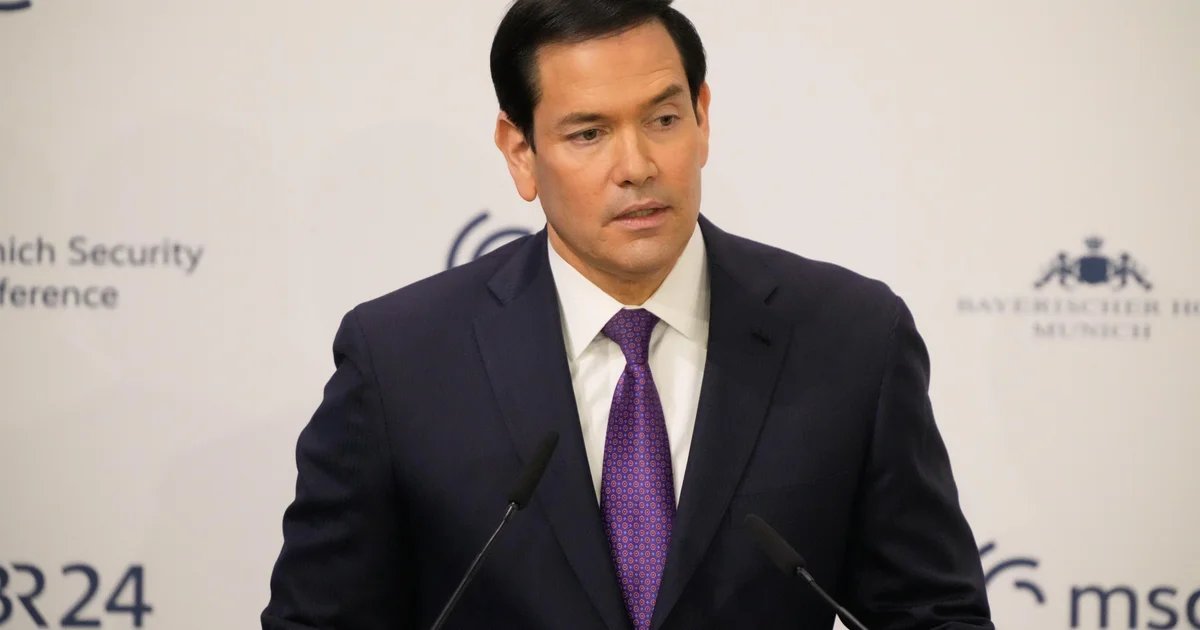
Munich —Secretary of State Marco Rubio delivered a message of reassurance in remarks at the Munich Security Conference, calming some fears that months of sharp U.S. rhetoric and policy disputes had opened a lasting breach between Washington and its European allies.
“We do not seek to separate, but to revitalize an old friendship and renew the greatest civilization in human history,” he said.
Though he admonished European nations for prioritizing welfare programs over self-defense and embracing migration policies that threatened their societal cohesion, he framed his critique as part of a shared reckoning.
“We made these mistakes together, and now together, we owe it to our people to face those facts and to move forward — to rebuild,” he said.
At last year’s conference, Vice President JD Vance delivered a combative address that rattled European capitals and fueled fears of an accelerating trans-Atlantic split. In contrast, Rubio paired sharp criticism of the post-Cold War order with repeated affirmations of shared destiny.
He argued that postwar “euphoria” had led the West into a “dangerous delusion” of borderless globalization and overreliance on international institutions.
“This was a foolish idea that ignored both human nature and the lessons of 5,000 years of recorded human history. It has cost us dearly,” he said.
Still, Rubio paid homage to what he described as a civilizational bond between the continents.
“In a time of headlines heralding the end of the transatlantic era, let it be known and clear to all that it is neither our goal nor our wish,” Rubio said. “For us Americans, our home may be in the Western Hemisphere, but we will always be a child of Europe.”
The address drew a standing ovation. Conference chair Wolfgang Ischinger said afterward that the remarks were widely seen as reassuring.
“Mr. Secretary, I’m not sure you heard the sigh of relief through this hall,” he told Rubio.
In a brief question-and-answer session, Rubio said efforts to broker an end to Russia’s war in Ukraine were continuing, with another round of talks expected Tuesday.
“We don’t know if the Russians are serious about ending the war; they say they are,” he said. “We’re going to continue to test it.”
On China, Rubio said Washington has “an obligation to communicate” with Beijing, even as “fundamental challenges” remain, and stressed that any engagement must protect U.S. national interests.
Since arriving in Munich, Rubio has met with senior European leaders, including German Chancellor Friedrich Merz, as well as officials from Denmark, Greenland, Poland, Croatia and Moldova. He also met with senior Syrian officials to discuss preserving a ceasefire and protecting minority communities, according to the State Department.
A U.S. official said Rubio did not attend one meeting on Ukraine support due to scheduling conflicts, though he is expected to meet briefly on Saturday with Ukrainian President Volodymyr Zelenskyy.
After Munich, Rubio is set to travel to Bratislava and Budapest, where he is expected to meet Hungarian Prime Minister Viktor Orban.
Europeans reassured but not complacent
The president of the European Union’s executive commission, Ursula von der Leyen, said Rubio’s speech was “very reassuring” but noted that “in the administration, some have a harsher tone on these topics,” according to the Associated Press.
In her speech to the conference, she stressed that “Europe must become more independent,” including on defense, and insisted upon “digital sovereignty” in the continent’s approach to hate speech on social media.
British Prime Minister Keir Starmer said that “we shouldn’t get in the warm bath of complacency,” the Associated Press reported. He said the U.K. must re-forge closer ties with Europe to help the continent “stand on our own two feet” in its own defense, and said there needs to be investment that “moves us from overdependence to interdependence.”
Shortly after Rubio’s remarks, the United Kingdom said it would send its Carrier Strike Group, led by the largest warship in the Royal Navy and including fighter jets, across the North Atlantic and Arctic. The deployment will visit a U.S. port, and U.S. jets are expected to operate from the deck of the warship, the HMS Prince of Wales. Defense Secretary John Healey said the deployment “will help make Britain warfighting ready, boost our contribution to NATO, and strengthen our operations with key allies, keeping the UK secure at home and strong abroad.”
Stefan Rousseau / AP 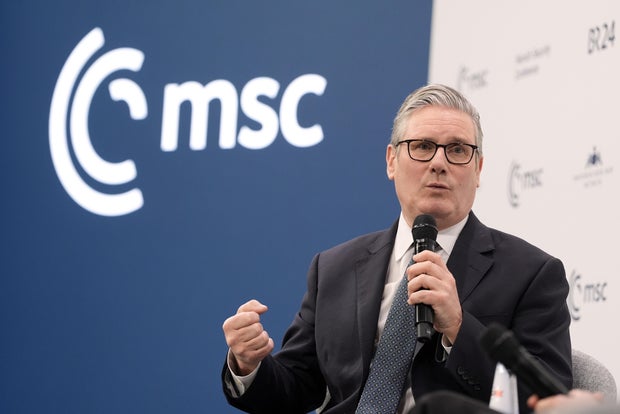
The conference pointed to tensions beyond those in the trans-Atlantic alliance, the Associated Press reported.
Speaking after Rubio, Chinese Foreign Minister Wang Yi said Beijing felt “gratified” that President Trump respects President Xi Jinping and China, but warned that some voices in the U.S. are leery of China’s rise.
“We see that some forces and some people are still trying their best to suppress and contain China, and are still attacking and slandering China by any means,” Wang said, according to the Associated Press.
He cautioned that “law of the jungle and unilateralism have taken hold” and said some countries “even revive the Cold War mentality.”