dailynewsnblog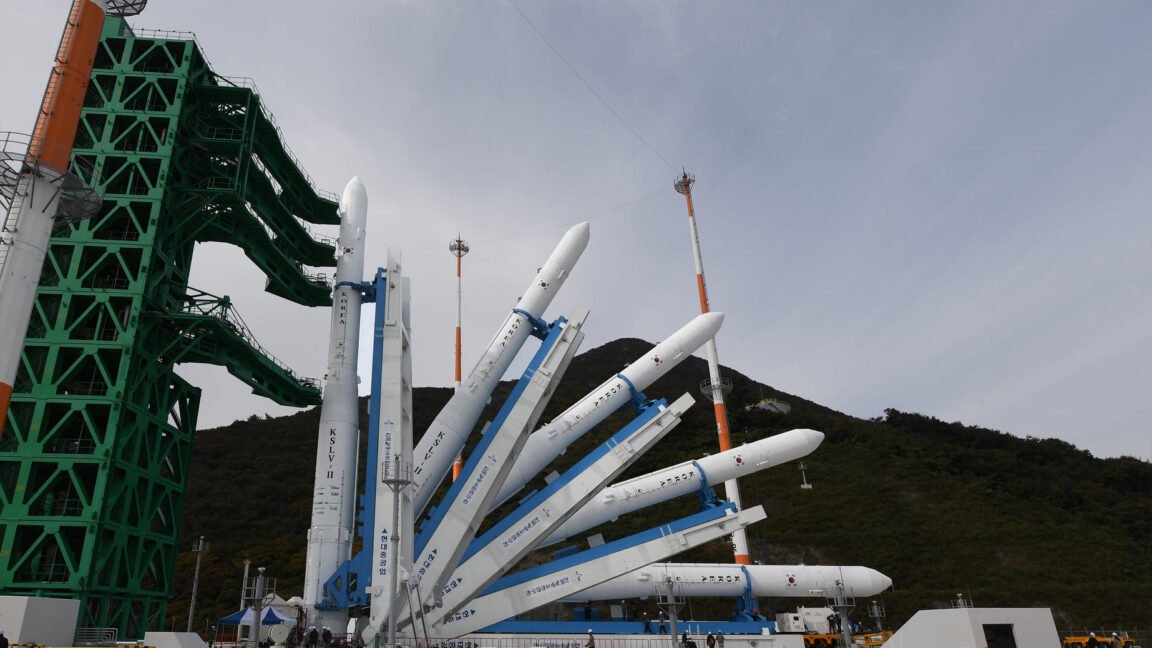
ESA fills its coffers for launcher challenge. The European Space Agency’s (ESA) European Launcher Challenge received a significant financial commitment from its member states during the agency’s Ministerial Council meeting last week, European Spaceflight reports. The challenge is designed to support emerging European rocket companies while giving ESA and other European satellite operators more options to compete with the continent’s sole operational launch provider, Arianespace. Through the program, ESA will purchase launch services and co-fund capacity upgrades with the winners. ESA member states committed 902 million euros, or $1.05 billion, to the program at the recent Ministerial Council meeting.
Preselecting the competitors … In July, ESA selected two German companies—Isar Aerospace and Rocket Factory Augsburg—along with Spain’s PLD Space, France’s MaiaSpace, and the UK’s Orbex to proceed with the initiative’s next phase. ESA then negotiated with the governments of each company’s home country to raise money to support the effort. Germany, with two companies on the shortlist, is unsurprisingly a large contributor to the program, committing more than 40 percent of the total budget. France contributed nearly 20 percent, Spain funded nearly 19 percent, and the UK committed nearly 16 percent. Norway paid for 3 percent of the launcher challenge’s budget. Denmark, Portugal, Switzerland, and the Czech Republic contributed smaller amounts.
Europe at the service of South Korea. South Korea’s latest Earth observation satellite was delivered into a Sun-synchronous orbit Monday afternoon following a launch onboard a Vega C rocket by Arianespace, Spaceflight Now reports. The Korea Multi-Purpose Satellite-7 (Kompsat-7) mission launched from Europe’s spaceport in French Guiana. About 44 minutes after liftoff, the Kompsat-7 satellite was deployed into SSO at an altitude of 358 miles (576 kilometers). “By launching the Kompsat-7 satellite, set to significantly enhance South Korea’s Earth observation capabilities, Arianespace is proud to support an ambitious national space program,” said David Cavaillolès, CEO of Arianespace, in a statement.
Something of a rarity … The launch of Kompsat-7 is something of a rarity for Arianespace, which has dominated the international commercial launch market. It’s the first time in more than two years that a satellite for a customer outside Europe has been launched by Arianespace. The backlog for the light-class Vega C rocket is almost exclusively filled with payloads for the European Space Agency, the European Commission, or national governments in Europe. Arianespace’s larger Ariane 6 rocket has 18 launches reserved for the US-based Amazon Leo broadband network. (submitted by EllPeaTea)
South Korea’s homemade rocket flies again. South Korea’s homegrown space rocket Nuri took off from Naro Space Center on November 27 with the CAS500-3 technology demonstration and Earth observation satellite, along with 12 smaller CubeSat rideshare payloads, Yonhap News Agency reports. The 200-ton Nuri rocket debuted in 2021, when it failed to reach orbit on a test flight. Since then, the rocket has successfully reached orbit three times. This mission marked the first time for Hanwha Aerospace to oversee the entire assembly process as part of the government’s long-term plan to hand over space technologies to the private sector. The fifth and sixth launches of the Nuri rocket are planned in 2026 and 2027.