dailynewsnblog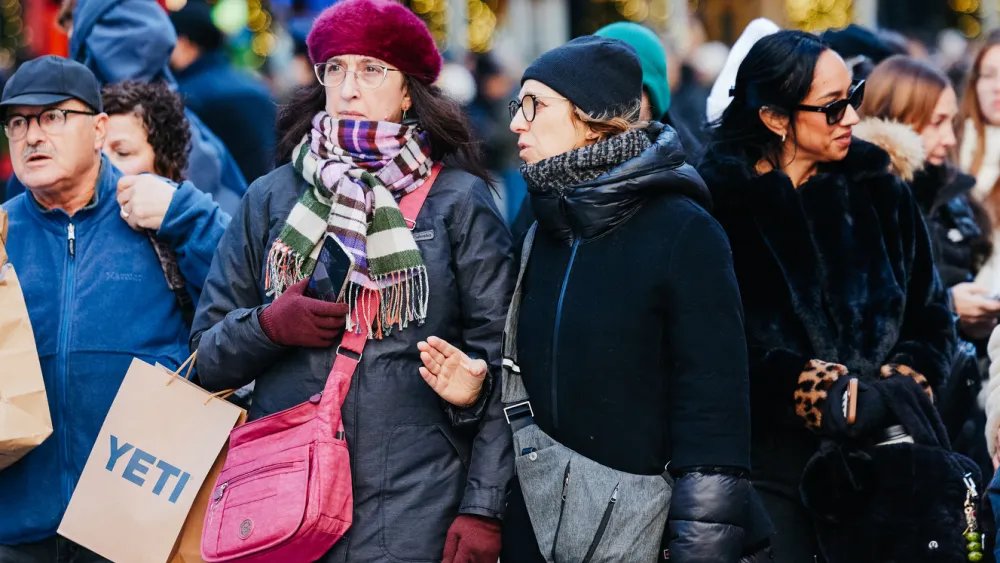
Between price hikes due to tariffs and inflation, sagging consumer confidence, and shoppers becoming choosier than ever, retailers had plenty to overcome this holiday season.
But they managed to — and should emerge with sales 3 to 4 percent above last year’s holiday season, meeting or slightly surpassed their plans, according to commentary from about two dozen retailers, shopping center executives, analysts, and market researchers.
How did they do it? Retailers offered values that were appealing and apparent. Consumers were willing to absorb tariff-related price increases, generally under 10 percent on fashion. And the weather was conducive to Americans getting out to shop, except where there was flooding in the Pacific Northwest and storms in the Midwest. California was battered with flooding rains on Christmas Eve and Christmas Day, and the Northeast was due to get hit with snow late Friday into Saturday. These were likely to reduce store visits for returns and shopping with gift cards and potentially have some impact on business, but was not expected to dramatically alter the outcome.
Throughout the season there was no letup in spending by the nation’s wealthiest, with by some statistics the top 10 income percentile accounting for 50 percent of spending. Income levels have been rising, but the unemployment rate is also increasing, reaching 4.6 percent as of November.
Apparel has sold surprising well. Bestselling categories and looks were outerwear, cold-weather accessories, Fair Isle sweaters, fragrance, fur, faux fur, sleepwear including matching parent and kids sets, athleisure, and athletic footwear. Electronics also fared well, particularly video games. On the other hand, sales of home goods were on the soft side.
Holiday Sales Seen Topping $1 Trillion
Visa projected holiday spending (Nov. 1 to Dec. 31) in the U.S. will be up 4.2 percent year-over-year, led by sales of electronics. Mastercard forecasts a 3.9 percent year-over-year gain, with apparel the top category, generating a 7.8 percent sales increase. Those estimates fall in line with the National Retail Federation’s prediction of 3.7 to 4.2 percent holiday sales gains, and total U.S. holiday sales eclipsing $1 trillion for the first time.
A clearer picture of how the 2025 season played out with sales and profits will emerge when retailers issue their fourth-quarter results in February and March.
“This was a decent season, not great, but a good one,” said Jim von Maur, president and fourth-generation leader of the Davenport, Iowa-based Von Maur Department Stores. “In the Midwest we had horrific storms almost every weekend, but we’ve been catching up, and we’ll end the season in the 3 percent range. Men’s has been really strong. Cosmetics not as much. Fragrance has been good. Children’s has been very good.”
Among the bestselling brands cited by von Maur were Skims, Uggs, Peter Millar, Vineyard Vines, Spanx, Hoka, and Cloud 9.
“I think we are going to have strong business right after Christmas,” von Maur added. “People will continue to shop. I’m optimistic about that, but you never know about returns. People will be out shopping for deals. Our competitors seem to be promotional. We were restrained. We sold a lot at full-price and did not see [consumer] resistance to that.”
“The Christmas selling season has been better than we anticipated,” said Stephen Yalof, president and chief executive officer of Tanger. “On Super Saturday, we saw sales levels in stores that rivaled Black Friday; in some cases there were even steeper levels. We saw stores taking half off everything, stacking discounts on top of discounts, giving gifts with purchase, even some door busters, but the promotions were planned for sure. I don’t think there was any desperation.”
Regarding post-Christmas returns and shopping, Tanger will be less impacted by the inclement weather since most of its 38 outlet centers and three open-air lifestyle centers are in warmer climates.
Yalof listed Nike, Under Armour and Adidas in athletic apparel and footwear; Michael Kors, Coach and Tory Burch in accessories; Pandora and Kay in jewelry, and Gap and Old Navy in apparel as among the busiest destinations.
“The season was good early on and good late and the lull in the middle lasted a little longer than we expected, so the shopping got bigger very late,” said one top retail executive, who said the season has been OK. Regarding the snow and rains post Christmas, “I don’t think that should change things dramatically.”
One specialty retail executive at a company that also wholesales said, “We feel really fortunate. There could have been this perfect storm between tariffs, the price of gold going up at least 50 percent to $4,500, and the situation with Saks Global,” which hasn’t been paying vendors and seems headed for bankruptcy. Nevertheless, the source said, “Gold has been selling very strong.”
Following an “amazing Black Friday,” business continued to churn throughout the holiday season at Brooks Brothers, according to CEO Ken Ohashi. “We’ll end the month in a good place,” he said. “We had a tremendous sportswear year,” he said, led by sweaters, knitwear and fashion items in seasonal colors and patterns. “A lot of our business is replenishment items, like our white button-down shirts and Golden Fleece blazers, but the disproportionate strength of our fashion offering tells me the customer is looking for newness,” he said.
Ohashi said Brooks Brothers notched a strong number of new customers this year purchasing at full price. “Our consumer is pretty resilient and our dollars per transaction have been up all year,” he said.
Bob Mitchell, CEO of Mitchells Stores, said the company’s 10 stores had “another record holiday season. To keep putting increases on every year is great. The formula is working — clients are just happy to be in a multibrand environment with high service.”
Although Mitchells and Richards on the East Coast led the way, Wilkes Bashford stores in California, including the unit in Palo Alto that was up against a strong opening last year, also performed well. Marios stores in Seattle and Portland, Ore., “came on strong at the end,” Mitchell said, and the latest addition, Stanley Korshak in Dallas, also had a good season.
For most of the company, traffic slowed at the end, Mitchell said, particularly in menswear, but overall, the business posted high-single-digit gains for the season. In men’s, top performers included luxury sweaters, outerwear and expensive casual pants from Marco Pescarolo. Zegna was the most popular brand along with Kiton, Brunello Cucinelli and Loro Piana. In women’s, “jewelry was the big winner,” along with expensive outerwear that “helped make up for the lighter traffic,” Mitchell said.
“It was busy the last few days before Christmas, which caught me a little by surprise,” said Ken Giddon, president of Rothmans, which operates men’s stores in New York City and the nearby Westchester County. “I’m surprised at the tenacity of the consumer. There was a crazy amount of gift giving. Our suburban stores were a little light on merchandise because of the big late push. I guess we did a good job picking the right things.”
Giddon said the strongest sellers included Eleventy and Peter Millar, a brand that ran out of stock early, and an indicator of the strength of the quarter-zip sweater trend. “We’re selling those to the younger guys as well as their dads.” Raffi sweaters, Barbour socks and Brax pants were also strong sellers. “As the weather changes, we get a big push in outerwear and we also benefit from kids coming home from college and shopping for suits,” Giddon said.
Heather Kaminetsky, CEO of Net-a-pPorter, said in a statement, “This holiday season we’ve seen our customer buy gifts for others, but also for herself — with peaks in fine jewelry from David Morris and Jessica McCormack, cozy fashion pieces from Loewe and Khaite and accessories from The Row.”
Managing Inventories Down
One retail CEO, who requested anonymity, said, “A lot of [retailers] have taken their units down and are riding on higher average unit retail prices. There’s less inventory out there. I think after last April, a lot of people scrambled to pull down some things because the cost of inventory went up, and so you really had to pick your shots. We took our assortment down. It was effective for us. It’s paying off in margin, in a year where margin has been hit hard with the increased cost of tariffs.”
Asked if markdowns were steeper this year compared to 2024, the retailer said, “I don’t think the magnitude increased any. Q4 is the most promotional quarter. We all know that. But it’s also, for many of us, the lowest margin quarter, right? It’s a lot of volume, but it’s also end of year, end of season, and given the inflated cost basis, we’ve all been very careful about managing our inventory so it doesn’t dilute our margins too much. No one wants the inventory after the holiday.”
“I’m hearing from retailers that Black Friday and Super Saturday were both good,” said John Neutzling, chief operating officer of Miller Capital Advisors. “They both showed increases over last year. However, what was more interesting is that the sales across the weeks of Black Friday and Super Saturday were better than last year also. So that suggests shoppers were showing up all week long.”
The privately held Skokie, Ill.-based Miller Capital has 17 properties in its portfolio including large, high-profile shopping centers like Ala Moana in Honolulu, Scottsdale Fashion Square in Arizona and the Houston Galleria. “Some of the legacy brands, the ones that have been around for a while, seem to now appeal to Gen Z and even Gen Alpha. The Gap in particular has found a really good business plan, and has had multiple quarters of sales growth,” said Neutzling.
John Harmon, a technology and equity analyst at Coresight, characterized the season as “just on track,” but could wind up being a bit better than 3 to 3.5 percent. Noting how people were shopping early, Harmon said October seemed “pretty calm, business really picked up in November, and 34.7 percent of consumers in the U.S. were done shopping by Dec. 15.” Regarding promotions, “It seemed pretty normal and largely planned.”
Top-performing Retailers
Harmon listed Amazon, Walmart and Target as the top-performing retailers during the season, though Walmart was largely fueled by its superior food offering; Amazon by its popularity, speedy deliveries and low prices, and Target apparently experienced a pickup after several sluggish seasons. He also cited Dollar Tree, TJ Maxx, Dollar General, Costco and Kohl’s as having a good season.
With holiday shopping spreading out over a longer period, Black Friday was less busy this year, with 46.8 percent of consumers shopping, versus 63.8 percent last year. Doorbusters were limited, and the Black Friday crowds of yesteryear were gone.
“The season ended on a high note,” said Craig Johnson, president of Customer Growth Partners. “Super Saturday and the Sunday and Monday after were very strong days for retailers, in terms of foot traffic and buying. It’s also been an excellent year for apparel, which is well over 7 percent ahead. Apparel was a laggard for many years. But people have been out spending, perceptions of the economy are improving, and interest rates ticked down. The impact of tariffs has been overblown. We think that will all settle out.
“The real thing that added money for spending was this dramatic drop in gasoline prices. We went into the season forecasting 4 to 4.6 percent sales growth. It might get up to 5 percent-plus” overall for the retail sector.
Johnson, like other observers, cited Walmart, Costco, Amazon and off-price players as performing well this season. “It’s been a relatively benign promotional season, though there are always a few outliers, most retailers were 25 to 40 percent off, though Gap offered 40 percent off everything” in late December, he said. Industrywide, “Inventories were pretty much in balance, as the two months unfolded we saw people really beginning to spend.”
The athleisure sector, including Vuori, Beyond Yoga and Free People Movement, were exceptionally strong, and retailers specializing in health and personal care had a good season. Demand for consumer electronics picked up, but mostly with video games. Outdoor sporting goods had just “a pretty good season.”
What’s Ahead
Returns were in full swing starting Friday, as were post-Christmas sales, so Americans took the opportunity to exchange gifts for credit or take advantage of discounted merchandise. The combination of returning gifts and taking advantage of deepening discounts will continue for weeks, as will redeeming gift cards.
For the holiday season, about 20 percent of apparel sold will be returned, according to Marcus Shen, CEO of B-stock, a business-to-business platform helping retailers unload returns and excess merchandise to off-pricers, jobbers and resale stores. The vast majority of apparel, he believes, will be back on the shelves and hangers. “Consumer electronics and some other categories outside of apparel are probably closer to the 10 to 15 percent range. It varies by brand and category.”
Overall, he expects return rates to be a slightly above last year’s, mirroring how sales perform.
While business has been so far so good, the Friday and weekend after Christmas brought significant weather volatility, impacting what’s normally a busy day in stores for returns and redeeming gift cards. In the Pacific Northwest, “Heavy precipitation and high winds are expected to persist through New Year’s Day,” Evan Gold, executive vice president of global partnership and alliances at Planalytics, which quantifies how weather impacts businesses, wrote in a report. “Los Angeles, San Diego, San Francisco, Sacramento, Seattle and Portland are among the major markets to expect heavy precipitation, including 3-plus inches of rain over the coming days. This will bring flooding conditions and keep soils saturated. In addition, high winds are expected from Northern California into the Pacific Northwest, posing threats for power outages and causing travel disruptions.”
Gold indicated that sales on the West Coast of need-based categories will spike, including wiper blades, rainwear and pumps.
Major population centers, including New York City, Philadelphia, Boston, Baltimore and Detroit, were expected to be hit with snow and/or ice over the weekend, driving demand for need-based categories, including ice melt, snow shovels, scrapers, heaters and more, Gold wrote.
However, unlike the days preceding Christmas, when consumers must get to the stores for last-minute gifts, shoppers could wait out the bad post-Christmas weather hitting the East Coast and California because stores typically allow 30 to 90 days to make returns and gift cards are generally good for years.
Looking ahead to 2026, there will be a wave of tax refunds due to U.S. President Donald Trump’s “One Big Beautiful Bill Act” and he has proposed providing a onetime, $2,000 tariff rebate to Americans to offset some of the impact of tariffs and the anxiety over the economy to stimulate spending. Also, Trump has proposed $1,176 “warrior dividends” to military personnel.
“From what we understand from the customer, there is enthusiasm” about the economic stimulus from the government, Yalof observed. “There is a lot money in the marketplace.” Yalof also said retailers he’s had contact with are “very optimistic” about 2026. “Retailers have not slowed down growth, from a leasing perspective. We’re doing a lot of brick-and-mortar deals.”
Ohashi at Brooks Brothers said he believes the skies will be bright “as long as we continue to offer newness.” While half of the company’s stores are in the Northeast, he said Brooks will be focusing more on its warm-weather doors next year, even opening two stores in Puerto Rico in 2026. Stores in warmer climates move into spring more quickly, providing a quicker read on the season.
Mitchell said he’s “a little cautious, especially in men’s where traffic slowed the last two weeks, but I’m still positive.”
Giddon at Rothmans said he’s optimistic about 2026, and that the final days before Christmas “surprised us because we felt the economy wasn’t that strong. But people are obviously more optimistic so we’ll have to measure our projections slightly upward for 2026.”
Tracking Shopper Traffic
RetailNext tracks shopper traffic at hundreds of retailers outfitted with tens of thousands of RetailNext traffic counters. “For the season overall, traffic was down 6.5 percent from November through Super Saturday,” said Joe Shasteen, global manager, advanced analytics, Retail Next. Stores were getting fewer visits, but conversion rates held up. “The shopping this year was more intentional and less about browsing,” Shasteen said, adding that retailers made up shortfalls in their stores with their e-commerce businesses, which were up in the high single digits.
“Holiday sales are not a reliable predictor, but we see a 5 percent-plus gain possibly repeated in the first quarter of 2026. It may even jump ahead of that, if we see a turn in the housing market,” said Johnson. “There are a couple of signs of that happening, but it’s not quite there yet. Housing has historically been a big booster to growth. If interest rates come down, we may yet see not just above 5, but 6 percent by the back half.”
“All the indicators show we are going to have some positive business going into 2026,” Von Maur said. “The economy is still strong, unemployment is low, tariffs got the prices up but customers aren’t holding back.” With tariffs, “The worst is behind us.”
“The holiday season has so far been a success for retailers,” Stephanie Cegielski, vice president, research and public relations, ICSC, said on Tuesday. “Consumers are still price-sensitive, but most continued to shop in the final days leading up to Christmas….One thing is clear: Despite their economic concerns, consumers are still willing to spend on memorable experiences, entertainment and gifts at the right price. They may be prioritizing value, but the retailers that are winning this holiday season will look beyond price to connect with consumers and stay on their radars into 2026 and beyond.”
— With contributions from Jean E. Palmieri
HOLIDAY 2025 TRENDS
- Apparel sales robust; home goods soft.
- 3 to 4 percent sales gains expected.
- Consumers resilient, show little resistance to price hikes but buy fewer units.
- Price promotions steady, primarily planned, and not overly intense.
- Markdowns at 30 to 50 percent off widely seen, along with up to 60 percent off on select items.
- Big box discounters, off-pricers, dollar stores fare the best.